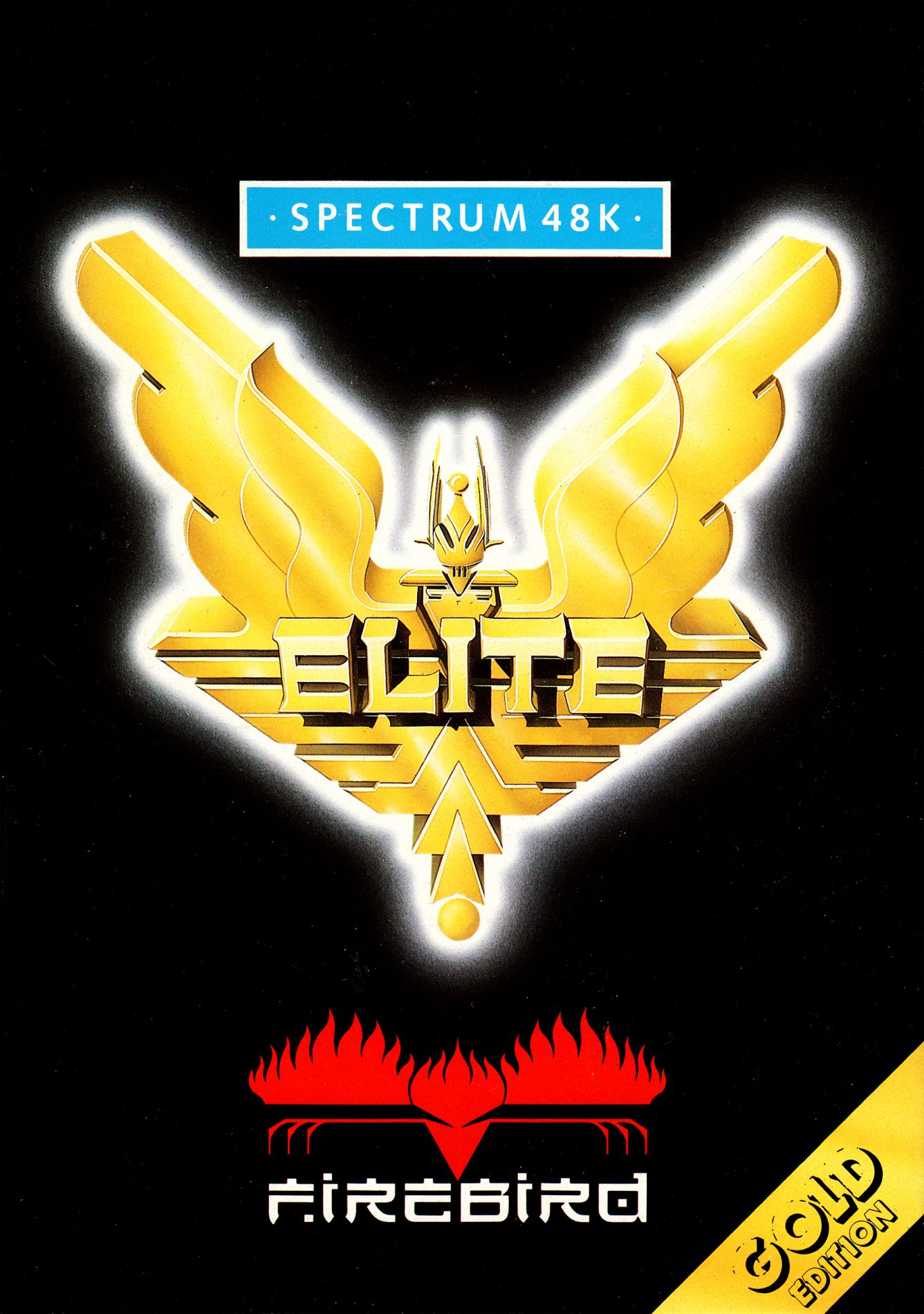
Elite
Strategy Game: Management · ZX-Spectrum 48K/128K · 1 players · English
Firebird Software Ltd · 1985 · Pound sterling 14.95




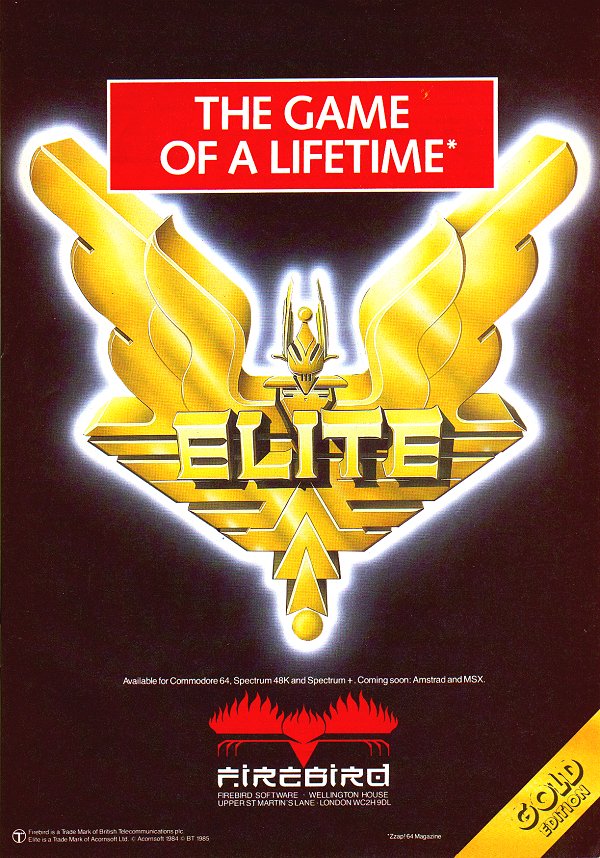
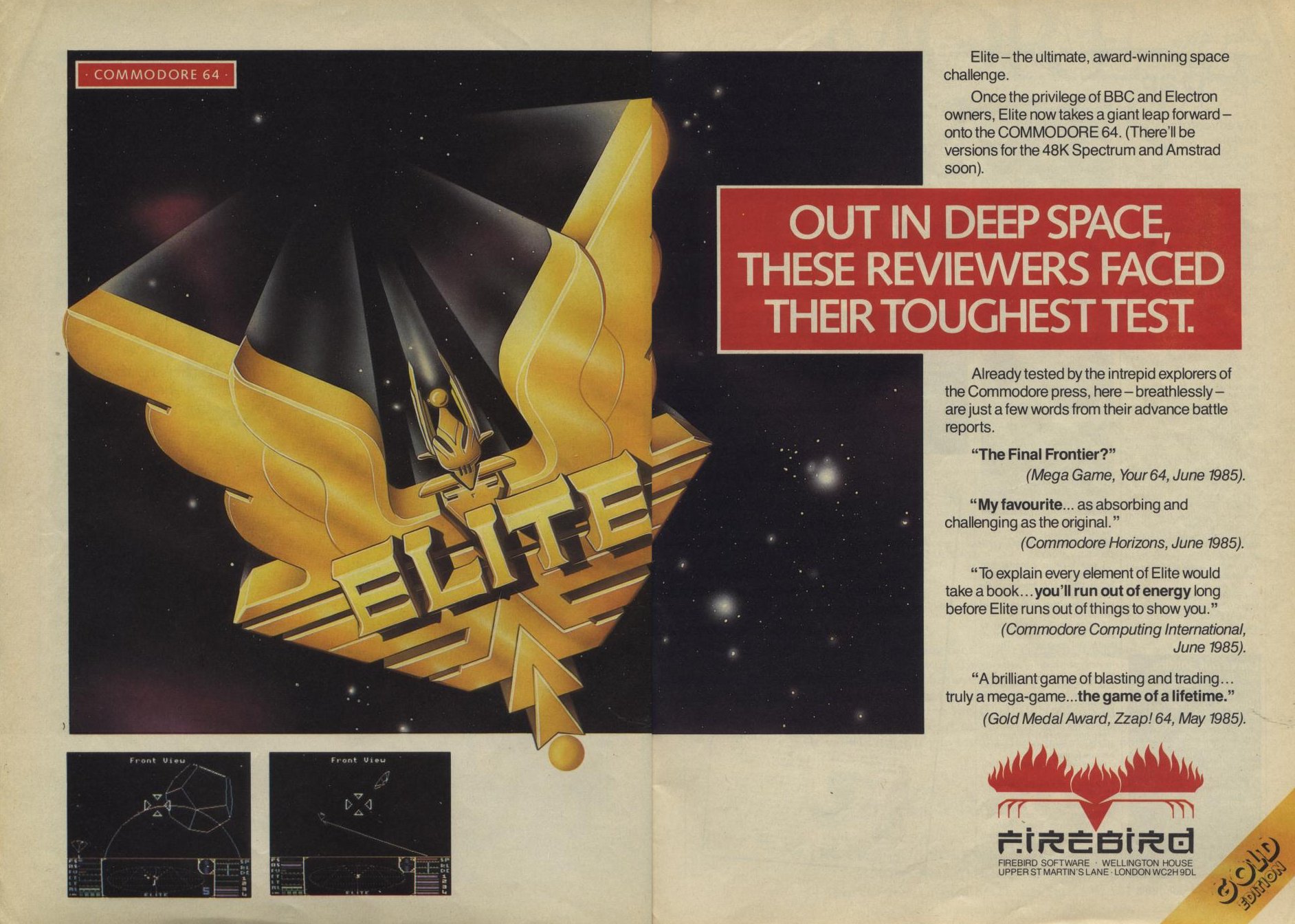
.jpg)
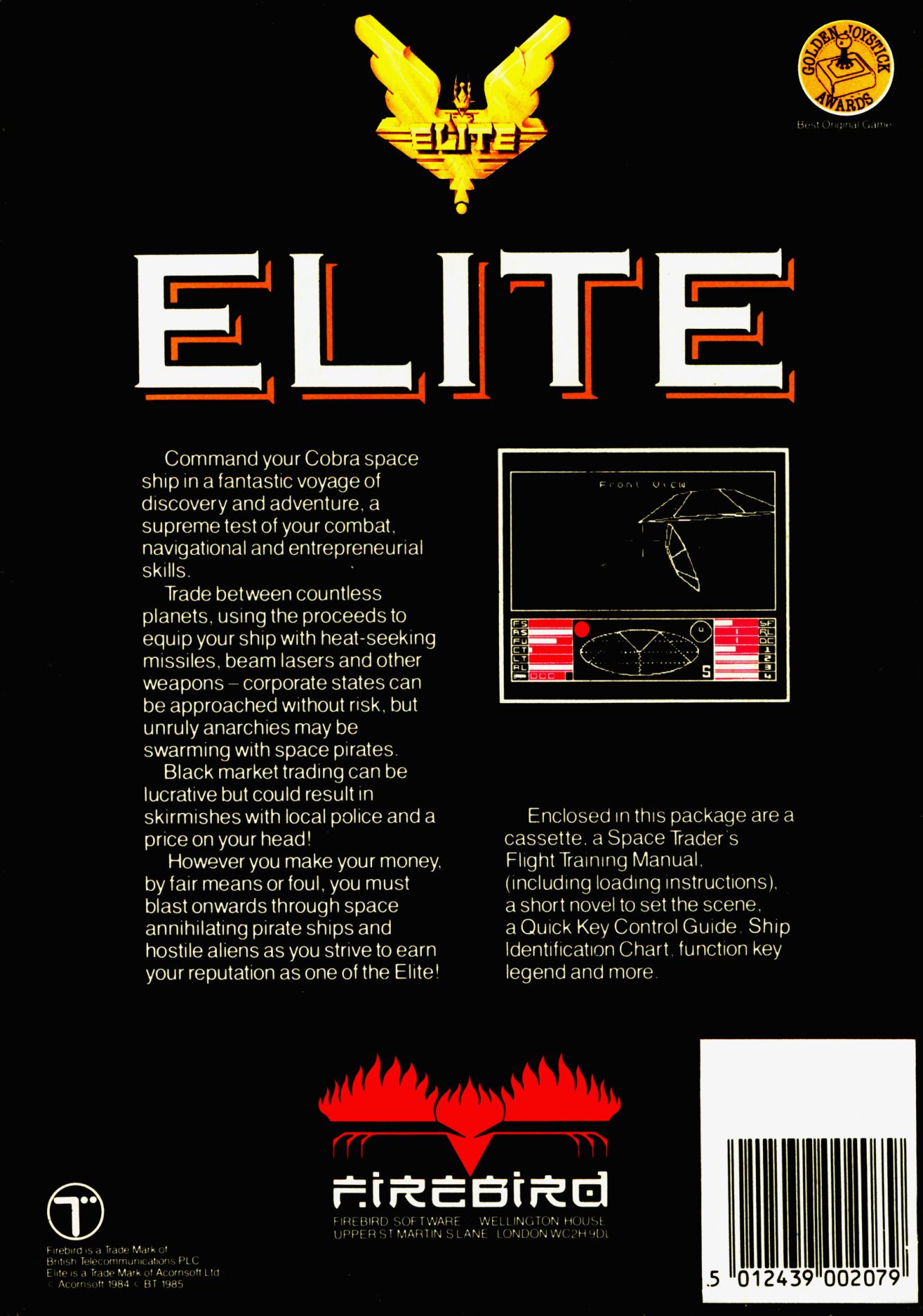
_Front.jpg)

Discussion
Nobody has started a thread about this yet.
Remarks
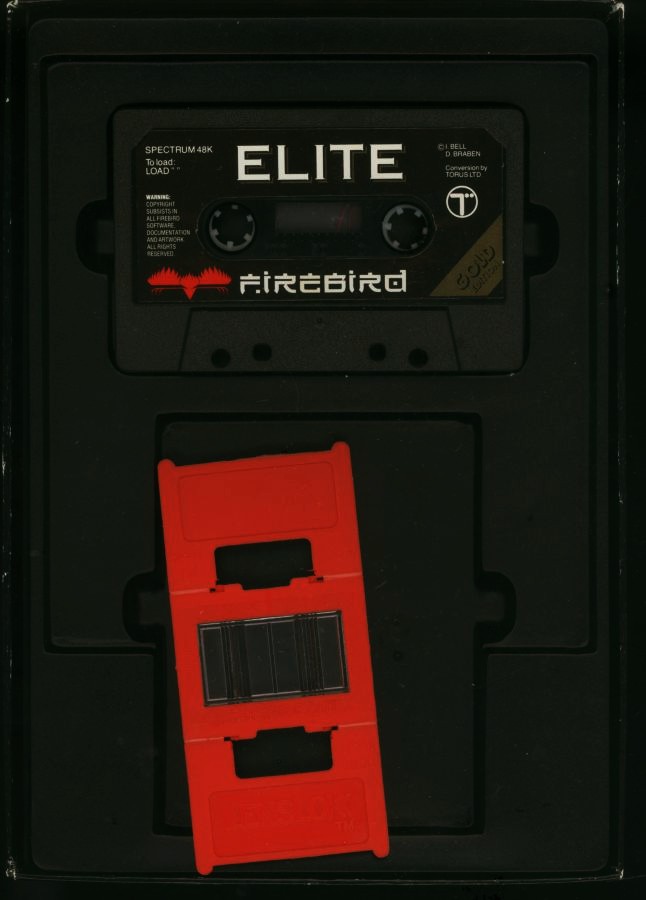
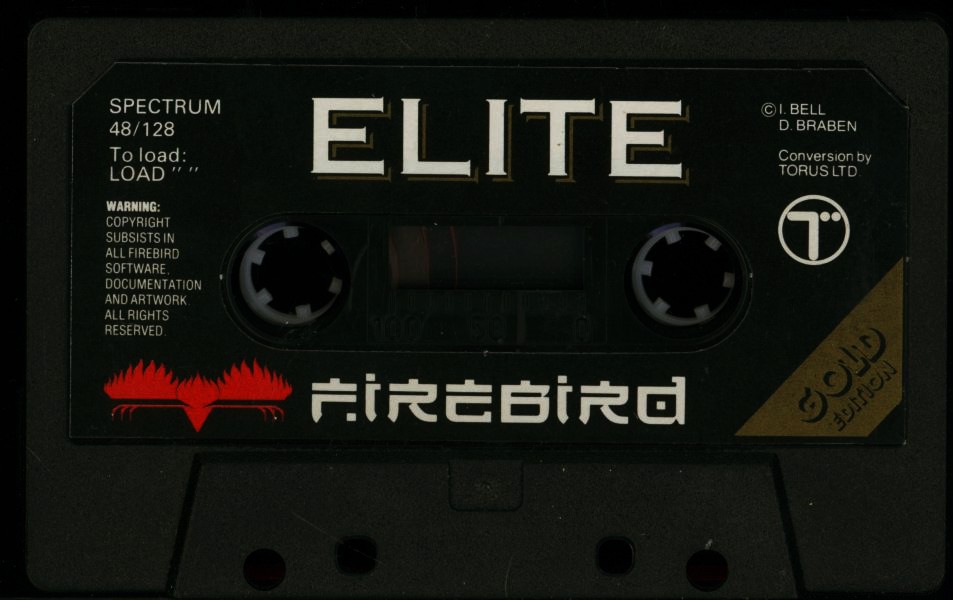
The main difference between the 48k and 128k versions is the 48k loader, that was not compatible with the 128k systems and got removed from that version.
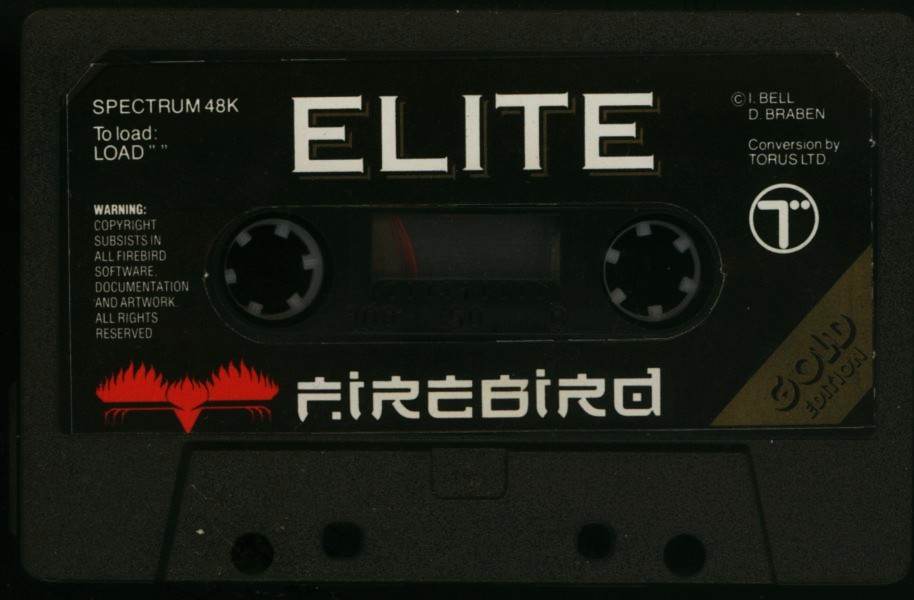
The original 48k cassette contains two versions of the game, with slightly different ships. On one side, the enemy ships are the Cobra, Asp, Fer-de-lance, Thargoid/Thargon, Sidewinder, Krait and Viper. On the other side, the Krait has been replaced with the Adder. Save games are fully compatible, so it is possible to start playing with one set of ships and then switch to the other set.
Releases
- 1985Firebird Software LtdPound sterling 14.95
- UnknownBoots
- 1985Serma SoftwareSpanish peseta 2800.00
Play
- elite.zipRZX playback file
- Elite.tzx.zipTape image English42 KB
- Elite_2.tzx.zipTape image English72 KB
- Elite(JoystickClubVersion).tap.zipTape image English34 KB
- Elite128.tap.zipTape image English40 KB
- Elite48.tap.zipTape image English43 KB
Documents
- Elite(EN)(Tips).pdfInstructions English1,825 KB
- Elite(EN).pdfInstructions English2,818 KB
- Elite(SermaSoftware).pdfInstructions Spanish175 KB
- Elite.txtInstructions English19 KB
- Elite_LenslokInstructions.pdfInstructions 372 KB
- Elite(Acorn).pdfScanned instructions English1,596 KB
Other files
- Elite_TheDarkWheelNovella.txt? 109 KB
- Elite (1985)(Firebird Software).pokPOK pokes file 2 KB
Files and rights
Distribution permission is on record, granted to another archive rather than to this one. Screens and pictures are copied here; everything else links to the archive that holds it.
- AllowedFirebird Software Ltd → WorldOfSpectrum
Credits
- David BrabenGame Design/Concept
- Ian C.G. BellGame Design/Concept
- Philip Mochancredited
- Ricardo J.M. Pintocredited
- Dominic M.N. Priorcredited
- Mark Wightoncredited
- Tim BooneLoad Screen
Sign in to credit somebody, or say what these people did.
Awards
Scores
In the magazines
- Sinclair User #441985 · Overall5/5
- Crash #221985 · Overall92%
- Sinclair User #541986 · Overall5/5
- Your Computer #11986 · Overall Rating5/5
- Your Sinclair #351988 · Elite9/10
Elsewhere on the web
- WorldOfSpectrum 719 votes8.30
Awards and competitions
Big K - Readers Poll 1984
- 4Game of the Year
- 5Best Packaging of the Year
Computer Gamer's Game of the Year Awards 1985
- 1Game of the Year
- 1Best Arcade Game
- 1Best Spectrum Game
Crash Readers Awards 1985
- 1Best Game Overall
- 2Best Flight Simulation
- 2State Of The Art Award
- 3Best Shoot'Em Up
Golden Joystick Awards 1984
- 1Best Original Game of the Year
Golden Joystick Awards 1985
- 2Game of the Year
In the magazines 143
ACE (Advanced Computer Entertainment) #7Apr 1988 · p.68
ACE (Advanced Computer Entertainment)
Spectrum, £14.95cs C64/128, £14.95cs, £17.95dk Amstrad, £9.95cs, £12.95dk PC, £24.95dk If this 3D space epic is a shoot-em-up then Michelangelo was an interior decorator, but for all that trading and mining you can do there's still a cracking blast in here. You can shuttle between safe systems carrying legal cargoes if you want, but the only way you'll get that coveted deadly or elite ranking is by going out there and wrecking other ships. This isn't easy: the combat is 3D tactically as well as graphically, so marauding pirates can attack from any direction There's no up, no down, and absolutely no quarter. Kill the enemy, run for home or die in the process. Tough, cynical stuff that'll have the palms of your hands in a sweat. Graphics have come on a bit since the slowish wire frames of the 8-bit versions - the PC Elite is in solid 3D - but for deep-space dogfighting the game still gets top marks.
Elite PC version - solid action.
Sinclair User #54Sep 1986 · p.47Sinclair User Classic5/55/5
Sinclair UserSinclair User Classic
Overall 5/5
John Gilbert 5/5
Label: Firebird Author: Torus Price: £14.95 Memory: 128K Joystick: Kempston Reviewer: John Gilbert At last, 128 owners can take a Cobra Mk III for a spin in Firebird's new version of its classic Elite trading and combat strategy game. The new version uses the same plot and trading missions as before but the graphics and action have been improved. You start the game docked at the space station in the Lave system. Short-range scanners tell you where your fuel can take you and a trading list gives information on the prices of goods you can acquire on the planet of your choice. You are a trader, of course, and the aim of the game is still to buy from one planet and sell at a profit on another and you still take part in speedily fought space battles in glorious 3D white on black. On the 128 version. Firebird has included three special missions and to become an 'Elite' you must kill 6,000 ships, which seems an almost impossible task. Firebird has also incorporated a couple of novel features into the new version. The first stops you from using the famous bug at the start of the game to amass thousands of credits in a matter of seconds. The company has also made some concessions to players who find it difficult to stay alive before and after hyperspace travel from one planet to another. Just leave the space station in Lave - don't touch the movement controls - and slowdown. Select a new hyperspace destination, pull the joystick up to loop-the-loop and come back on a heading for the station. As you re-enter the station press hyperspace and you'll be transported automatically to your new destination. This feature doesn't work with all of the planets - you may crash into a station if you pick the wrong one. Otherwise the usual rules for playing Elite apply. You can select your moral class - you can be good or bad - and become involved in battles between space police and pirates if you become a rogue, trading in drugs and other illegal substances. You should be thoroughly wary of any ship which hoves into sight. There are nine major types some of which will require more laser blasts than others to destroy, or even be impervious to your missiles. In the old Elite ships such as Vipers appeared from nowhere. More attention to detail in the new version means that ships appear from the hatches of space stations and, if you wait around long enough, you can knock them off as they exit. You get a few credits - the universal monetary unit - for bumping off other ships if they're owned by pirates but the mega-credits are made in trade. The type of goods available on a planet depends upon geological environment, level of civilisation and type of administration, and you need to take these three aspects into consideration when you sell on a planet. For instance, you could sell computers to a culturally dormant society at a huge profit. Elite is still as gripping as when it was first released. The shear volume of detail included - the histories of hundreds of races, details of planetary geometry, culture and government - make it still the most complex arcade strategy game ever devised.
Your Computer #1Jan 1986 · p.415/53/54/55/55/55/5
Graphics 5/5
Sound 3/5
Playability 4/5
Value For Money 5/5
Overall Rating 5/5
Lee Paddon 5/5
Spectrum Firebird Shoot-'em-up £14.95 A year after the battlestar Elite was launched, it has at last made contact with the universe of the Spectrum owner. Perhaps the most talked about computer game ever, has it lost anything in translation? The game has virtually been rewritten by Firebird's Torus team, and is a very impressive piece of programming. All the best features of the BBC game are there - very fast vector graphics, good instrument display and of course tremendous depth. You start off as "Harmless" with a real bucket of a ship and 100Cr to your name. Your ambition is to attain the fabled combat status of "Elite" and line your pockets at the same time. The game starts slowly while you get the hang of the controls and make a paltry profit shuttling between safe planets, then the pace begins to quicken as you fill you hold with highly profitable cargo, and equip your ship to allow you to go where no man has traded before. To attain the status of Elite you have to blow away some 8,000 ships. To break up this somewhat monotonous process, you are called upon to perform a couple of missions for the Galactic Navy. What, of course, sets this game apart is the use of vector graphics and challenging combat sequences with, if you're unlucky, up to a dozen ships and general bits of debris floating around the place. The number of ships is a reflection of your legal and combat status, the type of planet and your cargo. Shooting peaceful traders and trading in narcotics are good ways to get rich quick, but the police take a dim view of it. Things can soon get sticky with half a dozen ships whittling down you energy as you twist and turn trying to escape. However, once you're equipped with a military laser - affectionately known as The Can Opener by pilots everywhere - life becomes a little easier, if it really gets nasty, it's time to hyperspace out, or perhaps try out the smart bomb. Although it's difficult at this early stage to tell whether Firebird have succeeded in bug eradication, there does seem to be a problem with the space stations which are sometimes placed too far away from the planet, and on one occasion in the middle of the planet. On the plus side, your status is constantly displayed on all screens and the display is very fast, even when a lot is happening on the screen. Frankly a program no self-respecting Spectrum owner can afford to be without.
C&VG (Computer & Video Games) #50Dec 1985 · p.339/109/109/1010/10
Graphics 9/10
Sound 9/10
Value 9/10
Playability 10/10
MACHINE: Spectrum SUPPLIER: Firebird PRICE: £14.95 Combine a strategy/trading game, a flight simulator, a space shoot'em-up and what have you got? The answer is, of course, Elite, originally for the BBC B from Acornsoft. At the time, most frustrated C64 and Spectrum owners listened to BBC owners talk of the delights of having military lasers and being "Dangerous". This almost caused several suicides and dumped machines, but soon word came about that a bunch of bright young sparks called Firebird Software had gained the conversion rights. So, what makes this game so special that it seems to sell on any machine? Well, it is highly original and totally addictive for a start, secondly, this is not a game that you pick up, play and finish in a month. This can be a lifetime's experience and an enjoyable one too. You are placed on a space station with 100 credits, a space ship called a Cobra MK III, and a rating of harmless and clean, these ratings are actually very important because you are hoping to attain the ranks of Elite. This is done by trading in a number of options available to you such as a long and short range chart, several equipping and trade menus, and the ability to look out from all four points of the compass through appropriate scanners. Now you must select a planet from your short range chart then find out its details, This will help you select goods for trading (this is logical so I'm not going to give you any clues). Also, the state of the government is an indicator of how much trouble awaits you. Having settled on which planet you are off to and what goods you're taking, you're off. Overall, a really good game. The Spectrum version is slightly faster than the Commodore version but not quite as fast as the BBC. Some of the missions have had to be cut down to conserve memory and there aren't so many graphic tricks as in the C64 but still worth every penny of the £14.95 you will have to fork out. This is definitely a game that no-one who owns a computer should be without. Take my advice, buy it and you probably won't be seen for six months.
Sinclair User #44Nov 1985 · p.23Sinclair User Classic5/55/5
Sinclair UserSinclair User Classic
Overall 5/5
John Gilbert 5/5
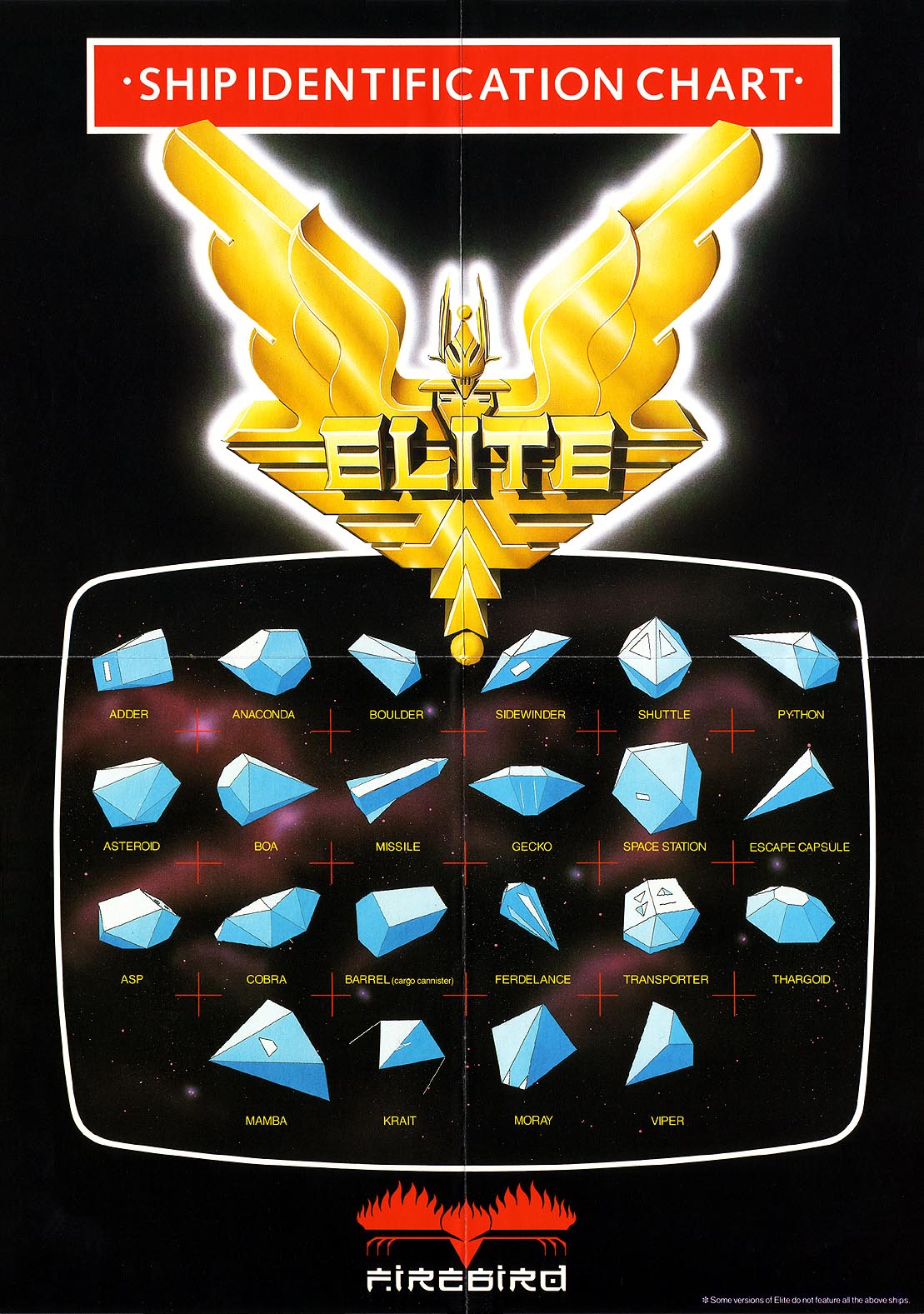
Publisher: Firebird Price: £14.95 Memory: 48K Joystick: Kempston, Cursor The Cobra's huge engines moan into life as you sit tensely at the controls waiting to be shot out of the space station. Your ship is the best of the medium-range, medium capacity, fighter traders and is ideal for transporting legal and illegal cargoes across the universe. It incorporates defensive screens, pulse lasers and missile launch facilities, while also being able to handle the jump to hyperspace. Once you have cleared the Coriolis space station, orbiting around the planet Lave, you can look out into space, turning your 3D display window to look at the star fields. Space travel can be achieved with small spurts of engine power or hyperspace, but only if aliens or police are not in the vicinity. If they are you must stand and fight. At the bottom of the screen you will find the flight grid scanner which displays other space ships or stations in your area. It is by using that, and the compass located on the right side of the screen, that you can track aliens. You will know when the enemy approaches as everything is shown in gory graphic glory. The craft grows from a speck to a shape which is barely recognisable. Then it grows bigger until you can identify it as one of the 10 ships in the game. Those include Adders, Mambas, Pythons and the deadly Thargoid invasion ships. Each has its distinctive shape which is illustrated in the bulky, but indispensible, Space Traders Flight Training Manual. If you miss it with your lasers or missiles it will approach quickly, trying to keep out of your sight, and either spin past you or fire its weapons systems. The authors have built range factors into the laser systems so that you cannot, for instance, use them to destroy a ship which is small and hundreds of light years away. In some ways Elite can be described as a simulation. You are piloting a space vehicle which will only take so much stress and strain and steering is more complex than in most space games. You can even become disorientated and have to rely on your instruments if you bank too sharply. The aliens will not sit still while you target your weapons and you will find that on many occasions you must control your ship's movement as well as operating the lasers or missile guidance system. You should be careful, too, not to over-compensate on the controls. Such action can send you into a wild spin. The alien ships react in a believable manner. If hit hard enough they will not explode into nothing but break up. You can pick up the odd piece of cargo in that way, but beware the larger debris. Fighting the forces of law and evil in space is only part of the game. You must earn a living, by buying and selling commodities from different planetary systems. Home in on the planet of your choice, using the long range scanner, and ask for a report on inhabitants, the political climate and products. The political climate is important and can influence trading links and attitudes. If you warp into a system where anarchy prevails you will soon find pirate ships on your tail. Goods are there for the taking. To get to a particular planetary system, you must switch your display to the long range scanner, position the cursor over the planet of your choice - which is within range - and press the hyperdrive activation key. You will, however, only get to a new system if you have destroyed all the aliens in the current sector. When you arrive at a planet you can look at the list of available commodities. They include shipboard resources such as fuel, textiles, food and even illegal substances. If you decide to traffic in black market goods you will be regarded as an outlaw. Elite is an unbelievably complex game with arcade, strategy and adventure elements. It will, inevitably, be compared with games such as Starion from Melbourne House. The graphics on both games are similar, but Elite has the edge with its 3D control panel, instruments which are constantly updated, and denser star field. When you are not playing the game you can read the novel included in the package. The Dark Wheel by Robert Holdstock, a noted science fiction writer, develops the background to the game. Take up the challenge. You are unlikely to find another space game of Elite's calibre this year.
Crash #22Nov 1985 · p.28Crash Smash93%91%92%94%81%92%
Graphics 93%
Playability 91%
Getting Started 92%
Addictive Qualities 94%
Value For Money 81%
Overall 92%
Unknown
Unknown
Unknown
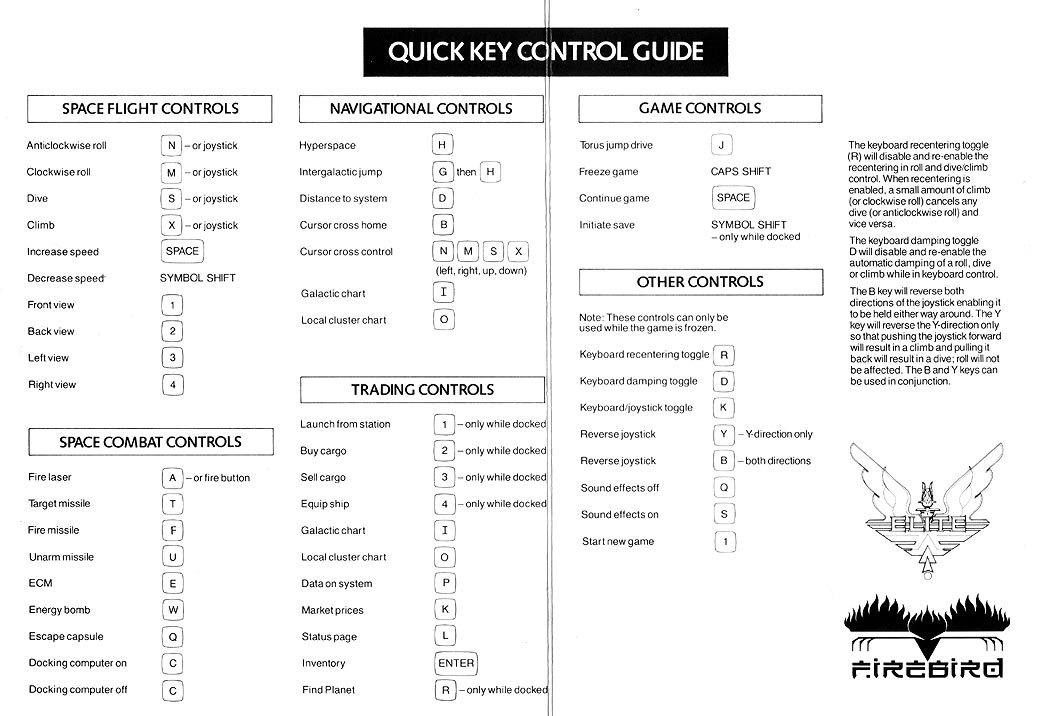
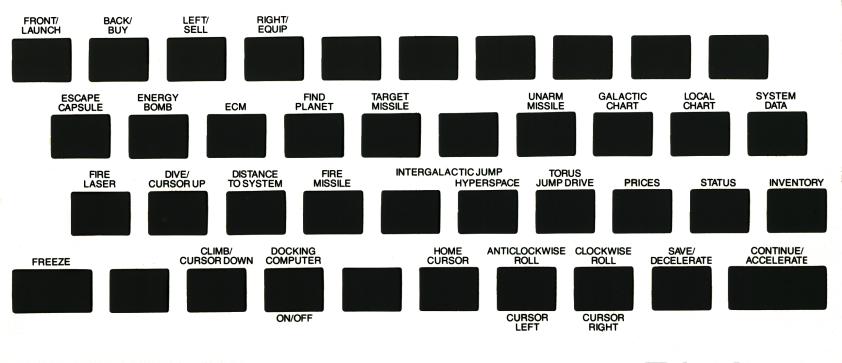
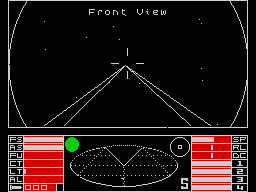
Producer: Firebird Memory Required: 48K Retail Price: £14.95 Language: Machine code Author: Torus Starting life on the BBC, Elite was converted for the Commodore and, has just appeared for the Spectrum, a mere three months late. It will go down in history as the first major piece of software to be supplied with the Lenslock protection device - a cunning way of preventing piracy by supplying a plastic decoding lens which is used to discover the encrypted access code for the game. In essence, after loading you need to look through the lens onto the screen in order to see the code letters which must be input before the program will RUN. The cassette is also accompanied by a slim novella which sets the scene. Converted by Torus, creators of Gyron, Spectrum Elite follows a very similar format to its other incarnations. With stars in your eyes and a Cobra Mk III in your charge, you've set yourself the task of becoming Elite, a combateer of the highest ranking. To become Elite you'll have to rise through several distinct stages starting with the almost derogatory rating of 'Harmless'. The more ships you kill, the higher your rating will rise, though mindless violence is not the only aspect to the game. To become an efficient killer you must have a well equipped ship, replete with weapons of destruction. When you start, the ship you're given is a pretty poor machine, not really up to the rigours of deep space combat, so the best thing to do is to buy extra equipment from the space stations you'll find in orbit around every planet. Most of the military hardware doesn't come cheap and seeing as how you only start with one hundred credits you will need to make some money. This is where the mindwork comes into play. You will have to trade. Every planet in the eight galaxies has a tech rating and some information detailing the world's economy. Using a trader's cunning, you can buy goods at one planet and take them to another and sell them for a profit. To be sure of making a profit it is wise to sell goods naturally rare on the planet you're trading with. For example a tech level 12, highly industrialised planet will probably have to import food, making the market price quite high. If you buy food from a low tech agricultural planet you can ferry it to the more advanced planet for a good profit margin. Information about each planet's political state is available, which will range from corporate state to anarchy. It is not wise to travel to an anarchic system with little in the way of weaponry as the place will be crawling with pirates. And pirates are doubly aware of you if you're carrying any cargo. Different cultures aren't too friendly with each - you can't land on planets. This makes trade awkward, so it's effected through a system of space stations. Each trading planet is orbited by a Coriolis space station which you need to dock with - a time consuming and awkward task. Once docked, you can refuel your ship and barter your wares inside the hanger. If you get rich, it's possible to buy a docking computer to make life easier. Fuel is only expended when you use hyperwarp for interstellar travel. Pottering around in planetary space burns no fuel and trips can be costed in fuel terms on a the short range chart. If you've bought some fuel scoops you can pick up free fuel by flying close and raking energy from the a star's corona - sun skimming. Bounty hunting is lucrative and simple: jump into an anarchic system and blast away at everything. A kill point is awarded for each ship destroyed and your credit status grows with the bounty. It is, however, best to go in heavily armed, and with a fair amount battle experience. Other loot gathering activities include asteroid mining, slave trading and drug running - but the last two are illegal and harm your legal status. You see the action from the cockpit, viewing a 3D representation of space. Three other views are available through left, right and rear windows. The display is mainly monochrome; vector graphics represent ships and objects. Colour appears occasionally, in explosions. To keep track of ships and asteroids not in your immediate vicinity, there's an oval short range chart. Other ships, attacking and friendly, are represented as a bar with small hook at the end showing the height above or below your ship and distance from it. A wealth of informative documentation comes with the cassette. A book commissioned from SF writer Robert Holdstock gives an interesting story plus a multitude of veiled hints for survival in a rough galaxy. The Space Traders' Flight Training Manual is also included, an essential guide to survival giving hints on docking, trade and combat. You also receive a pretty wallchart to hang in your cabin! If you are doing well it's possible to save out your progress to tape. This will record all your status attributes including score and credits. COMMENTS Control keys: Control keys: Front View/Launch (1); Back View/ Buy (2); Left View/Sell (3); Right View/Equip (4); Escape Pod (Q); Energy Bomb (W): ECM (E); Find Planet (R); Fire Missile (F) Target (T); Unarm (U); Galactic Chart (I); Local Chart (O); Data on System (P); Fire Laser (A); Dive/Cursor Up (5); Climb/ Cursor Down (X); Anti-clockwise Roll/Cursor Left (N); Clockwise Roll/Cursor Right (M); Distance (D); Hyperspace/ Intergalactic jump (H); Torus Jump Drive (J); Prices (K); Status (L); Inventory (ENTER); Freeze (SHIFT); Docking Computer (C); Home Cursor (B); Save/Decelerate (SYMBOL SHIFT); Continue/Accelerate (BREAK) Keyboard overlay provided Joystick: compatible with all Keyboard play: complicated! Use of colour: sparse but highly effective Graphics: excellent, but occasionally produces odd effects Sound: nice tune when loaded, plus some spot effects Skill levels: one Screens: not applicable
Your Spectrum #20Nov 1985 · p.28
David Bishop
Elitism! Are you ready to face the final frontier? Space is a dangerous place so stay at home if you're faint-hearted. But the rest of you should join Commander David Bishop as he battles his way through the infinite variety of Firebird's Elite. It's taken an eternity but now the sitting around in space station departure lounges is almost over... fellow space travellers, you are grounded no longer. Elite has arrived to prove there's plenty of life left in Speccy software, not to mention the eight galaxies each with two hundred and fifty planets set in deep space. Climb aboard your Cobra MkIII trading and combat craft, check your wallet for the 100 credits you start with (hardly enough for a GalacDonalds) and run through the list of weapons. There's the cheap and cheerful Front Pulse Laser, Zieman deflection shields, a Lance & Ferman 'seek and kill' missile system and the Holodirect & Grav-Distort communications system. Sounds impressive, huh? Well, it's interstellar peanuts compared what you'll need to become a member of the order of Elite. But getting your hands on the hardware you'll need, requires ready cash. Your best bet is to start trading - buying cheap and selling on the other side of the galaxy at a premium. And if you're really out to make a fast buck, you can always try dealing in drugs - but don't be surprised when you find both pirates and police on your tail. In space there's no mercy, and justice is dispensed with the gun. And as if that's not enough to contend with, you'll find yourself faced with special problems that can spell death if a solution isn't found - and fast! How will you react when your ship is infected with the plague, for example? To win at Elite, you're gonna need the commercial acumen of a merchant banker, the strategic skills of a chess grand master and the combat reactions of a jet pilot from Earth back in the pre-dawn days of the 1980's and 90's. But then nobody said it was going to be easy!
CHART TOPPING The one thing you've got to bear in mind about the unknown vastnesses of space, is that you don't know much about them! So, to help you plug some of the gaps in your knowledge, use the short range chart to have a quick shufti at your destination. Once you've selected a planet, have a look at its economic profile - with a bit of practice you'll soon know whether it's worth paying a visit. As the humanoids say, there's no space like home! Your home, or at least where you crashed out for the night, is marked by the large cross on the screen. The short range chart shows all the registered planets in the galaxy and the radius of the circle indicates the range you can jump in hyperspace. So, the more fuel in your tanks, the larger the circle grows. If you're travelling round the galaxy, you'll want to know if the natives are friendly. Move the cursor over the chosen planet and you'll be shown the basic info you need. Some governments are more stable than others. Corporate states shouldn't give you too much aggro. Riedwuat is run along the same lines as YS, as an anarchy! Don't go zippin' off here, loaded to the bulkheads with contraband unless you're prepared for an interstellar scrap. The economic profile of each planet lets you know what to expect when you get there - essential stuff for all budding traders. Since Riedquat has a poor agricultural economy you can expect to make a healthy profit with hi-tech goods to trade. Where d'you think Rabbit software came from? Riedquat is inhabited by harmless rodents so you shouldn't have too many problems here. (Oh, and aren't The Rats rodents? Ed). Not all aliens are quite so hospitable, though. The technical level of each planet is given a rating from one to twelve. It'll give you an idea of the sort of goodies you can lay your hands on there. Don't worry if your fuel's running low, though, 'cos it's readily available on all planets.
LAUNCH PAD At the start of your space mission, your Cobra MkIII isn't exactly the hottest hardware in the galaxy - you've only got three homing missiles and one forward firing laser. And a hundred credits ain't gonna go far - a bit like trying to turn a Renault 5 into a Rolls with only a tenner in your trousers. Your best bet is to stick to short hops at the start and only trade in safe commodities, building up your credits that way. Lost in space? Well, there;s no need to panic - just check here which planetary system you're in. Prepare for a warm welcome on this planet - a sort of Come Inside, Lave! Keep an eagle eye one your legal status. No problems if you're clean but prepare for police harrassment as soon as you acquire a criminal record or go on the run as a fugitive. You start out with the measly skill level of 'harmless', but as your kills are registered by the Galcop Federation Law Centre your rating'll rocket through 'mostly harmless' and 'deadly' until you eventually reach the dizzy heights of 'elite'. Fuel is measured in light years of travel. Keep a close eye on your gas tank as the maximum you can pick up at a gas station is seven light years' worth. This tells you which planetary system your hyperspace drive's locked onto - use your short range scanner to make your choice. Looks like you've plumped for a trip to Diso. Here's a breakdown of the equipment you have on board - not bad going so far. Each time you splash out on something, the display is immediately updated. This is the stuff that makes the universe go round - the readies. Make sure you invest your initial hundred credits wisely as you're gonna need a small fortune before you get your hands on life's little luxuries -you know, docking computers and intergalactic hyperspace drives. Just to give you an idea of how much ready credit you'll need to equip your ship, take a look at the list of fancy gadgets on offer - and their equally fancy price tags. Mind you, without them you don't stand a chance of making it to the top.
STAR WARS Out there in space, only the fittest survive. No matter how sharp you are at selling or how quick you are at snapping up the bargains, you must be able to pack a punch to protect yourself. Like a medieval knight strapped into his armour, you must practice the skills of the quick kill in your Cobra Mk III spaceship. You must learn to tell instinctively when it's right to attack and when to retreat. There's no other way that you'll ever join the ranks of the Elite! This is a Fer-de-Lance and best avoided - as well as its own missiles it has an ECM system so don't waste your missiles - hightail it out of here unless you have an ECM of your own. If you're wondering what your ship looks like - feast your eyes on this Cobra Mk III. Usually, you're in no danger from them but it's still an idea to arm a missile when one's around. The first rule of space is, trust no-one. A sneaky trick if you don't have qualms about shooting people in the back is to perfect the art of taking ships out using the rear view of your Cobra. Don't hang around here - Dive... These are the Thargoids you're tangling with, some of the deadliest aliens in the universe. It's said that they've had their fear glands removed. Nasty for them and doubly nasty for you. A good space pilot knows when to put his foot down and when to ease off. Watch your forward velocity level, speed to the uninitiated. Keep it on max when approaching a planet and take it right down to minimum when docking. Keep a sharp eye on your energy banks - if you sustain a direct hit when they're at zero, they'll still be mopping up your molecules come doomsday. It's a wise idea to acquire an extra energy unit as quickly as possible as it'll replenish your banks at a much higher rate than normal. As soon as you see the enemy on the scanner, spin the Cobra round until the target is in front of you, then climb or dive until he's bang in the middle of your sights. Now let 'em have it! As a humanoid-type organism, you haven't got eyes at the back of your head! That's why your 3D scanner is so useful. You'll soon be able to judge just where the enemy is, how fast it's travelling and when you should start panicking. You're on course for a smooth ride if you status display is green but as it changes through yellow to red then you'd better watch out - there's trouble ahead! At any one time, your Cobra Mk III can carry up to four homing missiles. But before you launch them they must be locked onto target. Once they're gone, there's no stopping 'em. If you're really ace, you can out manoeuvre them or you can use your ECM (Electronic Counter Measure) System to destroy them - if you've bought one. Avoid the temptation to get trigger happy. Non-stop laser firing will cause them to overheat and the automatic cut-out circuits will come into play. Then you could find yourself with your lasers down around your ankles just when you need them the most. You've got both for and aft shields to protect you from those minor inconveniences of space war, such as direct hits. Watch out though, 'cos your energy banks will take a real hammering in the face of persistent enemy fire. If your front shields go down, you'll find it prudent to run like billy-o and let the aft shields take the strain.
TRADE UNION Before you can start trading, you'll have to master the tricky process of docking with space stations. Practise on your home planet until you've got it right. Then plan your route through the galaxy so that you call in at different types of planet each time you dock. This is the planet's space station, a sort of orbital airport where all trading and re-equipping takes place - a bit like stocking up on the old duty-frees at Gatwick. All the planets have several of these Coriolis space stations orbiting at different altitudes in neutral territory. Docking with the space stations is a right pain in the reverse thrust region - unless, that is, you're rich enough to buy a docking computer. Without one, you'll have to manoeuvre manually into the access tunnel facing the planet. And if you thought three point turns were difficult you ain't tried nothing yet... In space the suns never set, of course. Don't steer too close or you could find your ship overheating - keep your eye on the cabin temperature chart. The S tells you that you're in neutral territory around a space station - and you'll be relieved to know that nothing can touch you here unless you're on the police wanted list. Space is very much like a supermarket, only bigger! The range of goods covers everything from food to narcotics and slaves - and you don't see many of them in Sainsbury's. As soon as you've docked, you'll be able to see how much the local produce will set you back. The more you shop around, the bigger the bargains you'll find - but you have to weigh up whether it's worth travelling half way across the galaxy to save yourself a few credits. The big question is why bother trading at all, when it's only good ol' killing and maiming that increases your rating in the universe. Well, you're not gonna last long against the big boys unless you're all togged up with the latest in offensive and defensive weapons - and they cost money. So, get out there and sell it to them before they lay one on you. Psst, wanna make a quick killing in the markets? Find two planets within seven light years of one another that've got fairly stable governments. One must be industrial, the other agricultural. Now shuttle back and forth, between them trading computers with the peasants and furs with the techies.
Supreme Challenge carries this game and has 16 references of its own.
Tips35
- FIFO #22Mar 1993 · p.20
- BiT #6Mar 1992 · p.25
- Crash #91Aug 1991 · p.49
- ACE (Advanced Computer Entertainment) #27Dec 1989 · p.117
- ACE (Advanced Computer Entertainment) #15Dec 1988 · p.129
- The Games Machine #13Dec 1988 · p.101
- MicroHobby #171Jun 1988 · p.69
- MicroHobby #165Mar 1988 · p.70
- Crash #46Nov 1987 · p.44
- Your Sinclair #16Apr 1987 · p.25
- MicroHobby #94Sep 1986 · p.31
- Sinclair User #52Jul 1986 · p.20
- Your Sinclair #7Jul 1986 · p.26
- Your Sinclair #6Jun 1986 · p.34
- Sinclair User #50May 1986 · p.20
- C&VG (Computer & Video Games) #55May 1986 · p.51
- Sinclair User #49Apr 1986 · p.30
- Your Sinclair #4Apr 1986 · p.38
- Sinclair User #48Mar 1986 · p.22
- Your Sinclair #3Mar 1986 · p.14
- Crash #26Mar 1986 · p.109
- Sinclair User #47Feb 1986 · p.26
- Crash #25Feb 1986 · p.58
- Popular Computing Weekly #7Feb 1986 · p.27
- Popular Computing Weekly #9Feb 1986 · p.27
News/Note24
- New Computer Express #24Apr 1989 · p.36
- ACE (Advanced Computer Entertainment) #8May 1988 · p.106
- ACE (Advanced Computer Entertainment) #7Apr 1988 · p.115
- ACE (Advanced Computer Entertainment) #6Mar 1988 · p.102
- ACE (Advanced Computer Entertainment) #4Jan 1988 · p.138
- ACE (Advanced Computer Entertainment) #3Dec 1987 · p.8
- Sinclair User #65Aug 1987 · p.20
- C&VG (Computer & Video Games) #70Aug 1987 · p.12
- Crash #38Mar 1987 · p.88
- C&VG (Computer & Video Games) #56Jun 1986 · p.8
- Sinclair User #49Apr 1986 · p.7
- Computer Gamer #11Feb 1986 · p.5
- Sinclair User #46Jan 1986 · p.5
- Your Computer #11Nov 1985 · p.23
- Home Computing Weekly #130Sep 1985 · p.9
- Popular Computing Weekly #35Aug 1985 · p.4
- Personal Computer Games #15Feb 1985 · p.9
- Micro Adventurer #15Jan 1985 · p.13
- Games ComputingJan 1985 · p.63
- Micro Adventurer #14Dec 1984 · p.7
- Home Computing Weekly #92Dec 1984 · p.5
- Popular Computing Weekly #47Nov 1984 · p.44
- Popular Computing Weekly #48Nov 1984 · p.5
- Personal Computer News #79Sep 1984 · p.2
Full-page ad17
- Sinclair User #48Mar 1986 · p.66
- Crash #25Feb 1986 · p.91
- Your Sinclair #1Jan 1986 · p.10
- Crash #24Jan 1986 · p.129
- Your Spectrum #21Dec 1985 · p.32
- Crash #23Dec 1985 · p.57
- Computer Gamer #9Dec 1985 · p.37
- Sinclair User #44Nov 1985 · p.20
- Your Spectrum #20Nov 1985 · p.74
- Crash #22Nov 1985 · p.151
- Popular Computing Weekly #45Nov 1985 · p.7
- Popular Computing Weekly #47Nov 1985 · p.15
- Popular Computing Weekly #47Nov 1985 · p.21
- Popular Computing Weekly #48Nov 1985 · p.15
- Sinclair User #43Oct 1985 · p.31
- Crash #21Oct 1985 · p.4
- C&VG (Computer & Video Games) #48Oct 1985 · p.6
Feature14
- ACE (Advanced Computer Entertainment) #42Mar 1991 · p.69
- New Computer Express #4Dec 1988 · p.38
- ACE (Advanced Computer Entertainment) #7Apr 1988 · p.67
- Your Sinclair #10Oct 1986 · p.35
- Computer Gamer #17Aug 1986 · p.14
- C&VG (Computer & Video Games) #55May 1986 · p.51
- Crash #27Apr 1986 · p.66
- Your Spectrum #20Nov 1985 · p.28
- Crash #21Oct 1985 · p.46
- Computer Gamer #6Sep 1985 · p.41
- C&VG (Computer & Video Games) #40Feb 1985 · p.15
- Micro Adventurer #15Jan 1985 · p.15
- Micro Adventurer #14Dec 1984 · p.20
- TV GamerDec 1984 · p.33
Advert13
- Computer Gamer #12Mar 1986 · p.77
- Sinclair User #47Feb 1986 · p.11
- Sinclair User #47Feb 1986 · p.23
- Your Sinclair #2Feb 1986 · p.2
- Your Sinclair #2Feb 1986 · p.10
- Sinclair User #46Jan 1986 · p.11
- Sinclair User #46Jan 1986 · p.15
- Crash #23Dec 1985 · p.15
- Crash #23Dec 1985 · p.17
- Crash #23Dec 1985 · p.21
- Crash #23Dec 1985 · p.31
- C&VG (Computer & Video Games) #50Dec 1985 · p.38
- C&VG (Computer & Video Games) #50Dec 1985 · p.39
Hack/Poke10
- Sinclair User #131Jan 1993 · p.15
- Your Sinclair #39Mar 1989 · p.27
- Your Sinclair #37Jan 1989 · p.30
- Your Sinclair #36Dec 1988 · p.34
- Crash #59Dec 1988 · p.44
- YS Smash TipsAug 1988 · p.15
- Your Sinclair #30Jun 1988 · p.24
- Your Sinclair #28Apr 1988 · p.29
- Sinclair User #59Feb 1987 · p.16
- Your Sinclair #12Dec 1986 · p.31
Letters8
- Your Sinclair #18Jun 1987 · p.16
- Crash #40May 1987 · p.45
- Crash #39Apr 1987 · p.41
- Your Sinclair #7Jul 1986 · p.19
- Your Sinclair #4Apr 1986 · p.17
- Crash #25Feb 1986 · p.35
- Popular Computing Weekly #3Jan 1986 · p.9
- Crash #23Dec 1985 · p.65
Review4
- C&VG (Computer & Video Games) #85Nov 1988 · p.36
- Your Sinclair #35Nov 1988 · p.83
- MicroHobby #68Mar 1986 · p.12
- Popular Computing Weekly #48Nov 1985 · p.20
Two-page ad4
- Your Sinclair #2Feb 1986 · p.16
- Crash #24Jan 1986 · p.34
- C&VG (Computer & Video Games) #51Jan 1986 · p.12
- Sinclair User #45Dec 1985 · p.126
Information1
- SSD-IISep 1999
Interview1
- ACE (Advanced Computer Entertainment) #26Nov 1989 · p.41
CompoResult1
- Computer Gamer #12Mar 1986 · p.96
CompoEntry1
- Computer Gamer #10Jan 1986 · p.21
Preview1
- Crash #20Sep 1985 · p.21
Licensed from
- EliteSoftwareDavid Braben, Ian C.G. Bell
Remakes
- Elite - The New KindPC/Windows
Christian Pinder
- Oolite2004PC/Windows, Linux, Mac OS X
Giles Williams
- Space Game, 3D2011Android
Richard Quirk
Related
- Compilations
- Supreme Challenge, ZX Files Megatape 4, Tips Amazing, Tips Amazing, Tips Amazing, Tips Amazing
- Ports
- (Amstrad CPC), (BBC Micro), (Commodore 64), (MSX), (NES), (Commodore Plus/4), (Amiga), (Atari ST), (PC/DOS), (Acorn), (Atari 8-bit)
- Elsewhere
- WikipediaSpectrum +2A/+3 IncompatibilityCentre for Computing HistoryCentre for Computing HistoryMobyGamesRZX ArchiveThe TipshopUVLTV/Web Advert (YouTube)Modern ZX-Retro GamingModern ZX-Retro Gaming
- Same entry at
- Spectrum ComputingZXInfo
Reviews from people here
Sign in to write about this, or make an account. It takes a minute and lets you correct the catalogue too.
Everything ZXDB can hold about this is here.
Sign in to correct or add to this.
Hold the rights to this and want it taken down?