Fantastic Voyage
Adventure Game: Text-Only · ZX81 16K · 1 players · English
Foilkade Ltd · 1982 · Pound sterling 5.95
Discussion
Nobody has started a thread about this yet.
Play
- FantasticVoyage.tzx.zipTape image English7 KB
Files and rights
No permission is on record either way. Screens and pictures are copied here on a take-down basis: if you hold the rights and want something removed, say so and it goes.
Scores
In the magazines
- Personal Computer News #71983 · Overall Value4/5
In the magazines 3
Personal Computer News #41Dec 1983 · p.337
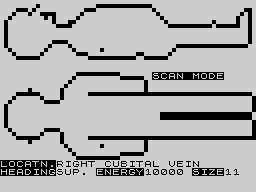
PC MICROPEDIA VOL 13 PART 3 SOFTWARE Christmas Software Buyers Guide SOFTWARE BUYERS GUIDE SOFTWARE SELECTION Whether you've just bought a personal computer, had one for some time or are expecting one on Christmas Day, one thing you'll be looking for is some good software to ease the digestion of the Christmas fare or to stave off boredom during the re-runs of old films on the TV. In this Micropaedia we'll give details of how to select the best value programs for your money, as well as a list of the best games we've reviewed in our pages this year. The first thing to do is look carefully at your needs. Software can be divided roughly into a number of areas such as: applications, utilities educational and games. This list is not comprehensive and there are bound to be some overlaps. Applications: This covers word processing, database, accounting programs and so on. These are designed to take the slog out of paper work, it you're looking to make typing easier then you must bear in mind that there's no point buying a word processor unless you have a printer. You should also ask: - Does the program give an adequate screen size, ie between 40 and 80 characters? - Does it respond quickly when a word runs off the end of a line? How easy is it to use and is the documentation clear? - Will it verity your text once you've saved it onto cassette? - Can you print more than one copy of the text easily? Databases: If you've reached the stage where you've got so many cassettes or records that you can't keep track of them, then you might consider looking at some database packages. If all you need is a simple card index, then you might be better off buying just that. Databases on micros can be misapplied quite easily. The problem with a card index is that you can retrieve the information in one of two ways: by picking a card from its main heading or by searching the entire set from start to finish. A card box is good for people's names and addresses etc, but no good if, for example, you wish to find out which of these people live in a given town. The main advantage of a computer database is that you can select cards ('records') on a number of criteria. For example. If you run a club you could pick out all the members who are late with subscriptions and who live in a certain town. The main limitation of computer databases is that you can't usually keep more than 300 cards at a time. If you have a cassette-based program you will have to SAVE and VERIFY the database every time you alter it - this can be a real pain. The questions to ask here are, will it really save you time and effort? What is the maximum number of records you can keep on it at any one time? How many separate pieces of information can each 'card' hold? (eg product description, code value, number in stock, reorder limit.) How many characters (letters) are you limited to for each record? Accounts: It's at this time of year that you are most likely to be feeling the pinch, financially. Investment in a home accounting or bookkeeping package may help with the management of money matters. In this area you will also find programs that help you calculate heat losses which may help you save money by proper insulation. As with the database programs, the most important question relates to your needs - will the program really save you time and effort? Would it be easier, quicker and cheaper to use a calculator, pen and paper? Utilities: These are programs for the more serious hobbyists, who enjoy developing their own programs and finding out more about their machines. Perhaps the first thing you should consider in this area is another language. Basic is a good language for learning about programming but it shouldn't be the only string to your bow. Forth is now available on most micros which allows you to write arcade games which run very fast indeed. Pascal is becoming increasingly popular on a variety of micros and most versions will give you a good grounding in this structured language. Rarer but just as interesting are, Logo, Lisp and Prolog. If you want your programs to go faster but don't want to learn another language you should shop around for a compiler. This is a program that will convert your Basic into machine code. This has the advantage of speeding up the program and making sure other people can't steal those routines that took you hours to code up. Certainly one thing most programmers will find of enormous use is a 'toolbox' of some kind. There are as yet only a few of these about due to their immense value more are being launched every week. Toolkits generally include REM strippers - to take out all the REM lines needed during program development. This can make for great memory savings if space is tight. If you're lucky a toolkit may also have a packing routine which takes out all unnecessary spaces and in some cases joins lines up to save space. An 'unpacker' should also be provided. If you're interested in working at the heart of the computer, you'll be looking to machine code. In that case you'll need an assembler at least. This saves you the slog of having to convert op-codes to hex, or calculate branches and offsets. A disassembler does the opposite - takes the hex codes from memory and shows you the op-codes. You'll need both of these for getting right down to it and so it is probably worth considering a full monitor system. A good monitor should combine an assembler and disassembler and provide a machine code toolkit with such facilities as, block moves of memory, trace functions, break point settings and so on. The more functions the monitor has the more useful it will be... and the more expensive. Education: In the last few months most of the major educational publishers have launched educational programs. These include, Heinemann, Griffin and George, Macmillan Longman and so on. There is also a lot of software being produced by smaller companies like Chalksoft and Widgit Software. The standard of software in this field is probably more variable than in other areas, some is dreadful, some excellent. Five-Ways is a software company that has produced programs for both Heinemann and Macmillan. Its programs have set the standard by which others should be judged, so try to see them. They are available on Spectrum, BBC and RML380 from retailers, who should be prepared to demonstrate any programs in stock. Games: There used to be a clear division between adventure and arcade-type games. This has been blurred over the last few months by programs which use ideas and techniques from the two types. Arcade-type games can be subdivided into those that mimic the 'real-thing', games like Invaders/Galaxians, Phoenix, Pac-Man, Defender/Scramble, Kong, Asteroids, Berserk and so on. The main differences between these games ties in how you move relative to the background. There has been a move of late toward 3D games. These seek to produce the illusion of three dimensions on the screen, so that things don't just move left-right and up-down, but can appear to move into the distance as well. Some of these have tried to use the brain's capacity for giving this impression from the different information obtained from the two eyes. They do this by using two coloured pictures of the same image on the screen and you have to wear coloured glasses to get the effect. These are worth looking at, but they don't always work well on all TVs. Other games use perspective transformations to get a similar effect. These seem to be pointing the way to a new and exciting direction in games. Of particular note here are Lunar Crabs and Ant Attack. The main point about arcade-type games is the use of sound and colour graphics on the machine. Don't be misled by the packaging. Sometimes the cassette cover gives the impression that the game uses stupendous graphics, but you'll find that this may be an artist's impression of the title and bear no relation at all to the pictures on the screen. To avoid this, look in the magazines to find reviews accompanied by a 'screen-shot' - a photograph of the game being played. Sometimes you'll find one of these on the inside cover of the cassette. Adventure games are often 'text-only'. This means that there are no pictures at all. In these you have to type in instructions such as 'go west', 'get rifle', 'open door' and so on. The idea is that you have to complete a quest which might involve finding some secret treasure or simply finding your way out of a labyrinth of rooms and corridors without being killed by some unsavoury thug. Often you need to have picked up items before you can proceed very far - for example, you may not be able to read a crucial message (or even be told it's there) before picking up and/or using a torch. The best of the strictly text-only adventures should have a very large vocabulary. The program should recognise ten verbs as a rock-bottom minimum and at least twice as many objects. There should also be many locations to move to and from. The best way to find out about these is, again, to read through reviews of the programs or to look at the cover or instruction manual. The problem with this is that some suppliers deliberately include very little detail about the words you can use, or the objects. One of the main points about an adventure game is that you are supposed to work out all this information for yourself. There have been a number of games released recently which might be termed 'extended adventure' games. In these you get a picture on the screen of the room you're in and possibly some extra information at the foot or to one side of the screen. Of particular note here are games like Valhalla. In this, you play the role of a wanderer in the Norse Gods' kingdom. The screen is split into two sections - the top shows your location, yourself and who/whatever might be present. The characters move around rather like those in a cartoon. The lower screen is used for entering commands and getting information about who's who or what's what. The point is that the characters have lives of their own and will move around without your doing anything at all! Also in this vein are the Oracle's Cave and the Hobbit. There are more and more games breaking into this new territory every week. One to watch out for will be Alice in Wonderland from Audiogenic for the Commodore 64. Adventure games require more wit than dexterity and it's easy to get addicted to the better ones, rather like getting completely taken up with a film or book. Try to see them in action before buying and bear in mind that the first few times you play them are likely to provide as much frustration as excitement while you're getting familiar with the basic framework. The better games allow you to do more than just enter two words in the usual verb-object pair. Some will even allow you to enter such complex phrases as telling one of the characters to do something for you! General rules: Avoid buying programs on the strength of advertising or covers. Some suppliers can generally be relied on to produce high-quality games, but everyone makes the occasional mistake! Check the top-ten charts in different magazines and look through back issues of magazines for reviews. Ask to see games before you buy, but make sure you know what sort of game you're after, or you'll waste a lot of your own time and that of shop assistants. TRIED AND TESTED FOR THE SPECTRUM NAME: Psst TYPE: Arcade PRICE: £5.50 PUBLISHER: Ultimate FORMAT: Cassette SYSTEM: 16/48K NAME: Jumping Jack TYPE: Arcade PRICE: £5.50 PUBLISHER: Imagine FORMAT: Cassette SYSTEM: 16/48K NAME: Cookie TYPE: Arcade PRICE: £5.50 PUBLISHER: Ultimate FORMAT: Cassette SYSTEM: 16/48K NAME: Magic Mountain TYPE: Arcade PRICE: £4.95 PUBLISHER: Phipps FORMAT: Cassette SYSTEM: 48K NAME: Zzoom TYPE: Arcade PRICE: £5.50 PUBLISHER: Imagine FORMAT: Cassette SYSTEM: 48K NAME: Splat TYPE: Arcade PRICE: £5.50 PUBLISHER: Incentive FORMAT: Cassette SYSTEM: 48K NAME: Football Pools TYPE: Utility PRICE: £5.95 PUBLISHER: Hartland FORMAT: Cassette SYSTEM: 48K NAME: Pimania TYPE: Advent PRICE: £10 PUBLISHER: Automata FORMAT: Cassette SYSTEM: 48K NAME: Horace Goes Skiing TYPE: Arcade PRICE: £5.95 PUBLISHER: Psion FORMAT: Cassette SYSTEM: 16K NAME: Mad Martha TYPE: Arcade PRICE: £5.95 PUBLISHER: Mikrogen FORMAT: Cassette SYSTEM: 48K NAME: Jetpac PRICE: £5.50 PUBLISHER: Ultimate Play The Game, [redacted] SYSTEM: 16K FORMAT: Cassette OUTLETS: WH Smith, John Menzies, Sinclair Dealers, mail order. This is a classic game that tops Space Invaders and Pacman and offers lots of fun. You're the chief test pilot tor Acme interstellar Transport and your job is to go to various planets to assemble rockets. Bits of elements, jewels and gold fall from the sky which you snatch, but the aliens get a bit peeved because you've grabbed their worldly goods without so much as paying the V in VAT. And there's only one way to settle the matter - shoot them with your Quad Photon Laser Phasers. Before you can make a quick getaway, you have to fuel a rocket with six fuel pods which drop from the skies. Each planet has its own share of nasties that try and get you. The first planet has fire-ball type creatures, the second furry creatures, the third vicious bouncing spheres and the fourth some strange looking little insects. With its good graphics and interesting content you'll have plenty to do to fill those free hours. NAME: Valhalla PRICE: £14.95 PUBLISHER: Legend SYSTEM: 48K FORMAT: Cassette OUTLETS: Some retail, mail order from Legend, [redacted] Valhalla is half epic, half cartoon strip and its Norse setting is ideal for those with the fjords in their bloodstream. With 200 crowns and your brains you have to wend your way through Asgard, Midgard and Hell to pick up a key, a ring, a shield, a sword, an axe and a helmet. First of all you need to get yourself well equipped. Armour is a must. So are the bare essentials like food and drink. And as you progress through the adventure the condition of your soul is rated. The graphics are good and varied, and the responses can be slow, but this is because the machine is processing the moves for a number of characters not just you, and the screen features a superb cartoon effect. The program also allows you to stack instructions. For example, you can type in get food, eat food, go north in quick succession then see your character do all these. I won't tell you how to solve the quest. What I will tell you is that Valhalla is well worth the rather substantial cost. NAME: Manic Miner PRICE: £5.95 PUBLISHER: Bug-Byte, [redacted] FORMAT: Cassette OUTLETS: High street shops For superb graphics and sound, humour and overall addiction there's little can beat Manic Miner for the 48K Spectrum. It scored top marks in Gameplay (Issue 23) and subsequently soared to become a bestseller. Using keyboard or joystick, you manoeuvre Miner Willy through caverns in a long-forgotten mine-shaft near Surbiton in Surrey, collecting keys to unlock a great fortune on resurfacing. Press ENTER and you're in Central Cavern beginning the great trek upward. The game needs a lot of thought, practice and timing. Robots, ducks and dozens of other creatures. Including humming penguins patrol the caves, platforms crumble and conveyor belts whisk Willy off in quite the wrong direction if he's not quick. NAME: Rescue PRICE: £5.95 PUBLISHER: Computer Rentals, [redacted] FORMAT: Cassette SYSTEM: 48K OUTLETS: Smiths, Menzies, Boots, Mail order An adventure that has all the ingredients - graphics, variety, plenty of surprises, good plot and ease of play to make it a winner. You have to rescue a princess who is in a castle, and you have four levels of skill from which to choose. You decide how to rescue the princess, you decide what tactics to employ, you decide what objects to use and how to use them. The game is played on a 'board' made up of concentric circles, linked together like a spider's web - and a fresh board is created every time you play. While you play you can keep tabs on the position of your enemies. The two guards keep on the move at the same time as you, and if they catch up with you, you're well and truly dead. NAME: Fantastic Voyage TYPE: Shootout PRICE: £5.95 PUBLISHER: Foilkade, [redacted] FORMAT: Cassette OUTLETS: Mail order MACHINE: ZX81 If you fancy a trip through the veins of a human body, battling against white blood cells - try Fantastic Voyage. You are injected into a right arm and must make your way to the brain by navigating through the body's bloodstream. Your aim is to destroy a bloodclot. On this interesting theme, forget all the medical jargon about veins and arteries you go straight into the scan mode to give a front and side view of the body. You identify your position by a tiny dot which represents a submarine - a strange object to be floating around in a body. Also displayed is your energy level, direction and size, which gets larger the longer you stay in the body. The movement of the submarine is well done, as you see the artery walls moving past you. But destroying white blood cells is none too easy. They jitter about the screen at a rapid rate and you have to use laser power sparingly. This is a very good game with clever programming. There's a good deal to do and you won't get bored. NAME: Adventure 200 TYPE: Adventure PRICE: £5.95 PUBLISHER: Foilkade, [redacted] FORMAT: Cassette OUTLETS: Mail order MACHINE: ZX81 The ingredients are here for a really gripping adventure. Disguised as a peasant you venture into the evil land of Grunlock to recover your King's stolen treasure. And you'd better not come back empty handed or the King will have you killed. Starting west of the palace you give simple commands for directions you want to move. After every move, the ZX81 displays where you are, what's happened, and the obvious paths you can take. During your journey you are offered several things, such as a lamp and a fish. And what you pick up affects your progress. A very interesting adventure.
Personal Computer News #7Apr 1983 · p.535/54/55/54/54/5
Lasting Appeal 5/5
Playability 4/5
Use Of Machine 5/5
Overall Value 4/5
David Janda 4/5
NAME: Fantastic Voyage SYSTEM: ZX81, 16K PRICE: £5.95 PUBLISHER: Foilkade, [redacted] FORMAT: Cassette LANGUAGE: Basic and machine code OUTLETS: Mail order. ENEMY WITHIN A shootout with a real difference - that's Fantastic Voyage. Instead of facing waves of lamb-chop-shaped invaders or mincing meteorites, you pilot a microscopic submarine through the veins of a human body, battling against rogue white blood cells to hunt and destroy a blood clot in a brain capillary. OBJECTIVES You are injected into a right arm and must make your way to the brain by navigating through the body's bloodstream. Your aim is to destroy the blood clot and to do so you have four difficulty levels. FIRST IMPRESSIONS The instructions you get are on a very small piece of paper giving details of the commands you may use in the three modes of play, and a map of the blood circulatory system you must travel along. Some heavily medical terms are used for the different veins and arteries, and I couldn't understand half of them! IN PLAY I went straight into scan mode, which gave me a side and front view of the patient. My submarine was a tiny dot in the right arm, where I had been injected. Also on display were my energy level, direction, and size, which gets larger the longer you stay in the body. After a good while looking at the map. I managed to get to the right brain capillary. So I switched to view mode, where I used the 'L' and 'R' keys to steer along the artery; the movement of the submarine is very well done, as you see the artery walls moving past you. Suddenly a bug-eyed monster - actually a white blood cell - moved in front of my sub, and I was automatically put into attack mode. This gave me control over the 'Z', 'X', 'N', 'M', and '8' keys to let me move up, down, left, right, and fire, as well as display the rogue white cell in front of me. Destroying white blood cells is none too easy. They jitter about the screen at a rapid rate and you have to use laser power sparingly, as it consumes valuable energy. Still, I got rid of it in the end, and the computer put me back into view mode to carry on the clot hunt. But I never found it! VERDICT A very good game indeed, blood clot or no blood clot. Not only is the theme interesting, but there's some very clever programming at work here. There is a good deal to do. My only grumble, apart from the missing clot, is that there are too many white blood cells to be dealt with - and surely losing all those cells can't do the patient too much good?
Information1
- Popular Computing Weekly #12Mar 1983 · p.39
Licensed from
- Fantastic VoyageMovieunofficial20th Century Fox
Reviews from people here
Sign in to write about this, or make an account. It takes a minute and lets you correct the catalogue too.
No credit, description, tag recorded.
Sign in to correct or add to this.
Hold the rights to this and want it taken down?