
Nidd Valley Digimouse
Hardware: Mouse
Nidd Valley Micro Products Ltd · 1986 · Pound sterling 34.95
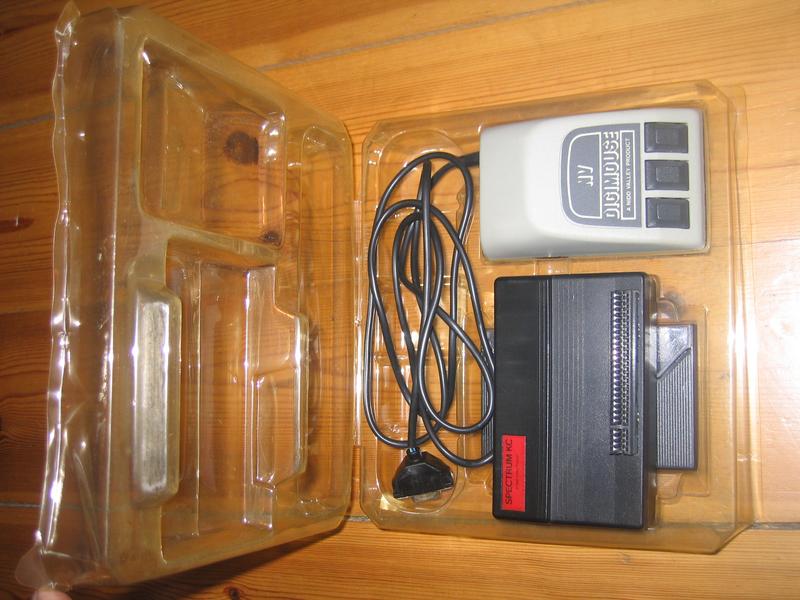
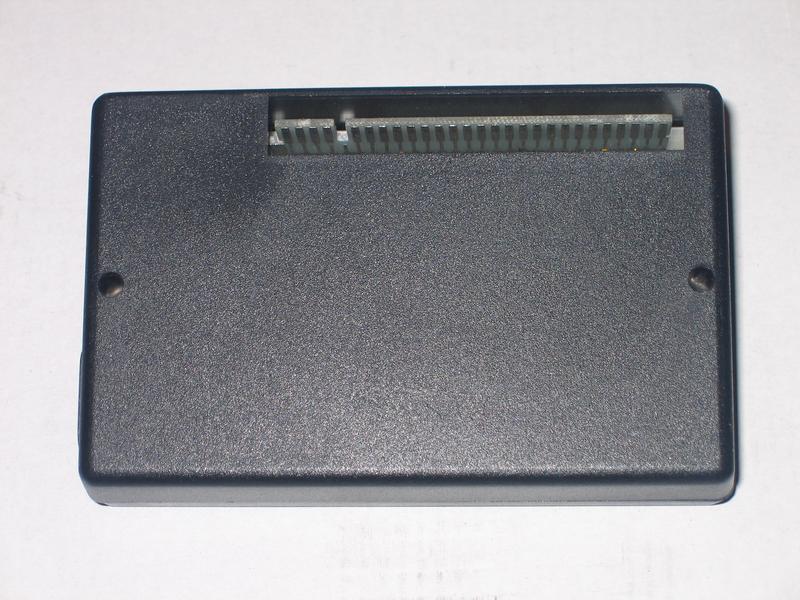
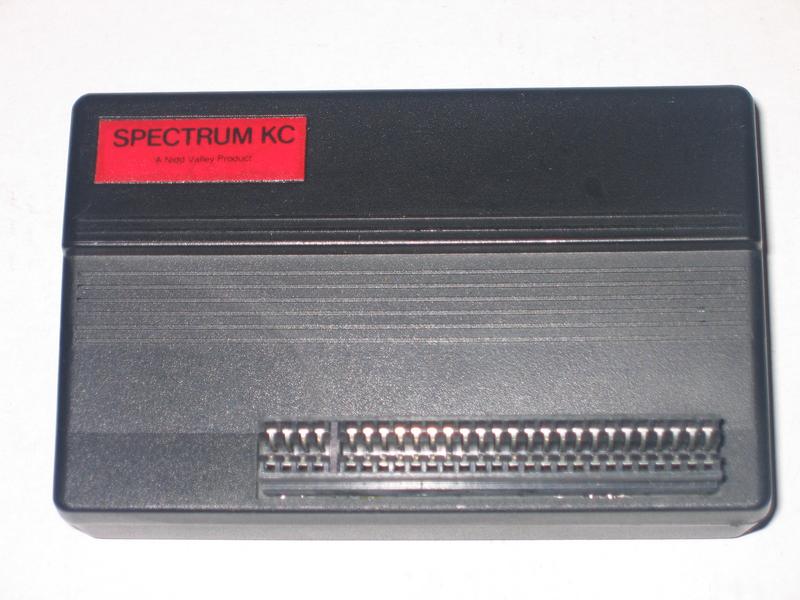
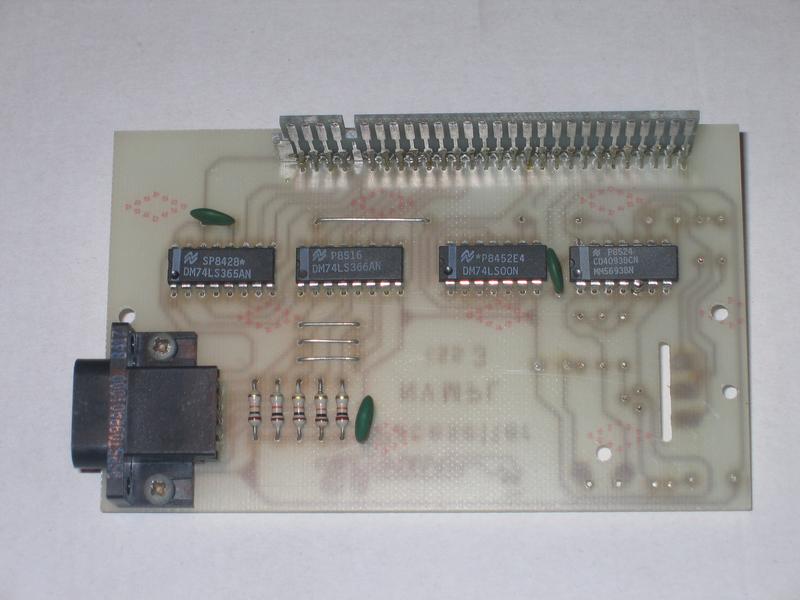
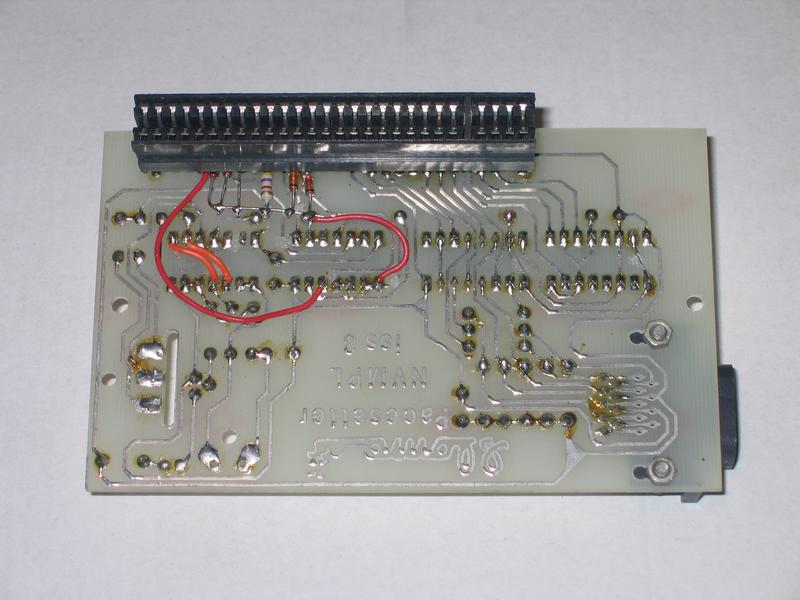
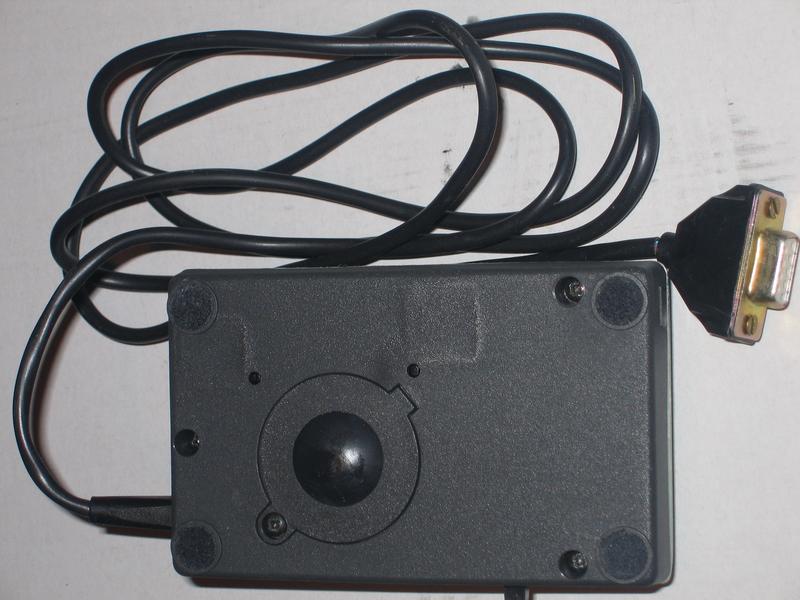
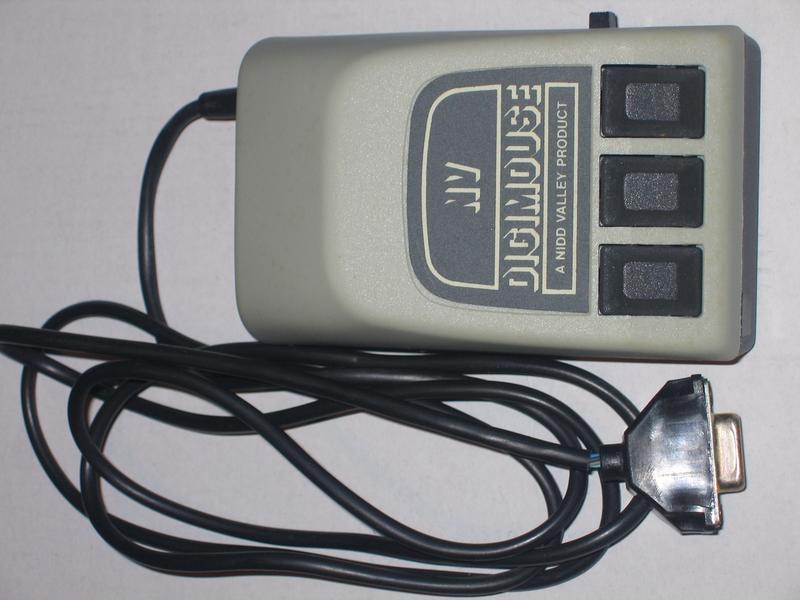
Mouse that uses digital pulse output for more accurate movement. Requires one of two interfaces to work, The basic low-cost version (£14.95) or the professional version incorporating a Centronics port and direct link to the Nidd Valley programmable keypad. (£34.95)
Discussion
Nobody has started a thread about this yet.
Remarks
Release price: £34.95 (interface £14.95)
Releases
- 1986Nidd Valley Micro Products LtdPound sterling 34.95
- 1985Nidd Valley Micro Products Ltd
Play
- Joystick(NiddValleyMicroProducts).tzx.zipTape image 5 KB
Files and rights
No permission is on record either way. Screens and pictures are copied here on a take-down basis: if you hold the rights and want something removed, say so and it goes.
In the magazines 11
Your Sinclair #30Jun 1988 · p.96
Phil South
RAGE HARD! More twiddling with the Magic Screwdirver with Phil Snout, as he reviews two squeaky new mice for the Speccy. Mice have become more and more widespread in computing. You might say they're breeding like rodents, but jokes of that magnitude are a bit hard to take, so let's not. Instead let's quickly turn our attention to two new mice for the Spectrum, namely the British built Digimouse from Capri Marketing, and the new Kempston job, made in Switzerland. Why should you want to use a mouse? Of course, if Sir Clive had wanted us to use mice, we would have been born with one attached to our user port. Well, yes, the Spectrum wasn't designed to use mice, but then again, when the Spectrum was originally designed, mice didn't exist on any computer. And neither did 128K memories or 3" disk drives. I rest my case. But the reason you would want to use a mouse is simple. It makes life easier. Especially if you are interested in graphics, and one thing the Speccy is really good at, is fast colour graphics. So why not unleash your creative bent (fnar), with a mouse. All the top graphics packages support one mouse and sometimes more. So what's stopping you? You don't know which one to buy? Oh dear. KEMPSTON MOUSE A funny old firm, Kempston. In spite of being quite a small firm, and not producing vast quantities of joysticks, it's managed over the years, to become something of an industry standard. What with joysticks, mice and interfaces and now the Kempston Mouse II, where will it all end? This latest package includes everything you need to get mousing: a mouse, an interface and a piece of software called Toolkit. The new mouse is a precision designed piece of kit from the land of skiing holidays and funny shaped sausages. (No, not Scotland, silly, Switzerland.) The name on the bottom of the mouse is Logimouse(TM) and design is credited to Antoine Cahen and Partners. So a designer mouse, eh? The mouse sits on your desktop on four waxy plastic pads, two tiny round ones at the front and two fat rectangular ones at the back. The ball inside the mouse is easily removed for cleaning by twisting a small round plate in the base, and the plate and the ball just fall into your hand. The ball itself is of silicone rubber, with I suspect, a tiny metal core inside it to give it weight. The two buttons on the top and front of the mouse (the end that the lead comes out of), are flat and square, and not only lend a modern look to the mouse, but are precise and fall conveniently under your fingers as they rest on the top of the unit. Whipping the unit open with my magic screwdriver revealed the guts of the mouse. On the circuit board, two sealed microswitches and two optical potentiometers do all the work, while a single chip does all the thinking. (Interesting to note that there is another switch in between the two used, indicating that the board was originally designed for three buttons!) All in all, the construction has a feel of solid reliability, and stands alongside the mice supplied with more expensive computers, even making some, notably the Atari ST's one, look pretty flimsy. The program which comes with the package is nifty too, because it allows you to construct your own Windows and Icons from Basic, and access the mouse interface. But the test program included with the package I examined, told me that when I pressed the left mouse button. I was in fact pressing the right button, so I figured anything else it told me was of dubious merit. Okay, so how does it feel in use? Pretty good. The switches are smooth, and the ball rolls sweetly across even the roughest desk. The mouse performed effortlessly with my preferred graphics programs, The Artist and Advanced Art Studio, and even did a super little job in Basic. One highly recommended aspect of the Demo program is the calculator, a full screen piccy of a scientific style calculator, where you click the buttons on screen. The Kempston Mouse is a well made and useful piece of equipment, and worth looking at if you're into graphics on the Speccy. DIGIMOUSE The Digimouse is made in England by Nidd Valley and distributed by Capri Marketing. Nice to see a British production in this line, although it has to be said that AMX was there first. Nidd Valley is very strong in the BBC micro field, and its mouse for that machine has been a best seller. So let's have a look. The main worry here was the size of the thing, a big chunky box with three buttons on the front (this time the other end from the flex), and a slide switch on the side. Under the mouse there is a vaguely keyhole shaped hatch, which gives you access to the mouseball... after you've undone the crosspoint screw holding it in place, that is. There are four felt pads on each corner of the base, affording smooth movement on most surfaces, except slightly rough ones like untreated wood, where it catches a bit. The slide switch is on the left hand side of the unit and has two positions. This is the speed control, altering the speed of response for the pointer on your screen,for graphics or menu selection. The mode of operation is supposed to be with your hand on top of the mouse, with your first three fingers on the buttons, and your thumb on the slide switch. I found this a bit unnatural at first, a bit like holding a Konix joystick, where you can only hold it one way and you wish you could change hands. Still, like most things, you get used to it after a white, although it's never very relaxed. Once more into the casing, dear friends, and my magic screwdriver reveals the very different internal construction. One main L-shaped circuit board, containing one central chip and the three button switches, plus the slider on the side. The architecture of the machine isn't as tidy as the Swiss mouse, with multi-coloured wires all over the shop, and a floating circuit board, which is secured inside the lid of the device with a piece of double sided padded sticky tape. This isn't as duff as it sounds, as all but the most expensive hi-fis are actually made like that as well, so the NV mouse isn't alone in that little design feature! The x and y potentiometers are mechanical, so far as I could tell, and firmly sealed too, to prevent any grit mucking up their little graphite plates, I'll be bound. The ball housing is massive, and after unscrewing the plate in the bottom, I discovered why. The ball, which I first thought was plastic, due to the seam on it, was in fact a big polyurethane affair, and not as slick and non-grip as it appeared. Running the thing around my desk, it actually did a fair job of wheeling the pots round, so no complaints about the mechanism. Basically it does the job, even if the design is a little 'kludgey'. In spite of all my initial misgivings about this mouse, as compared to the admittedly better designed and more expensive Kempston, I actually liked it quite a lot. The package that came with it was nicely done, and a sizeable part of the booklet described the various functions of the program. One thing which the book didn't tell you much about, was the program's use of memory (which the Kempston one did, actually), and how to use the mouse with your own programs, or indeed anybody else's. (No IN=61, or POKE howsyafather). It does say that you select 'joystick' on any program you might want to use, but it doesn't actually say which type. But having said all this, the Digimouse is an economically sound and solidly built device, with a great future ahead of it. Good work, NV. OKAY, CLOSE 'EM UP, NURSE Yes indeed, ladies and gentlemen, so there you have it. Now if you don't know everything about these two mice, you must have been asleep for the last page. The verdict? My personal taste is for the Kempston, but that's 'cos I'm a posey git with more money than sense. If you've got slightly less money, then by all means go for the Digimouse, 'cos you wont get better for the money.
CONTACT BOX Kempston Mouse Kempston Data Limited [redacted] Digimouse Capri Marketing Ltd [redacted]
FEATURES KEMPSTON Buttons: Two Potentiometers: Optical Ball: Silicone Rubber No. of Chips: One No. of PCBs: One Feet: Waxy Plastic Interface Type: Flat Dimensions: 9.5 x 6.8 x 2.7 Price: £49.95 DIGIMOUSE Buttons: Three Potentiometers: Mechanical Ball: Polyurethane No. of Chips: Five No. of PCBs: Two Feet: Felt Interface Type: Upright Dimensions: 11 x 6.5 x 4.7 Price: £45.00
Your Computer #8Aug 1986 · p.56
Mary Sargent
A TALE OF MICE, JOYSTICKS AND THINGS Mary Sargent gets to grips with joysticks, trackerballs and mice. Books could be written about joysticks - and have been - but finally it is a matter of personal preference. If you play many games on your computer you must buy a stick which feels correct for you. You may sit well back from the TV screen so you need to consider the length of lead you have with the joystick. It may vary from 3ft. to 8ft. depending on the model. The second consideration is if it will tolerate heavy treatment. Internally, switched joysticks have either pressure pads, leaf springs or micro-switches. Those with micro-switches are likely to last longest. Names and models to conjure with are Wico, which also makes joysticks for much-hammered arcade machines; Flight Electronics, which also makes joysticks for industrial use; and Spectravideo, whose Quickshot range is much-favoured, especially by manufacturers offering interface-with-joystick packages - for the Spectrum, of course. At least one company traces its fortunes directly from the lack of a Spectrum joystick port. JOYSTICK PORT Newcomers to the scene are the mercury-switched The Stick, the hand-shaped Konix Speedking, and the Cheetah cordless R.A.T. Not all makes and models will be available for all models of computer. There are pitfalls such as the auto-fire facility, designed to make shooting aliens easy but which can cause the fire button to stop working on some micros. If you want a joystick, the advice is to try it in a shop or buy one on the recommendation of a friend and be prepared to spend between £10 and £20. Two trackerball contenders are the analogue ball from Wigmore House, an import from the East selling for around £22, and the optical/digital Marconi RB2 ball at £59. From there the peripherals begin to become selective about the micro into which they are plugged. The analogue ball will run on the BBC and the Commodore 64. Do not expect any software with it, though it should run on any analogue joystick software without too much difficulty. The Marconi ball, available for the BBC, has its own software on cassette. There are utilities, so that the ball can be used not only from Basic but can also take over the use of cursor keys in word processor programs such as Wordwise and View, and a stand-alone drawing package, Paintball. For Master 128 owners, a supplied ROM ensures that the trackerball works automatically with the View family software. The advantage of trackerball over joystick is a matter of the degree of control. It is a precision-made item, a fact reflected in the prices, and the Marconi version compares well to certain of the rodents available. It is a realistic alternative to the more fashionable mice, if only because its size ensures a finer manipulation of the cursor. It is not dramatically cheaper, however, and the final choice, yet again, is a matter of user preference. There is something infinitely user-friendly about the name of the mouse which, after all, is just a glorified piece of plastic designed to take you from one part of the screen to the other in the shortest time. There is a definite art to calculating the distance your mouse travels vis a vis the results on-screen, and some users never manage to appreciate the discrepancy between hand movements and computer reaction. Nevertheless, mice are breeding and now Wigmore House is marketing a furry one, there could well be a population explosion which will render joysticks and trackerballs as obsolete as the Oric. It was AMS, of course, which pioneered the home-micro rodent by developing a mouse system for the 32K user-RAM/single-disc BBC. That resulted in the affordable Mousepaint and WIMP utility software packages which had hitherto been seen only on the Apple computers, Macintosh and Lisa. Software has always been an integral part of the appeal of a mouse and AMS has produced a great deal of it since the AMX Mouse nibbled its way into the BBC micro in January, 1985 with a sideways-ROM and paint-package at the then outstanding price of £90. Other manufacturers of mice have taken appropriate steps to follow the AMS lead and have, in some cases, made their mice AMX software-compatible. That may well prove advantageous for the user as there is every chance that a common standard for mouse hardware will be adopted based on the AMS three-button design. Atari, with its 520ST series computers, has anticipated the fact that one day all micros will be mouse-driven and has included a neat and well-made mouse, with WIMP software, in the price of its machines, leaving the older generation of micros - BBC, Commodore 64, Spectrum and Amstrad CPCs - to be served by peripheral manufacturers, whose wares are shown, as usual, in the buyers' guide table. Depending on which micro you own you may have little or no choice about which mouse/software package you can select. The Amstrad has only the AMS package, which was unfortunately not available for review at the time of writing, while the Spectrum fares a little better with the AMS package and a Kempston mouse. The Commodore has three mice and so has the BBC. Points to look for when mouse-buying are the physical construction of the unit and the availability of compatible software, The Kempston mouse for the Spectrum is typical of the breed, being a two-button rubber-coated ball device. As with most mice, the ball can be removed easily from its cavity, which is essential since all mice tend to collect fluff, biscuit crumbs and other foreign bodies; if they cannot be shaken-out, the operation of the mouse becomes erratic. BALL SLIDES The inner works reveal that no short cuts have been taken in its design. There are brass spindles, ball-race bearings and a sprung idler wheel. Two PCBs hold the opto-electronics, a few other small components and the two click-switches. A black box interface is needed on the Spectrum, since that micro lacks any ports of which a mouse could make use, but even with the extra hardware the mouse costs a reasonable £69.99, which includes the highly-successful OCP Art Studio software. The efficiency of the AMX mouse is hampered by its uncoated metal ball which tends to slide on many surfaces and that has attracted much criticism from the opposition. On the proper surface - a rubber-compound sheet is ideal - it is reliable. The AMX Mouse/SuperArt package costs around £75. SuperArt is one of a number of offerings from a company which constantly updates and improves its software. It is excellent if you buy after the packages have been field-tested but not so good if you have one of the early versions. AMS is helpful about upgrades and advice but detailed review is difficult, since an assessment of one version of a software offering may not be relevant to later issues. I consider PageMaker to be its best product, since you can use it for straightforward artwork as well as for its more widely-promoted magazine-making role. ANAMOUSE Nidd Valley entered the mouse stakes with devices for the BBC A, B and Master series computers. Anamouse is promoted as being "not just another mouse" but a "new concept in positive mouse control," which does not affect the results so far as the user is concerned to any noticeable degree. What is interesting about it, though, is that it plugs into the analogue port on the BBC, thus making it possible to have something else plugged into the user port. Digimouse, the second of its offerings, is an optical device which is in direct competition with the AMX and the Wigmore Megamouse. As such, it is highly competitive on price and will run AMS software. A large diameter rubber ball is set in its socket with no play whatsoever. That makes for a very stable mouse arrow on the screen but the hand pressure needed to move it is more than is needed for other mice. Digimouse has simple interface software on cassette and can run the large software offerings associated with AMS and Wig- more House. Versions of both Anamouse and Digimouse for the Spectrum 128, the Commodore micros and Amstrads are promised. Each mouse, which is extremely well-made, sells for £34.95. Then there is Megamouse for BBC and Commodore 64, the one and only furry rodent of this selection. It has a large felt pad on its underside on to which a square of Velcro can be fitted. PROTECTION That protects the rubber-coated ball when the mouse is not in use and is genuinely useful. The cost is around £63 but for that price you have a truly ergo-dynamically-designed peripheral which is a joy to use. The technically-minded may note that it has a heavy rubber-coated ball and a low centre of gravity. Software offerings accompanying the mouse are all opfional. Cadmouse is a drawing package with a slight slant to technical drawing - dimensions and centre line can be placed on engineering drawings and there is provision for 45-degree hatching - but the handbook is brief and at £29.90 it has not a great deal to commend it. Alternatively, the Mega-mouse/PearTree Artist package may be purchased for £99 excluding VAT. The Peartree Artist is a 16K ROM for the BBC and is an excellent colour-drawing package with animation facilities. For the serious user, it would undoubtedly be money well spent.
JOYSTICK There are two basic types of joystick, the switched (digital) variety and the analogue variety. The analogue type has two potentiometers inside it which convert the movements of the stick to a screen location. The switch type is much more akin to an aeroplane joystick - it gives directional information, rather than an absolute position. Push a digital joystick up and your space defender travels up-screen forever until you next move the joystick. Digital joysticks are inexpensive to manufacture and are ideal for computer games. PADDLES Really an analogue joystick in disguise. The name derives from the original TV-Tennis games. There, you will recall, the position of the player's bat was directly proportional to the twist given to the paddle. Why the paddle is called a paddle and not a racquet or bat is one of the best-kept secrets of the micro revolution. TRACKERBALL Effectively a low-geared joystick. It does not look anything like a joystick, of course; the user uses a finger or two to move the surface of a plastic ball, not a stick. The movement of the ball is geared down so that it needs a relatively large movement of the finger to move a small way on the screen. You lose speed of movement but gain accuracy. Trackerballs may be digital or analogue but in either case the output gives positional rather than directional information. Trackerballs need to be fairly substantial so that they stay still while you move the ball. MOUSE Take a trackerball, make it small because the intention is to move it, turn it over so it has something on which to move (the ball). and you have a mouse. That is the Darwinian theory of mouse evolution. Mice are usually digital devices. They have speed and accuracy. BITSTICK A precision analogue joystick which looks like a trackerball. Used for high-resolution drawing. It is available for the Apple and for second-processor BBC users. It is expensive. FOOTPRINT A measure of how much space the devices need to work successfully. Some joysticks are held in the hand and never touch the table. Their footprint is zero. The footprint of other devices is equal to their maximum width and depth and for the average joystick that is about 10 sq. in. The exceptions are the mice. Generally they run all over the table-top but how far they wander depends on their internal gearing. It is not uncommon to have to move a mouse some 24 inches to obtain a 4in. line on the screen.
Kempston £69.95 Kempston Micro Electronics, [redacted] AMX Mouse £46 Advanced Memory Systems Ltd, [redacted] Anamouse and Digimouse £34.95 Nidd Valley Micro Products, [redacted] Megamouse £69 [redacted] Dates Mouse - EEC £76 (Commodore 64 only). Magic Mouse - SMC £60 (Commodore 64 only). Bitstick 2 - Robocom £795 Robocom, [redacted] Trackerball - Marconi £69 Central Trade Exchange
News/Note4
- Your Sinclair #29May 1988 · p.6
- Sinclair User #50May 1986 · p.10
- ZX Computing #24Apr 1986 · p.8
- Popular Computing Weekly #8Feb 1986 · p.5
Offer3
- Your Sinclair #29May 1988 · p.6
- Sinclair User #69Dec 1987 · p.49
- Sinclair User #68Nov 1987 · p.105
Feature2
- Your Computer #8Aug 1986 · p.56
- Your Computer #5May 1986 · p.58
Reviews from people here
Sign in to write about this, or make an account. It takes a minute and lets you correct the catalogue too.
Everything ZXDB can hold about this is here.
Sign in to correct or add to this.
Hold the rights to this and want it taken down?