
Saga Soundboost
Hardware: Sound/Speech
Saga Systems Ltd · 1985 · Pound sterling 9.50
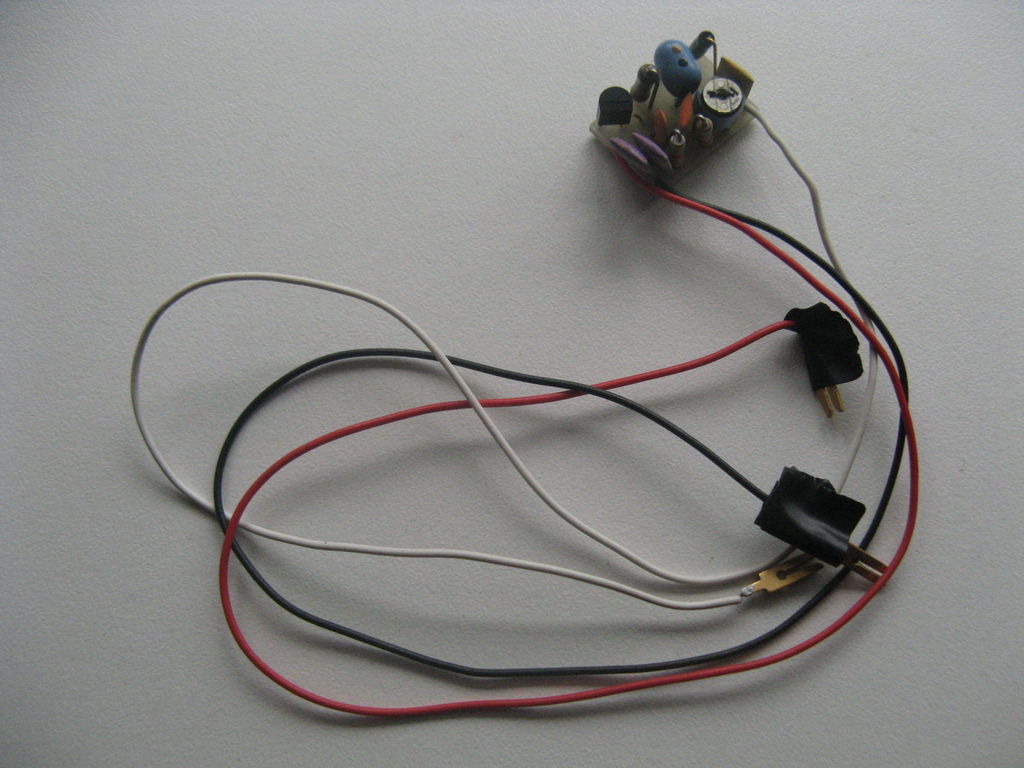
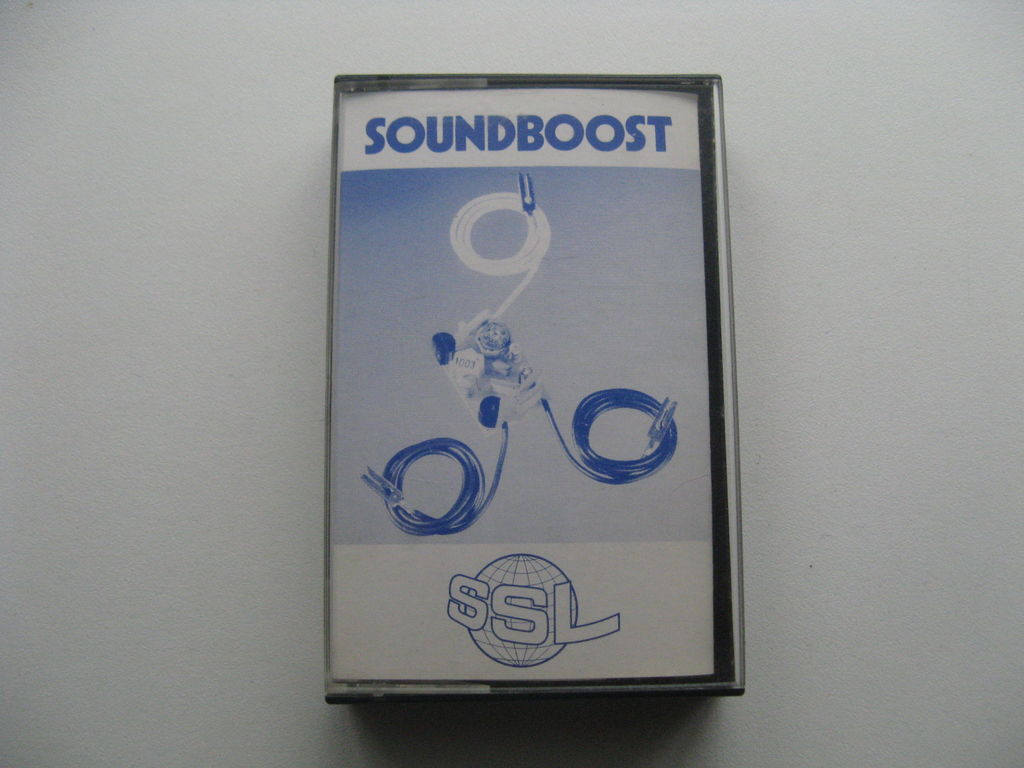
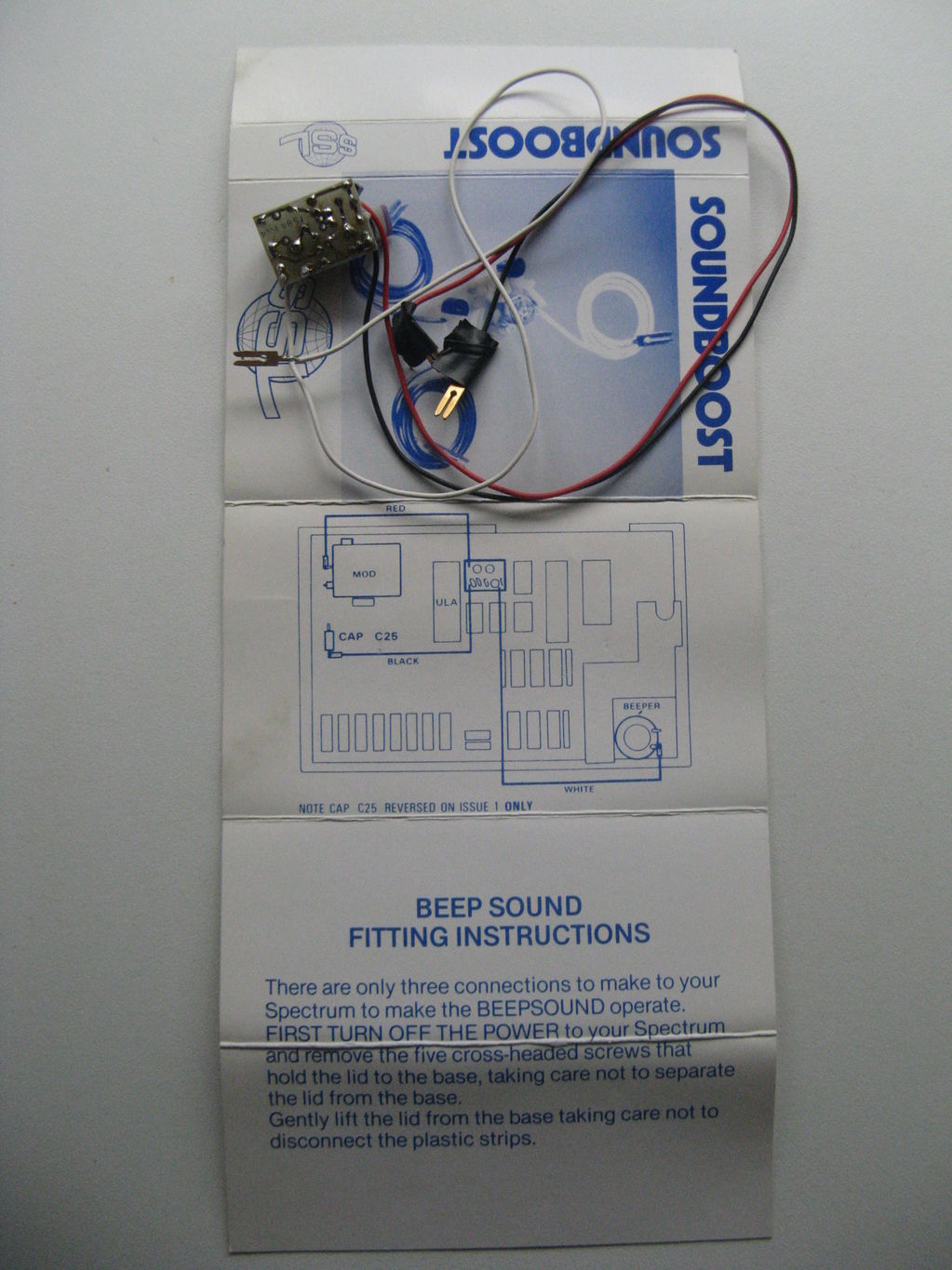
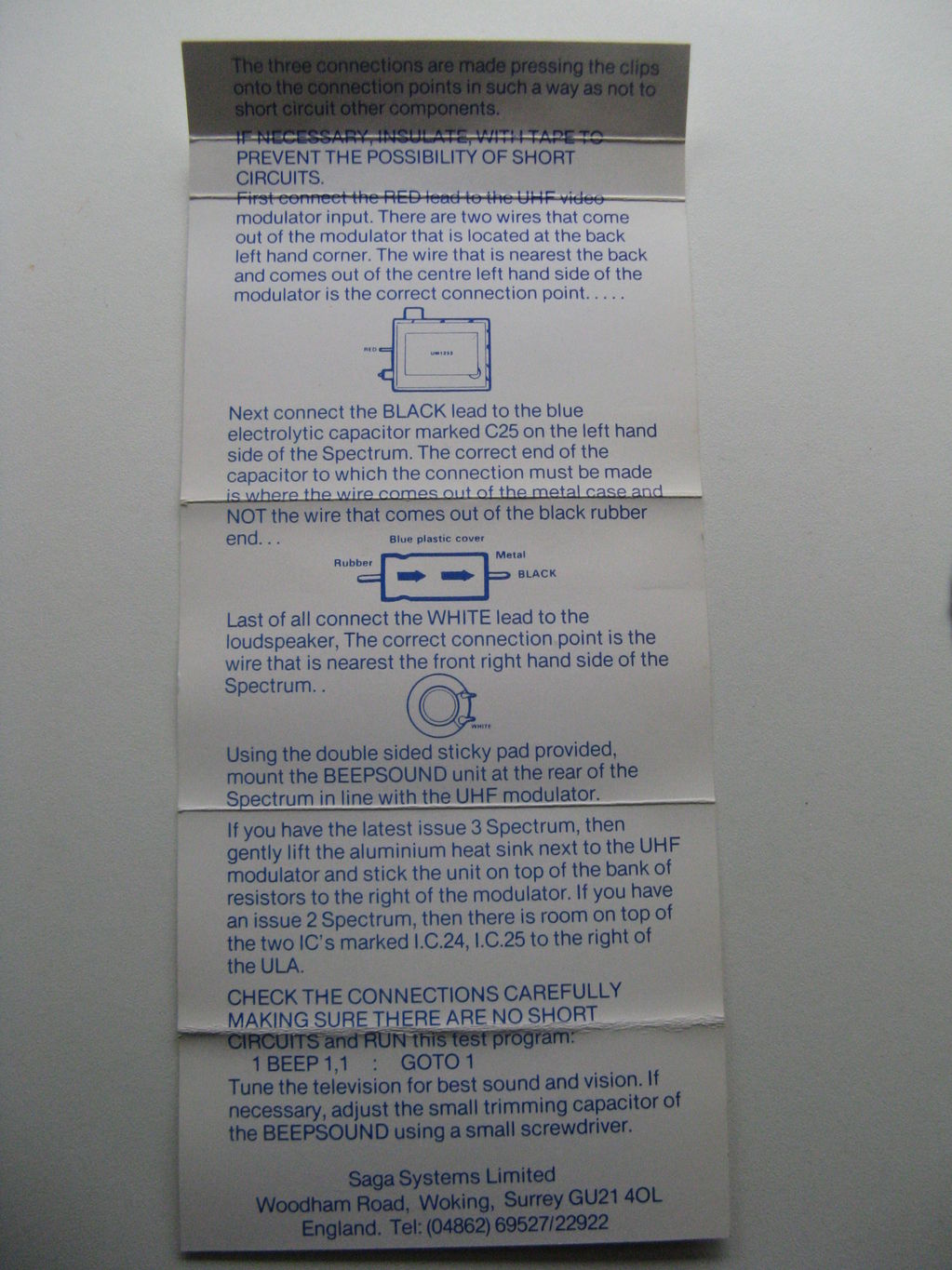
Internal sound amplifier.
Discussion
Nobody has started a thread about this yet.
Files and rights
No permission is on record either way. Screens and pictures are copied here on a take-down basis: if you hold the rights and want something removed, say so and it goes.
In the magazines 63
Your Sinclair #6Jun 1986 · p.41
Max Phillips
HARDWARE BONANZA Yeeeehaah! Max Phillips rounds up all the latest Speccy add-ons and pens them up... Saga Soundboost Saga Systems £9.95 Reviewer: Max Phillips It looks like a bionic implant. What you actually have to do is open up your Speccy, connect the three wires and gum the gummy bit onto a convenient spot. Sound can then be played through your TV set as loud as you can stand. Installing it is easy enough (ten minutes) if you don't mind losing your garan.. guara... warranty. It works well but the sound quality is still pretty basic - it's just a lot louder. If you don't want the expense of an add-on box, Soundboost costs £9.95 and comes from those friendly Saga keyboard people.
ZX Computing #23Feb 1986 · p.14
Ray Elder
'HARDWARE' 'ZX looks at some new addd-ons for the Spectrum' We are used to extravagant claims here at ZXC, and when this small wedge shaped bit of plastic with an edge connector on the thin end arrived we were not terribly excited. Even Rodney Holland's glowing letter - 'extraordinary ... grand title product...over £18,000 and eight months to develop' - only raised a knowing glance. But as a serious programmer on the Spectrum I was in for a treat, this is a little marvel! What is Microsource? Well, it is really three units in one which combine to produce one of the most powerful tools for the dedicated programmer. The unit provides you with an ASSEMBLER, a FORTH interpreter and a versatile DEBUG or Monitor. Accompanying it is a 38 page manual which provides all the instructions needed to operate the beast and is satisfactorily clear and concise. As with all similar programs no attempt to teach machine code or FORTH programming is made and the user is either already proficient or will have to learn from another source. The assembler produces standalone code which is portable while the FORTH interpreter is machine (or unit) dependent. Both can be used from within BASIC and commands for each are held in REM lines. Assembler prefixed by '!' and FORTH by '#' and BASIC variables can be used to pass parameters to and from either. The assembler is a two pass assembler and all Z80 Op codes are supported, plus a wide selection of pseudo op codes such as DEFB, DEFW etc. A useful feature is the way in which operands can be typed as BASIC expressions. When the assembler is called (by LET assemble = number) the whole program is scanned and ALL code, irrespective of its position within the program, is compiled. This can be assembled as a direct command or during RUN time. The FORTH used is an implementation of FORTH 79, is 16 bit integer and also has some unusual and useful features such as allowing the USR command to call machine code. Unlike the assembler, the FORTH compiler only compiles the code following the command, most usefully from within a program, and stops when it reaches the next Basic command. The only disadvantage with this language is that you must have a Microsource unit attached, as, unlike the assembler, FORTH does not generate code which can be used independently. Finally, the Debug utility is easy to use and performs all the tasks you are likely to require from such a program, including single stepping breakpoints and memory manipulation. Any of these features could be obtained as individual programs, but apart from the constraints of having to load them and the memory they would occupy, having all three together and available instantly makes the Microsource very powerful. You could, for example, write a program in Basic and then modify sections to FORTH or assembly so that all three types of code exist in the same program yet still be able to run and use it. A tremendous amount of thought has been put into this product, it is compatible with microdrives and Interface 1 and commands and options are included to make the best use of them. I really have nothing but praise for this device, but I did find that sometimes my bad habits caused some confusion, for instance I wrote 'JRNZ label'. The assembler insisted on the form 'JR NZ, label', but thanks to the extensive error trapping, I soon got to know its requirements and this really is a small quibble with a well thought out unit. I have no hesitation in wholeheartedly recommending this unit to anyone who takes their computing seriously. Quadhouse Computers UK, [redacted]. Price: £14.00 BIG BEEPS The Soundboost unit from SSL is a small circuit board with three coloured leads ending in press-on clips attached to it. The circuitry modifies the Spectrum sound generation and outputs it through the TV speaker, tough luck if you've lashed out on a proper monitor! Attaching the gizmo was very easy, but may cause concern as it means you invalidate the guarantee by opening the Spectrum's case. Unscrew case screws, separate case halves, position unit and attach leads as per instructions - which include a good diagram for those among us of a nervous disposition - and Bob's your uncle. Before reconnecting the two halves of the case it is worth entering a BEEP command, turning up the TV volume and then adjusting both the TV tuning and a little fine tuning on the unit to get the best sound you can. Fitting is that simple, and it worked. Unfortunately, the sound is very poor. I tried it on two Spectrums, each with its own different, TV. Tuning is a very precise job but even at the best possible combination of settings the background noise was so high as to be extremely irritating. When the volume was towered so that the background hiss was unobtrusive then the level of sound was only about twice as loud as the Spectrum beeper. Worse was to follow, over the next few days the unit and the TV consistently needed to be re-tuned and I was beginning to experience SAVE/LOAD problems. I'm not saying the unit caused them, but when I eventually gave up and removed it, they disappeared - coincidence? From the company who have produced possibly the finest keyboard for the Spectrum and one of the most exciting graphics aids in the Graphics Pad, this was a great disappointment and, at £9.95 cannot be recommended.
Crash #25Feb 1986 · p.98
Franco Frey
TIRED OF BEEPS AND SQUAWKS? Saga Systems may have the solution for you. Their Sound Boost is a tiny little doobrie which allows you to combine the Spectrum's sound output with the UHF signal sent to your telly. Three straightforward connections have to be made to your computer's internals - three wires are attached to the little circuit board which is the Sound Boost. Each wire ends in a tiny clip doobrie, which has to be connected over the appropriate part of the Spectrum - no tiresome soldering, no messy connector blocks, just follow the instructions, adjust the sound output and you can put the top back on your computer and listen to your telly rather than the onboard buzzer. All this for a mere £9.95. With a little care, you can have your Spectrum speaking loud and clear.
Advert55
- Your Sinclair #10Oct 1986 · p.103
- ZX Computing #29Sep 1986 · p.91
- Your Sinclair #9Sep 1986 · p.89
- ZX Computing #28Aug 1986 · p.41
- Your Sinclair #8Aug 1986 · p.22
- Crash #30Jul 1986 · p.44
- Your Sinclair #7Jul 1986 · p.22
- ZX Computing #27Jul 1986 · p.99
- Your Sinclair #6Jun 1986 · p.75
- Crash #29Jun 1986 · p.78
- ZX Computing #26Jun 1986 · p.99
- Popular Computing Weekly #21May 1986 · p.2
- Your Sinclair #5May 1986 · p.22
- ZX Computing #25May 1986 · p.17
- Crash #28May 1986 · p.105
- ZX Computing #24Apr 1986 · p.37
- Crash #27Apr 1986 · p.113
- Your Sinclair #4Apr 1986 · p.16
- Your Sinclair #3Mar 1986 · p.95
- Your Sinclair #2Feb 1986 · p.95
- Your Sinclair #1Jan 1986 · p.121
- Sinclair User1986 · p.131
- Your Spectrum #21Dec 1985 · p.81
- Your Spectrum #20Nov 1985 · p.73
- Your Spectrum #19Oct 1985 · p.66
News/Note4
- Your Sinclair #3Mar 1986 · p.4
- Crash #25Feb 1986 · p.98
- Sinclair User #46Jan 1986 · p.48
- Your Sinclair #1Jan 1986 · p.7
Feature1
- Your Sinclair #6Jun 1986 · p.40
Reviews from people here
Sign in to write about this, or make an account. It takes a minute and lets you correct the catalogue too.
Everything ZXDB can hold about this is here.
Sign in to correct or add to this.
Hold the rights to this and want it taken down?