
Adventure 1
Adventure Game: Text-Only · ZX-Spectrum 48K · 1 players · English
Abersoft · 1982 · Pound sterling 9.95 · Pound sterling 6.95 budget
Also known as Classic Adventure (English), Colossal Caves (English)
(MelbourneHouse)_Back.jpg)
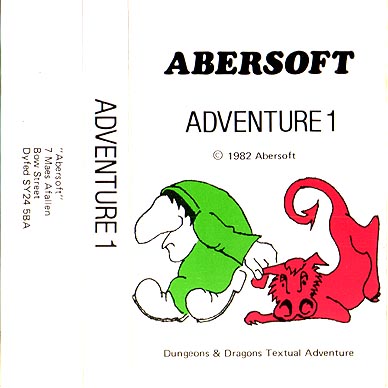
(MelbourneHouse).jpg)
(CPSoftware)_Front.jpg)
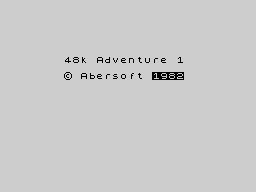
(MelbourneHouse)_SideB.jpg)
(MelbourneHouse)_SideA.jpg)
(CPSoftware)_Tape.jpg)
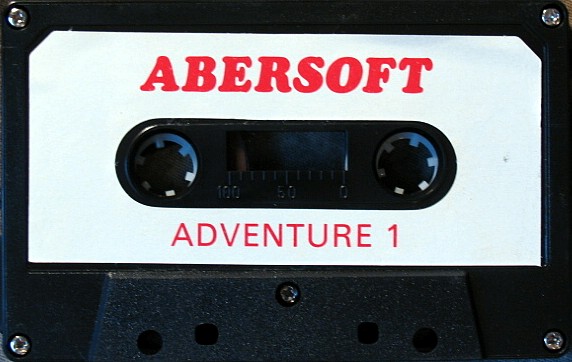
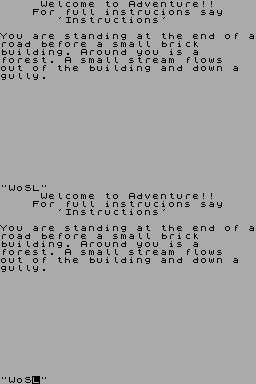
Discussion
Nobody has started a thread about this yet.
Remarks
Other renditions of this adventure, that was originally written on a mainframe, are {Adventure|Micro Gold|0005907} and {La Aventura Original|Aventuras AD S.A.|0005977}.
Releases
- 1982AbersoftPound sterling 9.95 · Pound sterling 6.95 budget
- 1982CP Software Sold as Colossal Caves
- 1983Melbourne House Sold as Classic Adventure
Play
- Adventure1.rzx.zipRZX playback file 51 KB
- Adventure1.tzx.zipTape image English20 KB
- Adventure1(different).tzx.zipTape image English20 KB
- Adventure1(different)_2.tzx.zipTape image English20 KB
- Adventure1.tap.zipTape image English20 KB
- Adventure1(ColossalCaves)(CPSoftware).tzx.zipTape image English20 KB
- Adventure1(ClassicAdventure)(MelbourneHouse).tzx.zipTape image English20 KB
- Adventure1(ClassicAdventure)(MelbourneHouse).tap.zipTape image English20 KB
Documents
- Adventure1(ClassicAdventure)(MelbourneHouse).txtInstructions English2 KB
Files and rights
Distribution permission is on record, granted to another archive rather than to this one. Screens and pictures are copied here; everything else links to the archive that holds it.
- AllowedAbersoft → WorldOfSpectrum
Credits
- John Jones-Steelecredited
- Steinar LundInlay/Poster Art
Sign in to credit somebody, or say what these people did.
Scores
In the magazines
- Sinclair User #101983 · Gilbert Factor6/10
Elsewhere on the web
- WorldOfSpectrum 10 votes7.00
In the magazines 125
Your Computer #7Jul 1984 · p.49
Hugo North
48K Spectrum £5.95 Melbourne House Aptly named, this test adventure is closely based on the famous Crowther and Woods Colossal Cave. If you've never played it before, you're in for a treat. There are a large number of problems to solve and locations to explore, the latter being described in some detail. Among the old favourites are the well house, the looked grate, the black rod and the hall of mists. Those pesky dwarves are there as well, still sneaking up and hurling axes at you. Seasoned adventures will know how to best deal with these nuisances. Although not as comprehensive as Level 9 Computing's version (Colossal Adventure), it does include most of the flavour and delights of the original classic. Definitely one for your collection.
Your Spectrum #3May 1984 · p.708/109/107/10
John Hall 8/10
Mark Knight 9/10
Tony Samuels 7/10
Your Spectrum is continuing to scour the country's computer clubs to get the undiluted thoughts, feelings and impressions of dedicated games enthusiasts - thus providing our readers with unbiased evaluations. Any club wishing to offer their reviewing services should contact Ron Smith, Spectrum Soft, [redacted]. This month we visited the Heald Green Computer Club (which meets fortnightly at the Public Hall, [redacted], on Wednesdays from 7.30 to 10.30pm). Three of the club's leading members each played the games we gave them for review and in some cases found them so well-conceived and written, went completely over the top with the superlatives. In others, the games were deemed to be re-hashes of old ideas and evaluated accordingly. The club was formed four months ago, and has already managed to attract over 40 enthusiasts. All members are being brought up to the same standard of proficiency by the more experienced members who are running formal courses in both Basic and machine code. Membership is offered at a very reasonable rate, and all enquiries should be referred to Tony Samuels on [redacted] (after 6pm). Tony, incidentally, is currently working on a new program for the Spectrum (called Ugh - see Rumbles in this issue) which will be available from Softek in the near future. CLASSIC ADVENTURE Melbourne House £5.95 This is a copy of the first ever text adventure game which was written to run on a large mainframe computer. The aim of the game is to search for hidden treasure, which is often guarded, and then return it to your home base.
Micro Adventurer #7May 1984 · p.24
DD
STILL A CLASSIC BRAINTEASE MICRO: Spectrum 48K PRICE: £6.95 FORMAT: Cassette SUPPLIER: Melbourne House, [redacted] Back in the dim, distant past (well, 1978 actually) two bored mainframe programmers came up with the idea for a game. They used over 200K on their mainframe to write it in Fortran, and when they'd finished they called it Adventure. Six years and several computer lifetimes later the Classic Adventure is available for the Spectrum 48K. Actually, Abersoft have been selling the same adventure for some time, and there is a first-class version from Level 9 under the name Colossal Adventure, but Melbourne House's commercial muscle will doubtless win many new admirers for this classic textual brainteaser. The screen display is an elegant white-on-black, very restful on the eyes when the first location pops up on screen and you find yourself on a deserted road beside a building. The plot is familiar (but bear in mind it is the original), sending you into a labyrinthine cave system in search of treasure, and inviting you to plunge in and explore. Respect for its pivotal role in adventuring history would not alone make this a game worth playing. However Classic Adventure has much more going for it than mere historical significance. The descriptions of the locations are detailed, literate and frequently lengthy, while the locations themselves are varied, unusual and fascinating. Starting out is a pleasure, since there is plenty to explore at the beginning before the problems really being. The problems are thorny and unpredictable - some have very logical solutions, while others defeated all my best efforts until in a fit of pique I typed something quite daft, only to find that was what I should have done all along. Crowther and Woods, the mainframe programmers, have a wicked sense of humour, but they are always fair. The caverns house a selection of flora and fauna ranging from fluttering birds, fierce snakes and baleful dragons to axe-wielding dwarves and larcenous trolls. These are considerably less aggressive than their Level 9 counterparts, which is a relief, and Classic Adventure is refreshingly calm, allowing the adventurer to get on with exploring without the constant danger of attack. On the minus side, some of the descriptions are mis-spaced or mis-spelled, the vocabulary, while extensive, is a little picky and some of the responses can be odd, but these are very minor complaints about an excellent games in the future.
Personal Computer Games #6May 1984 · p.99
Steve Cooke
POWER FROM THE GIANT CASTLE This month, PCG's resident White Wizard conjures up a magical new section. Okay adventurers, this is IT. Drop everything, take the 'phone off the hook, lock all the doors, drug the cat, and get stick in to the first of PCG's new monthly adventure specials. You name it, this is where you'll find it. Gossip, hints, reviews, and much, much more. These four pages are about to become the most sought-after location in the kingdom. Don't miss them! Every adventure we look at will be thoroughly explored and graded, with ratings awarded in four different categories. We'll be looking for imagination, suspense, challenging scenarios and the sort of programming skills that help make a good game into a great adventure. We shan't be giving away too many secrets (which would spoil all the fun) but we shall try to help you avoid wasting your hard-earned pennies on programs that aren't worth the tape they're recorded on. Each month we'll give space to readers comments, so if you've got something to say, let us know. We're waiting to hear about your high scores, your favourite game and locations - and if you want to mention fantasy fiction, dungeons and dragons, or anything else connected with adventuring, then go right ahead. Last, but not least,we'll be offering clues to some of the most common problems you encounter. But to ensure that we don't give the game away, these clues will be presented in a special form so you can't read them by mistake. Full details will be found below. So if you really get stuck, write and tell us - we may be able to help. Congratulations for having found your way to these pages. The long and winding road stretches ahead of you. Night is falling, and in the distance you can hear the howling of wolves. Read what follows and you may, just may, survive... REVIEWS OF THE LATEST TEXT GAMES A picture is worth a thousand words so they say, and they can go on saying it as far as I'm concerned till they're blue in the face. When it comes to adventures it just isn't true. By now I expect half of you are reaching for your pens with every intention of making me Wally of the Month. Don't misunderstand me. I'm not against graphic adventures. It's just that until we get home micros with decent sized memories then every picture is going to cost a thousand words, and that means poorly described locations, fewer characters, fewer puzzles, and less interesting games. There are some exceptions, and we'll be looking at those in future issues. But meanwhile you'll understand why I was so impressed with Castle Blackstar, a new Spectrum adventure from SCR Adventures. This is a text-only game that forms the first part of a series, the Artemis Quests. Although currently only available on the Sinclair, these programs will shortly be available on other machines. GRAND SCALE Castle Blackstar is an adventure on a grand scale, in which your objective is to locate a 'power orb' in the castle dungeons and return it to your revered Goddess. On the way you have the chance to collect various treasures which will add to your score. So far, nothing new. Where this program really scores is in the description of its locations and the large (200-word plus) vocabulary. As you explore the Castle and the caverns beneath it, you really do get a feel for the world into which you have fallen. My only quibble with SCR's program is that it doesn't allow you to quit the game and re-start. If you enter 'Quit' the game crashes and you have to re-load. Another minor annoyance is that the program doesn't specify which word it is having trouble with when it rejects your inputs, but since the vocabulary is of a decent size this isn't too much of a disadvantage. The program accepts complex commands, and all words may be abbreviated to four letters, plus of course the usual N, S, E, W and so on. The next game in the Artemis series, Pyramid of the Sun, should be in the shops this summer. GAME: Castle Blackstar MACHINE: Spectrum 48K SUPPLIER: SCR Adventures PRICE: £8.95 TRILOGY Recent months also saw the launch of the first game in another text-only series, a trilogy this time, Mountains of Ket from Incentive Software Ltd. From the blurb supplied with the cassette you'd expect this to be something really special - 'A giant of an adventure program featuring Combat, Interactive Beings, Monetary system...' Unfortunately the game itself doesn't quite live up to expectations. Mountains of Ket is nicely presented on the screen with good use of boxes and colour to make the text more readable. Input is in the two-word verb/ noun format which places a few limitations on the player, especially since the vocabulary isn't that large. There are some good combat sequences, and the angry reaction of passersby when you decide to kill someone is a welcome disincentive to mindless violence. However the locations are very scantily described and the atmosphere of the game suffers as a result. GAME: Mountains of Ket MACHINE: Spectrum 48K SUPPLIER: Incentive Software PRICE: £5.50 VIVID Spectrum owners who like their locations to be vividly described, and who aren't content with Castle Blackstar, might like to try Melbourne House's Classic Adventure. This is a version of the program Colossal Cave (or just 'Adventure'), the game that started it all, back in the days when you used your computer to heat the room and did your calculations on a slide-rule. Adventurers on most home micros have already had a crack at this classic, thanks to Level 9, but Melbourne House's offering is £3.00 cheaper. How does it compare? Well, it has to be admitted that the difference in price is reflected in the quality of the program. However, what I liked about Melbourne House's game was that it was subtly different from the original Colossal Cave. Even if you're familiar with the older program or one of its modern versions, you could find yourself in trouble in Melbourne House's version. The locations in this game are excellently described by comparison to most of today's text-only programs, so if you haven't already tried this game, and can't afford the extra for Level 9's version, then Classic Adventure looks like a good bet. GAME: Classic Adventure MACHINE: Spectrum 48K SUPPLIER: Melbourne House PRICE: £6.95 Another text-only program, recently released for the Commodore 64, also shows the influence of Colossal Cave in some of its locations. Island Adventure is written by Peter Gerrard, whose 'Exploring Adventure' books are reviewed elsewhere on these pages. Peter is a firm text-only fan. 'Graphics detract from an adventure.' he told me, 'because everyone has their own ideas about what the locations look like.' He certainly practices what he preaches in Island Adventure, but I felt that the locations weren't sufficiently described to give the reader much idea in the first place. Otherwise the game is of the standard 'stranded-on-an-island-get-as-much-treasure-as-you-can' type, and if you've played Colossal Cave you'll find some of the puzzles easier to solve. GAME: Island Adventure MACHINE: Commodore 64 SUPPLIER: Duckworth PRICE: £7.95 Complexity: 6/10 Atmosphere: 3/10 Interaction: 5/10 Value: 4/10 BUSY Salamander, who produce adventure programs for the Dragon, BBC and Oric, seem to have been very busy recently. The first Dan Diamond trilogy is now complete and the third title, Fishy Business, is currently available. By the time you read this they should have released the first program in the second trilogy, Franklin in Wonderland, in which the intrepid detective attempts to rescue a damsel in distress. Salamander tell me that reading Alice in Wonderland will help you solve the adventure. The Dan Diamond games were notable for their way of displaying information on the screen, with separate boxes giving information on your location, input, and items carried. The same lay-out is used in two other new Salamander games, Wings of War and The Cricklewood Incident. REFRESHING The Cricklewood incident is an utterly pointless game that had me howling with laughter some of the time and screaming with frustration the rest of the time. Some of the humour is a little out-of-date (when did you last have a coffee-table nailed to your head?) but like Richard Shepherd's Urban Upstart it makes a very refreshing change from the usual dungeons, dragons, and dwarves. Your quest (if you can call it that) in The Cricklewood Incident is to find the Holy Grail, having first left your padded cell where you had been put for safe keeping. There are five levels of play, ranging from Utter Wally to Geoff Boycott (who rates one higher than Superman). You will encounter a number of fascinating characters, including a very tiresome Hell's Angel. The fight sequences are highly amusing, and although the locations are very briefly described, this game stands on its sense of humour alone. GAME: The Cricklewood Incident MACHINE: Dragon SUPPLIER: Salamander PRICE: £7.95 Complexity: 6/10 Atmosphere: 6/10 Interaction: 5/10 Value: 6/10 SERIOUS STUFF There isn't much humour in Wings of War, the first of a two-part adventure in which you are parachuted down behind enemy lines to steal some plans and escape back to good old Blighty. Serious stuff here, but somehow the simple vocabulary and brief descriptions don't manage to conjure up much of an atmosphere, and the challenge of the game lies more in finding things than in solving puzzles or dealing with other characters. Wings of War was a first attempt from someone new to adventure programming, and Salamander assure me the second game in the series, White Cliffs of Dover, is a vast improvement. Let's hope so. Dragon owners seem to have been spoilt for choice when it comes to adventures recently. Klartz and the Dark Forces is another new release for that machine from Dungeon Software. Described as a 'multi-adventure' it places you in a time capsule and sends you off through the ages to gather relics of the victims of the evil Klartz. I'm afraid I can't recommend this game. I stumbled across the first relic almost as soon as I'd left the capsule, and the small vocabulary, poor error checking ('Illegal input. Please Recompute') didn't encourage me to go much further. Even so, I gathered up most of the relics before quitting the program. Ah well, some you win, and some you win just too easily This month I've concentrated on text-only games, so next issue I'll be looking at graphics adventures and replying to your letters. If you want me thrown into the Bottomless Pit for being rude about your favourite game, you'd better put pen to paper. I'm quite prepared to cross swords with anyone on these pages, so beware! GAME: Wings Of War MACHINE: Dragon SUPPLIER: Salamander PRICE: £7.95 Complexity: 5/10 Atmosphere: 4/10 Interaction: 3/10 Value: 4/10 GAME: Klartz And The Dark Forces MACHINE: Dragon SUPPLIER: Dungeon Software PRICE: £9.95 Complexity: 2/10 Atmosphere: 6/10 Interaction: 5/10 Value: 4/10 The White Wizard ADVENTURE RATINGS Adventures need special treatment when it comes to ratings, so we've devised a whole new system for them. Each game will be awarded points in four different categories: Complexity, Atmosphere, Interaction and Value. Points will range from 0 (Abysmal) to 10 (Sheer Genius). The first category, Complexity, will be determined by the number of locations in the program, and the difficulty of the tasks presented. The Atmosphere rating reflects the quality of the descriptions of each location, and the standard of graphics if they are provided. Points given for Interaction will be based on how large a vocabulary the program has, how helpful its responses are, and the type of in puts it can accept. Adventures accepting only two-word inputs, for example, may score lower than those accepting multi-statement commands. The last category, Value reflects value for money. It is an overall rating of the game that takes all the above factors into account, matches them with the price of the program and its originality, and awards points accordingly. Any game that scores 10 for Value belongs on your shelf. A game that scores 0? Into the waste-paper basket.
From top: Castle Blackstar; Mountains of Ket; Exploring Adventures on the Commodore 64.
Crash #4May 1984 · p.73
Producer: Melbourne House, 48K £6.95 Author: John Jones-Steele Also known as Adventure 1 by Abersoft, who originally marketed this adventure through CP Software under the the title of Colossal Caves. Classic Adventure was originally written in the 70s in Fortran and took up over 200K of memory. As the name suggests, this is the epitome of traditional D & D adventures. You must find a treasure of untold riches by penetrating a deadly complex of caverns. When the game starts you are standing by a brick building which must be entered, and where you will find a number of objects to help you in your quest. Then the entry to the caverns must be discovered. On your travels you will meet giant snakes trolls, dragon and other wierd creatures. Although requiring some careful thought, most of the puzzles presented are easily overcome. A fast moving and enjoyable adventure.
Crash #4May 1984 · p.73
Producer: C P Software, 48K £7.95 Author: Abersoft Alsknown as Adventure 1 by Abersoft, this is a traditional style adventure where you must find the treasure left behind by a Wizard, and in which you will meet dragons, trolls, snakes and other dark denizens. When the program has finished loading the adventure begins instantly without instructions. These are available on command. The game is strictly text only and uses repeat locations when travelling along, say, a valley. Finding the cave in the first place is already an adventure in itself, and the whole game may take days, even weeks to complete satisfactorily. One of the classic computer adventure games. Recommended.
Crash #2Mar 1984 · p.66
Producer: C P Software, 48K £7.95 Author: Abersoft Also known as Adventure 1 by Abersoft, this is a traditional style adventure where you must find the treasure left behind by a Wizard, and in which you will meet dragons, trolls, snakes and other dark denizens. When the program has finished loading the adventure begins instantly without instructions. These are available on command. The game is strictly text only and uses repeat locations when travelling along, say, a valley. Finding the cave in the first place is already an adventure in itself, and the whole game may take days, even weeks to complete satisfactorily. One of the classic computer adventure games. Recommended.
Crash #1Feb 1984 · p.62
Producer: C P Software, 48K £7.95 Author: Abersoft Also known as Adventure 1 by Abersoft, this is a traditional style adventure where you must find the treasure left behind by a Wizard, and in which you will meet dragons, trolls, snakes and other dark denizens. When the program has finished loading the adventure begins instantly without instructions. These are available on command. The game is strictly text only and uses repeat locations when travelling along, say, a valley. Finding the cave in the first place is already an adventure in itself, and the whole game may take days, even weeks to complete satisfactorily. One of the classic computer adventure games. Recommended.
ZX Computing #5Feb 1983 · p.78
Paul Holmes
IN SEARCH OF ADVENTURE Now that the Christmas rush if over, Paul Holmes takes a look at some of the latest software for the ZDX Spectrum. I expect that by now you are as sick of turkey sandwiches and Christmas cake as I am, and are now on the lookout for some post festive inspiration for your ZX Spectrum. Whether you managed to survive the Christmas period with some cash or you are wondering what to do with that fiver you received from your Auntie, here are a number of goodies to choose from. ADVENTURE 1 Abersoft This is an adventure game, and for the uninitiated an adventure game is one of a 'search' usually for treasure of some description hidden in caves, passages, jungles, Egyptian pyramids and the like. just to make matters more complicated, there are usually a number of monsters and mysterious objects whose sole aim in life is to hinder or help you on your quest. Abersoft's adventure, however, has no harmful monsters but makes you rely on your own intelligence to get around the passages and utilise the objects you find to help you win the treasure. In the first scene, you are looking at a water house and you can see a large set of keys, a shiny brass lamp, some tasty food and a bottle of water. You can instruct the computer by giving it simple one or two word instructions such as 'get keys' or 'take lamp'. Using these keywords, you can pick up a number of items that you might think will be of use to you at a later point in the game; you are allowed to 'hold' up to eight items. To find out what you are holding at any stage in the game, you type 'inventory'; the computer's recognition of vocabulary is very good, and fast too due to the fact that the vast majority of the program is written in machine code. The computer only scans the first four letters of each keyword so 'inve' is the same as 'inventory'. To move about in the game, simple compass directions should be given such as 'N', 'E', 'S' and 'W'. Instructions such as 'enter' are obeyed such that if you are next to a building or the entrance to a passage, you will appear inside. A 'SMASHING' GAME The adventure is based on a series of caves, canyon crawls and passages. There are countless rooms with a white mist lingering on the floor (similar to a Top of the Pops rehearsal, maybe?). Most passages, rooms, etc, are empty but some will contain useful objects and treasure. The treasure varies from extremely heavy golden nuggets to easily breakable Ming vases. The Ming vase had me in some confusion for a few days. I don't get the idea that you'll manage to finish this game in a week!. The problem with the vase is that the only way to put something down is to use the command 'drop' which is countered with the reply 'you hurled it delicately to the ground'. (You have to put some of the objects down again as for every item of treasure you return to the water house, you receive 10 points.) So all I got the first few times I tried this was a smashed vase! Until I found the pillow, of course... There are 21 items of treasure to find in the game in all, so don't expect an easy time. The adventure holds many secrets for the player to work out, one of which is the meaning of the secret messages on the walls in certain rooms. I managed to work out most of them, but I won't spoil your fun by telling you. LACK OF TALENT? At one point in the game I came across a very strange room in which I was standing at a window looking down on a pit (complete with mist). Opposite me I could see a man at another window waving back at me. It has been a puzzle to me ever since what is the relevance of the eerie figure? Perhaps he was, like me, another player driven to madness by this game. I fear he might have been, as the game is non-graphical and requires great enthusiasm to play for more than a few hours at a stretch. Pure text, with no colour or sound, is a clear waste of the ZX Spectrum's talent and would clearly wear the interest of the player. (There is also a ZX81 version of the game available for £8.95.) Far too often in the game, I found myself going round and round in circles. However, there's no resting to cook the odd meal or read a book or two while you await some happening - the computer always has a quick answer for you. For instance, in the depth of frustration, I told the computer 'where to go' to which it promptly told me 'Watch it. The wizard is watching you'. I found its understanding of my use of 'non-Queen's English' quite amusing and prompts me to applaud the author's sense of humour. One of my main criticisms of the game is the actual quality of the cassettes themselves. One of the two copies I had for review had a header that was full of rubbish, so that the normally tolerant Spectrum rejected it. The whole program was littered with clicks and buzzes. However, I did manage to load the second copy, albeit with some difficulty. Adventure is priced at £9.95 and is available from Abersoft, [redacted].
Sinclair User #10Jan 1983 · p.216/10
Gilbert Factor 6/10
DREADFUL DWARF Murderous dwarfs, misty caverns and mysterious objects all play a part in the new Abersoft adventure game for the 48K Spectrum, Adventure One. Anything can happen during the adventure but one thing to look for is a dwarf who throws knives. He could put a quick end to any adventuring. The adventure is displayed as text on the screen and reads like a book written by Tolkien with shades of Agatha Christie included. It is ideal for a beginner at adventure games because the computer helps the player more than other games so far released for the Spectrum. The game should prove advantageous for the experienced Dungeons and Dragons player who cannot find a Dungeon Master against which to pit wits. Adventure One is available from Abersoft, [redacted] and costs £9.95.
Advert96
- Home Computing Weekly #82Oct 1984 · p.34
- Your Computer #9Sep 1984 · p.175
- Your Spectrum #7Sep 1984 · p.16
- Micro Adventurer #11Sep 1984 · p.10
- C&VG (Computer & Video Games) #35Sep 1984 · p.90
- C&VG (Computer & Video Games) #35Sep 1984 · p.91
- C&VG (Computer & Video Games) #34Aug 1984 · p.82
- Home Computing Weekly #77Aug 1984 · p.16
- Home Computing Weekly #69Jul 1984 · p.17
- Home Computing Weekly #65Jun 1984 · p.49
- Home Computing Weekly #67Jun 1984 · p.17
- Sinclair User #26May 1984 · p.43
- Sinclair User #24Mar 1984 · p.93
- Sinclair User #23Feb 1984 · p.97
- Crash #1Feb 1984 · p.53
- Personal Computer Games #3Feb 1984 · p.138
- Popular Computing Weekly #1Jan 1984 · p.44
- Sinclair User #21Dec 1983 · p.163
- Personal Computer Games #2Dec 1983 · p.132
- Sinclair User #20Nov 1983 · p.54
- Sinclair User #20Nov 1983 · p.69
- Your Computer #11Nov 1983 · p.92
- Sinclair Programs #13Nov 1983 · p.45
- Micro Adventurer #1Nov 1983 · p.26
- Home Computing Weekly #35Nov 1983 · p.24
Tips10
- Your Sinclair #13Jan 1987 · p.97
- Sinclair User #56Nov 1986 · p.90
- Your Computer #7Jul 1986 · p.77
- ZX Computing #26Jun 1986 · p.90
- Popular Computing Weekly #6Feb 1986 · p.29
- C&VG (Computer & Video Games) #45Jul 1985 · p.79
- Sinclair User #36Mar 1985 · p.72
- Crash #10Nov 1984 · p.117
- Crash #8Sep 1984 · p.75
- Your Computer #7Jul 1984 · p.49
Review3
- Games ComputingJul 1984 · p.39
- TV GamerJun 1984 · p.22
- Home Computing Weekly #58Apr 1984 · p.27
News/Note3
- ZX Computing #13Jun 1984 · p.98
- Personal Computer Games #7Jun 1984 · p.22
- Home Computing Weekly #51Feb 1984 · p.3
Feature2
- Sinclair Programs #19May 1984 · p.44
- Popular Computing Weekly #11Mar 1983 · p.12
Solution1
- Die Speccy CDJan 1996
Licensed from
- Advent/Colossal CaveSoftwareunofficialCrowther & Woods
Related
- Ports
- (Amstrad CPC), (BBC Micro), Classic Adventure (Commodore 64), (Commodore Plus/4), (MSX), (Acorn)
- Same entry at
- Spectrum ComputingZXInfo
Reviews from people here
Sign in to write about this, or make an account. It takes a minute and lets you correct the catalogue too.
No tag recorded.
Sign in to correct or add to this.
Hold the rights to this and want it taken down?