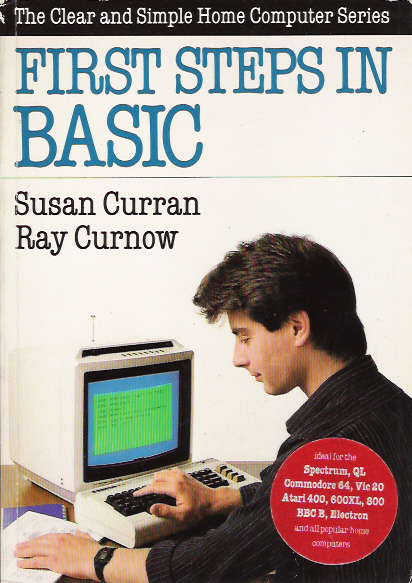
First Steps in BASIC
Book: Paperback · English
Windward · 1983 · Pound sterling 4.95 · 191 pages · ISBN 0-7112-0333-4
MIA Missing in action. This is known to have existed, and no copy has ever been found. If you own one, the archives would like to hear from you.
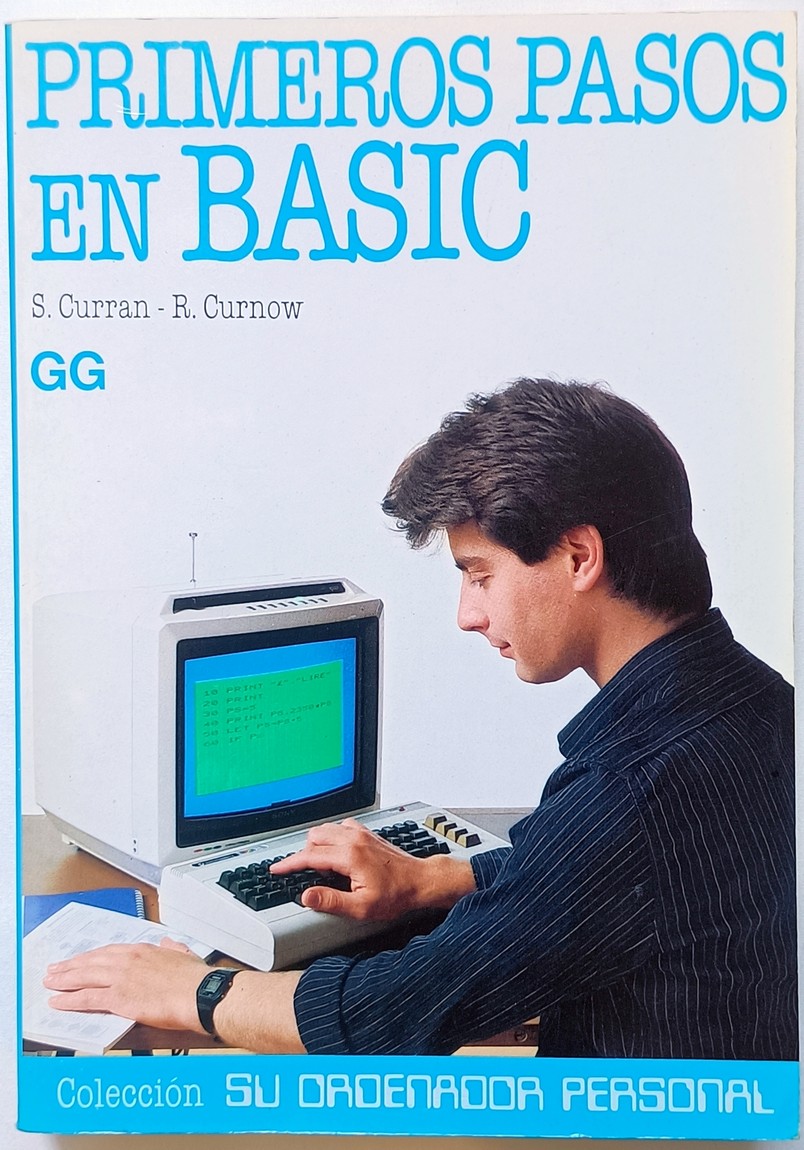
Also known as Einfuhrung in die Programmiersprache BASIC (German), Primeros Pasos en BASIC (Spanish)
(FalkenVerlag).jpg)
Discussion
Nobody has started a thread about this yet.
Releases
- 1983WindwardPound sterling 4.95
- 1986Falken Verlag Sold as Einfuhrung in die Programmiersprache BASIC
- 1984Editorial Gustavo Gili S.A. Sold as Primeros Pasos en BASIC
Files and rights
No permission is on record either way. Screens and pictures are copied here on a take-down basis: if you hold the rights and want something removed, say so and it goes.
Credits
- Susan Currancredited
- Ray Curnowcredited
- Jordi Abadal BeriniLocalization/Translation
Sign in to credit somebody, or say what these people did.
In the magazines 3
ZX Computing #13Jun 1984 · p.83
Patrick Cain
PATRICK CAIN GIVES US HIS THOUGHTS ON SOME OF THE LATEST BOOKS AVAILABLE FOR THE SINCLAIR USER. The credits of husband and wife team, Susan Curran and Roy Curnow read like the glittering prizes of the commercial and personal computing world. The computer titles they have jointly and individually been responsible for total far too many to include here. Susan is a specialist in User Applications of Micro Computers as well as a director of a consultancy company. Roy squeezes being a Professor at City University, London in alongside with being an advisor to several multinationals, an IT Consultant, an author and a company director! He was also the man the BBC made responsible for structuring and developing the 'Computer Program' television series. Their pedigree alone makes their current book, 'First Steps in Basic', a Windward publication, well worthy of some attention. As any new programmer will agonisingly testify, some computer manuals are precise to the point of being sinful; others are simply muddled or remiss. I well remember my own frustrated attempts at mastering this 'genius level' code and recognising the need for a more patient set of instructions. It is, after all, the manual's job to detail the features of the language as applied to the machine and not to teach programming. Of course, many more resourceful people than I have recognised this need, resulting in a crock of books of varying standard, aimed at the novice computer programmer. As one might expect, this one stands out from the crowd. It is fair criticism, I think, to say that it might have been better if the authors had chosen to devote the book to one type of computer entirely. Instead, a non-specific text using 'Microsoft BASIC' as an example caters for most computer types. An appendix details how the dialect used varies from that run on other machines, including the Spectrum. But far outweighing any criticism must be the credit due to a well planned and thoughtful book that is aware of those 'early days' pitfalls. The reader is not expected to have any previous knowledge of computing and no more is required of him than that he has connected the various wires and switched on. In fact, allowances have been made for readers who may as yet not be in possession of a computer, although why anyone should want to learn to program without one is beyond me. It is my opinion that a lot of heads are banged against walls as novice programmers toil with a whole new confusing world, unable to identify and recognise the many constituent parts. An introductory chapter that outlines the computer, its requirements and functions, the basic language - the reason for it and its applications and more key elements of computing should help prevent future damage to both heads and walls. Chapter One, 'Writing on the Screen' deals with the PRINT statement in its various forms, writing messages on the screen, positioning screen output and simple arithmetic; introducing and explaining on the way strings expressions, arguments and variables. Each topic is discussed in straightforward text, highlighting each point or instruction with an example and supporting screen illustration. Not, of course, a new approach to this subject but one that works well because the authors have identified likely areas of difficulty and developed the text accordingly. (NB: page 17: don't get too worried if your computer gives a different answer to the cosine of 43, unless the laws of mathematics have changed this is a printers error: at least that's my angle.) Subsequent chapters build on the knowledge and expertise that has been built up in the first few pages. By chapter 2 this expertise is put to good use in writing short programs, reinforcing the theory learned so far while introducing new elements of the computer's ability, eg 'loading' and 'saving'. As throughout, the text is straightforward and unassuming, expanding and elaborating ideas to give a fuller awareness of the topic. Supporting examples are fun and interesting enough to try, while again clear illustrations compliment and highlight the text. Further chapters take task in 'loops and branches', 'editing and debugging' and 'handling data' until a comprehensive knowledge of BASIC statements and familiarity with their applications is gained. Chapter 7, 'Writing Longer Programs', brings these statements together and sets guidelines for planning and writing more involved programs. On conclusion the reader should be familiar with BASIC statements and aware of good program structure. At this point it is necessary to develop the skills learned, a job that is beyond the scope of this book, and readers are directed to further reading material. New programmers will find that in investigation of subsequent texts they have a firm foundation as a starting point for developing their programming skills. First Steps in BASIC by Susan Curran and Roy Curnow is part of the Clear and Simple Home Computing Series published by Windward and costs £4.95. ISBNO 7112 0333 4.
Personal Computer News #38Nov 1983 · p.72
Piers Letcher
'First steps in Basic' by Susan Curran and Ray Curnow, published by Windward at £4.95 (paperback, 192 pages). This book is lucid, well laid out, and thoroughly useful. Since it starts in immediate mode, with the Print statement, it enables the beginner to experiment with the language and the computer without needing to know about more complicated matters such as programs and variables. These, sensibly, are not introduced until after the first chapter. The book is machine independent, relying on a simplified form of Microsoft Basic to achieve this. Any adaptations that are needed (and they appear to be few and far between) are not difficult to implement. Sensible appendices on different Basics, and the language used here, facilitate this. Progress is rapidly made to programs and variables. The latter are dealt with almost too thoroughly, but once the knowledge has been gained it is useful later on. The book subsequently moves on to loops, branching, editing, debugging, data and longer programs. The grounding given provides a basis from which to learn any programming language. I think that it is a pity that flowcharts were used rather than structured diagrams, especially since the book advocates structured programming. The only structured diagram shown is used to illustrate structured programming ideas. First Steps in Basic is an excellent book, whether you are just beginning to use your micro for programming or you are just about to buy one. Recommended.
News/Note1
- ZX Computing #11Feb 1984 · p.88
Reviews from people here
Sign in to write about this, or make an account. It takes a minute and lets you correct the catalogue too.
No description recorded.
Sign in to correct or add to this.
Hold the rights to this and want it taken down?