
Getting the Most from Your Sinclair Spectrum
Book: Paperback · English
Penguin Books Ltd · 1983 · Pound sterling 4.95 · 118 pages · ISBN 0-14-007802-9
MIA Missing in action. This is known to have existed, and no copy has ever been found. If you own one, the archives would like to hear from you.
Discussion
Nobody has started a thread about this yet.
Files and rights
No permission is on record either way. Screens and pictures are copied here on a take-down basis: if you hold the rights and want something removed, say so and it goes.
Credits
- Anne Sparrowhawkcredited
Sign in to credit somebody, or say what these people did.
In the magazines 3
Personal Computer News #44Jan 1984 · p.24
John Lettice
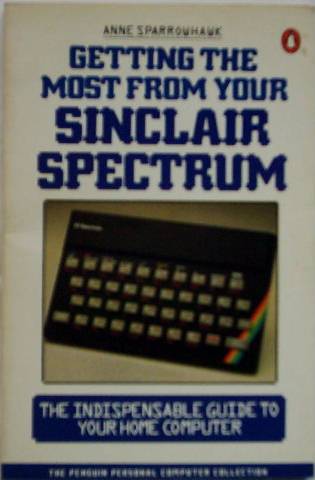
'Getting the Most from Your Sinclair Spectrum', by Anne Sparrowhawk, published by Penguin at £4.95 (paperback, 118 pages). With the number of introduction to computer books there is around, it's surely high time we had an MSX-style standard for them, allowing beginners upwards compatibility? Seriously though, they're not all the same, and this one is commendably different, although you wouldn't think so from the first two chapters, which are the standard 'what do you with a micro anyway' and 'now you've got it why don't you open it and plug it in' introductions. Surely it's about time authors dispensed with this kind of padding? But after that it really becomes quite interesting, launching into a complicated but accessible flowchart illustration dealing with the processes necessary to start up a car. Once you've related that to how you use flowcharts in programming, Ms Sparrowhawk delves into the innards of the machine, showing you how the information is actually stored. It's highly unusual for an introduction to computing to do this so early, but the illustrations are well thought out, and I'd say this approach was more successful than the usual parrot-style method of instruction. However, the book does go off the boil a little towards the end, presenting brief guides to peripherals - surely better in a separate volume, bought after the beginner has come to grips with the machine - and a relatively useless chapter on troubleshooting - perhaps the most difficult area of using a computer. But there is one last bonus - the appendix presents a particularly clear and detailed explanation of the machine's commands. These are listed in sections depending on their function, and I'm inclined to think they'd have been better organised in alphabetical order, but they're still very useful.
Advert2
- Sinclair User #22Jan 1984 · p.130
- Sinclair User #21Dec 1983 · p.33
Reviews from people here
Sign in to write about this, or make an account. It takes a minute and lets you correct the catalogue too.
No description recorded.
Sign in to correct or add to this.
Hold the rights to this and want it taken down?