
Mindstorms
Book: Paperback · English
Harvester · 1980 · Pound sterling 8.50 · 230 pages · ISBN 0-85527-163-9
MIA Missing in action. This is known to have existed, and no copy has ever been found. If you own one, the archives would like to hear from you.
Also known as Gedankenblitze (German), Mindstorms: Children, Computers and Powerful Ideas (English)
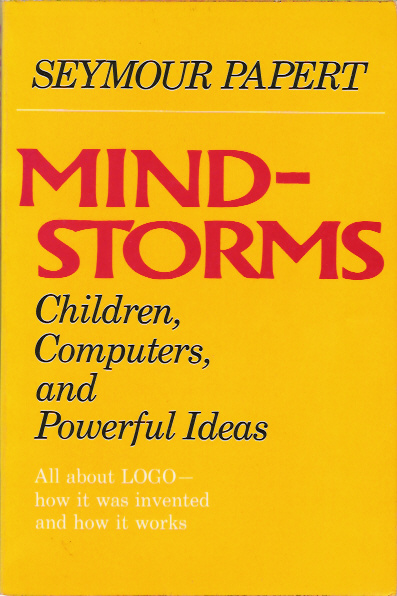
(Rowohlt).jpg)
Discussion
Nobody has started a thread about this yet.
Releases
Files and rights
No permission is on record either way. Screens and pictures are copied here on a take-down basis: if you hold the rights and want something removed, say so and it goes.
Credits
- Seymour Papertcredited
Sign in to credit somebody, or say what these people did.
In the magazines 1
Sinclair User #36Mar 1985 · p.53
John Gilbert
PAPERT'S PROPHECY MINDSTORMS Publisher: Harvester Press Price: £4.95 (paperback) Seymour Papert, the father of the Logo language, has arguably done more for computers in education with his book Mind Storms than anyone else. His ideas about the lifting of restrictions and enjoyment of learning within the classroom form the basis of the book which describes the conception and use of MIT Logo within educational environments around the world. The basic premis, which he supports vehemently, is that children learn more by discovery rather than by rote. Give a child the choice between a multiplication table and a computer running Logo and the child is more likely to take the latter. Papert also asserts that the child will learn more and in Mind Storms he makes a good job of proving it. Papert's arguments make sense not least because he is more literate than many of his colleagues in education. As he explains his proposals he sets up questions between the lines which critical readers are likely to ask and then with great modesty knocks those critics down with practical solutions to the problems. In the introduction critics are at first likely to attack him for his apparent lack of concern for the teacher/pupil ratio. Many will say that his ideas seem to point to an educational system where the lack of resources and trained staff can be corrected through the use of computers. Papert sets up the critics and then says: "My goal is not educational economics: it is not to use computation to shave a year off the time a child spends in an otherwise unchanged school or to push an extra child into an elementary school classroom... I believe that certain uses of very powerful computational technology and computational ideas can provide children with new possibilities of learning, thinking and growing emotionally as well as cognitively." Papert is obviously a Utopian but this book shows that he is willing to adapt, just as his language is adaptable. His book is a worthwhile read for everyone who is disenchanted with the computer scene.
Reviews from people here
Sign in to write about this, or make an account. It takes a minute and lets you correct the catalogue too.
No description recorded.
Sign in to correct or add to this.
Hold the rights to this and want it taken down?