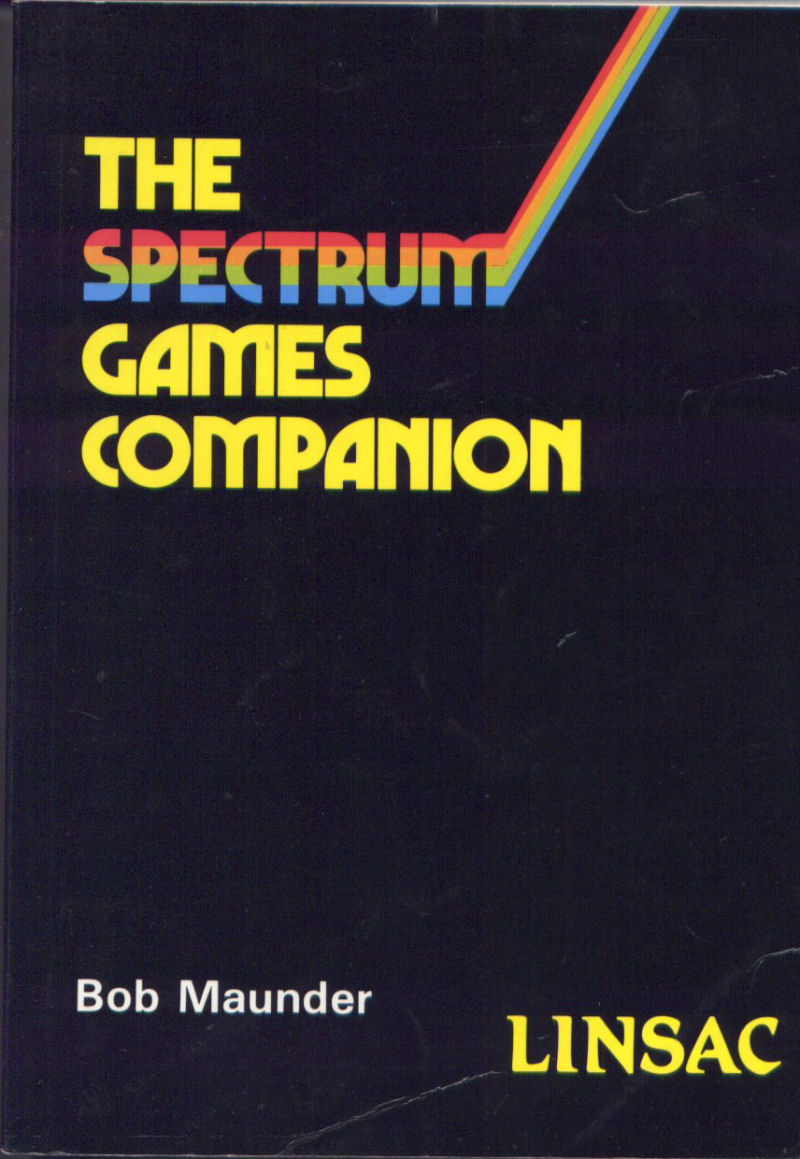
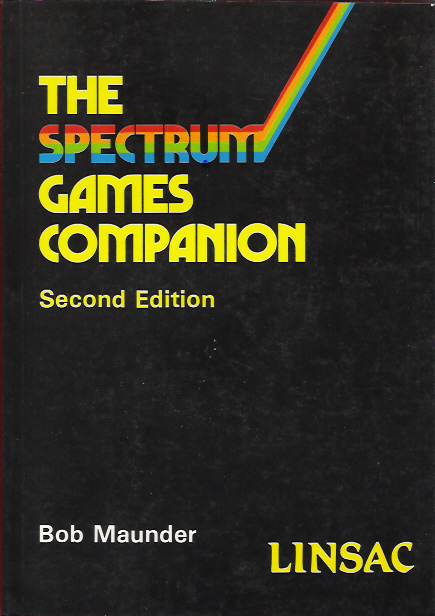
The Spectrum Games Companion
Book: Paperback · English
Linsac · 1982 · Pound sterling 5.95 · 121 pages · ISBN 0-907211-02-X
MIA Missing in action. This is known to have existed, and no copy has ever been found. If you own one, the archives would like to hear from you.
Discussion
Nobody has started a thread about this yet.
Files and rights
No permission is on record either way. Screens and pictures are copied here on a take-down basis: if you hold the rights and want something removed, say so and it goes.
Credits
- Bob Maundercredited
Sign in to credit somebody, or say what these people did.
In the magazines 30
ZX Computing #6Apr 1983 · p.69
Patrick Cain
PATRICK CAIN TAKES LONG, HARD LOOK A THE LATEST PUBLICATIONS FOR YOUR ZX LIBRARY. 'The ZX Spectrum Companion' by Bob Maunder is in design similar to many other games books published for the Spectrum. Many attempt to offer both exciting and educational games that make full use of the Spectrum's capabilities and at the same time aim to teach by a proliferation of methods the art of program writing. Boasts that are fulfilled to varying degrees! With Mr Maunder's background as an educationalist, it is natural that his book should lean more to instruction. The book begins by laying down a 'good programming practice' for designing Spectrum games that takes the reader step by step from conceiving or translating an idea to a final listing. To a beginner, any lessons on program writing by a senior lecturer in Computer Science has got to be worthy of notice. Has he been able to translate his undoubted knowledge effectively to print? Bob Maunder and I both feel that he has. From his early enquiries about what the qualities of a good game are to methods for translating the final ideas into BASIC, the description at each methodical stage is detailed and clear. Crystalising the idea - how the game will start, what the play is expected to do, what will the screen look like; stepwise refinement of the program method and writing the basic program are planned at each stage before approaching the computer - better for getting rid of bugs than D.D.T. Not then too great a surprise to discover that each of the 21 programs are well structured, mindful of memory and an example to all of us of the way programs ought to be written. To be found with each of the programs is an account of its purpose, an entry of the method used to create it and notes of explanation; indeed each includes an example of the guideline laid down at the beginning of the book. Where unfortunately the programs have not followed the example of the guidelines has been in observing the qualities of a good game. I found few of the programs in the book to be particularly good ones. Seven categories of games are to be found, number games, word games, board, simulation, dice, card and grid games. None of these, with perhaps the exception of the simulation games, seemed to make much of the scope that the graphics on board the Spectrum provide. While both the sound and graphics were used in nearly all of the games, their effect or application was not terribly impressive and certainly not utilised to their full. The screen images and sounds produced appeared to me to be more of an afterthought used because it was expected, and not integral to the programs themselves. The essence of many of the games seemed to be number manipulation, like the type which were available on previous generation computers, before the development of user graphics. 'Money Match' is one of this type, based on the American casino game Keno, it requires the player to guess eight numbers from a series of 20, randomly selected between one and 80. The player is given £20 pounds and has to bet this on his choice. The game continues until the player runs out of money or dies of boredom. In fairness 'Sink the Ship', 'Simon' and 'Dead Ducks' are worthy of mention. Of the others, the best were those games which had been adapted from favourites such as 'Blackjack', 'Solitaire' and 'Concentration'; unfortunately they have gained nothing in their translation to computer, and frankly I would rather play the originals anytime. As a teaching manual on how to write games programs. The Spectrum Games Companion is published by Linsac, written by Bob Maunder and costs £5.95. ISBN 0 907211 02 X.
Advert29
- Personal Computer Games #1Sep 1983 · p.78
- C&VG (Computer & Video Games) #21Jul 1983 · p.154
- Your Computer #7Jul 1983 · p.108
- Sinclair User #16Jul 1983 · p.41
- C&VG (Computer & Video Games) #20Jun 1983 · p.120
- Sinclair User #15Jun 1983 · p.102
- Personal Computer News #15Jun 1983 · p.14
- Your Computer #6Jun 1983 · p.184
- Personal Computer News #10May 1983 · p.13
- C&VG (Computer & Video Games) #19May 1983 · p.106
- Your Computer #5May 1983 · p.133
- Sinclair User #14May 1983 · p.22
- ZX Computing #6Apr 1983 · p.73
- Personal Computer News #4Apr 1983 · p.66
- Personal Computer News #6Apr 1983 · p.79
- Sinclair User #12Mar 1983 · p.52
- Personal Computing Today #8Mar 1983 · p.57
- Sinclair User #11Feb 1983 · p.42
- Your Computer #1Jan 1983 · p.128
- Sinclair Programs #5Jan 1983 · p.47
- Popular Computing Weekly #34Dec 1982 · p.4
- Popular Computing Weekly #35Dec 1982 · p.18
- Your Computer #11Nov 1982 · p.62
- Your Computer #10Oct 1982 · p.130
- Sinclair User #7Oct 1982 · p.21
Reviews from people here
Sign in to write about this, or make an account. It takes a minute and lets you correct the catalogue too.
No description recorded.
Sign in to correct or add to this.
Hold the rights to this and want it taken down?