The Fourth Protocol
Adventure Game: Graphic · ZX-Spectrum 48K · 1 players · English
Hutchinson Computer Publishing · Jun 1985 · Pound sterling 12.95
Also known as The Complete Fourth Protocol (English), The Fourth Protocol - The Game (English)
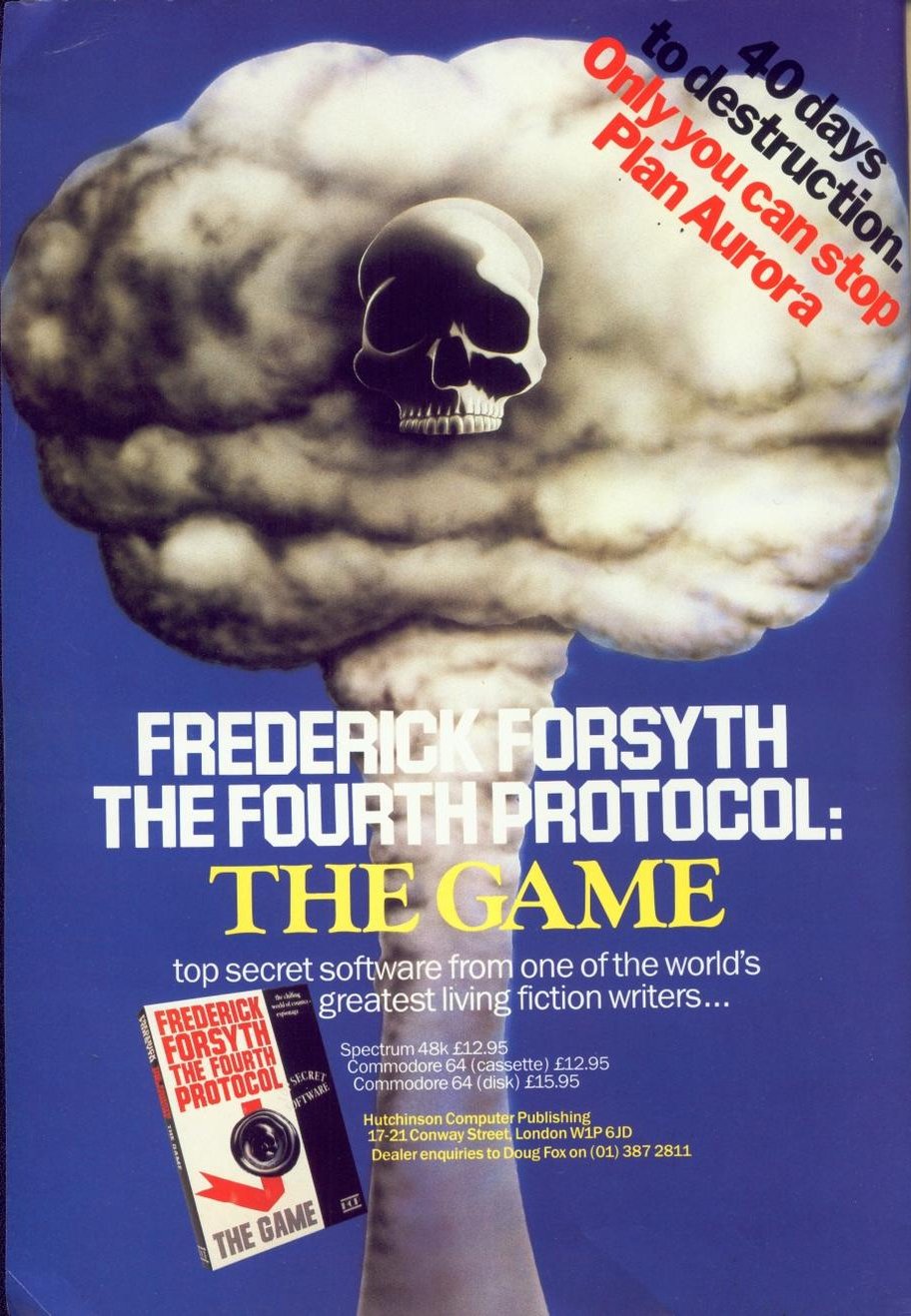
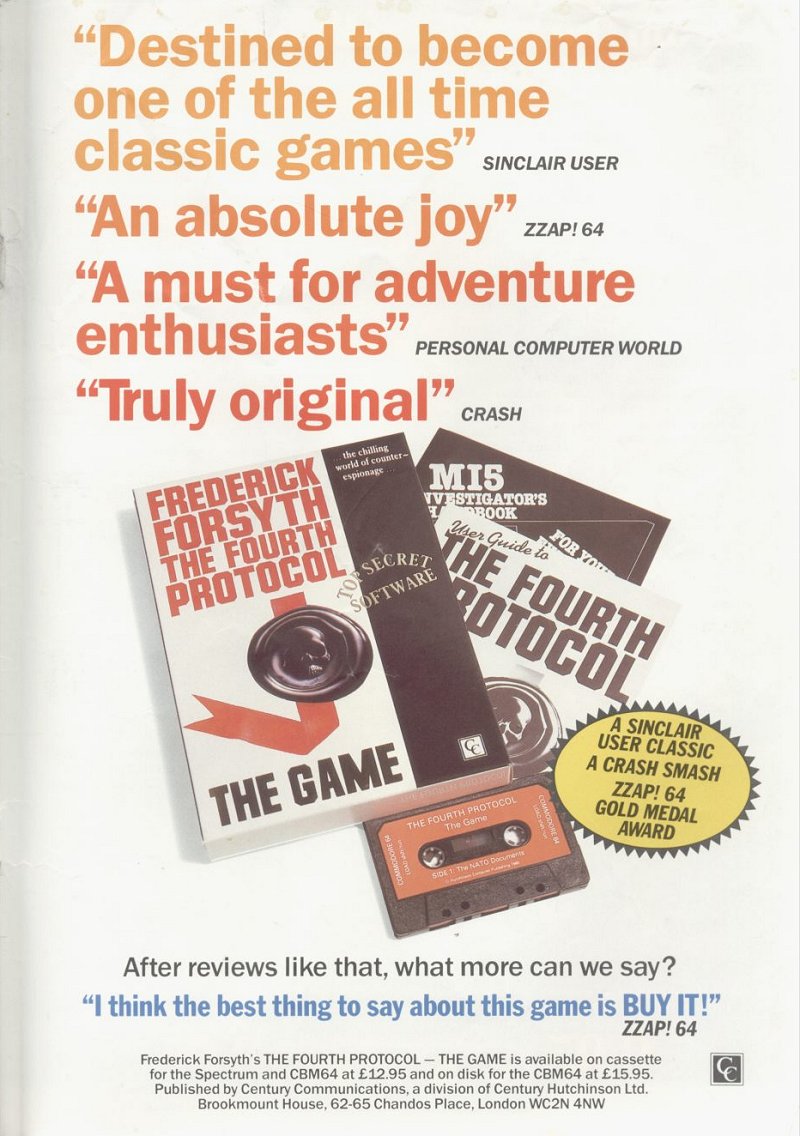
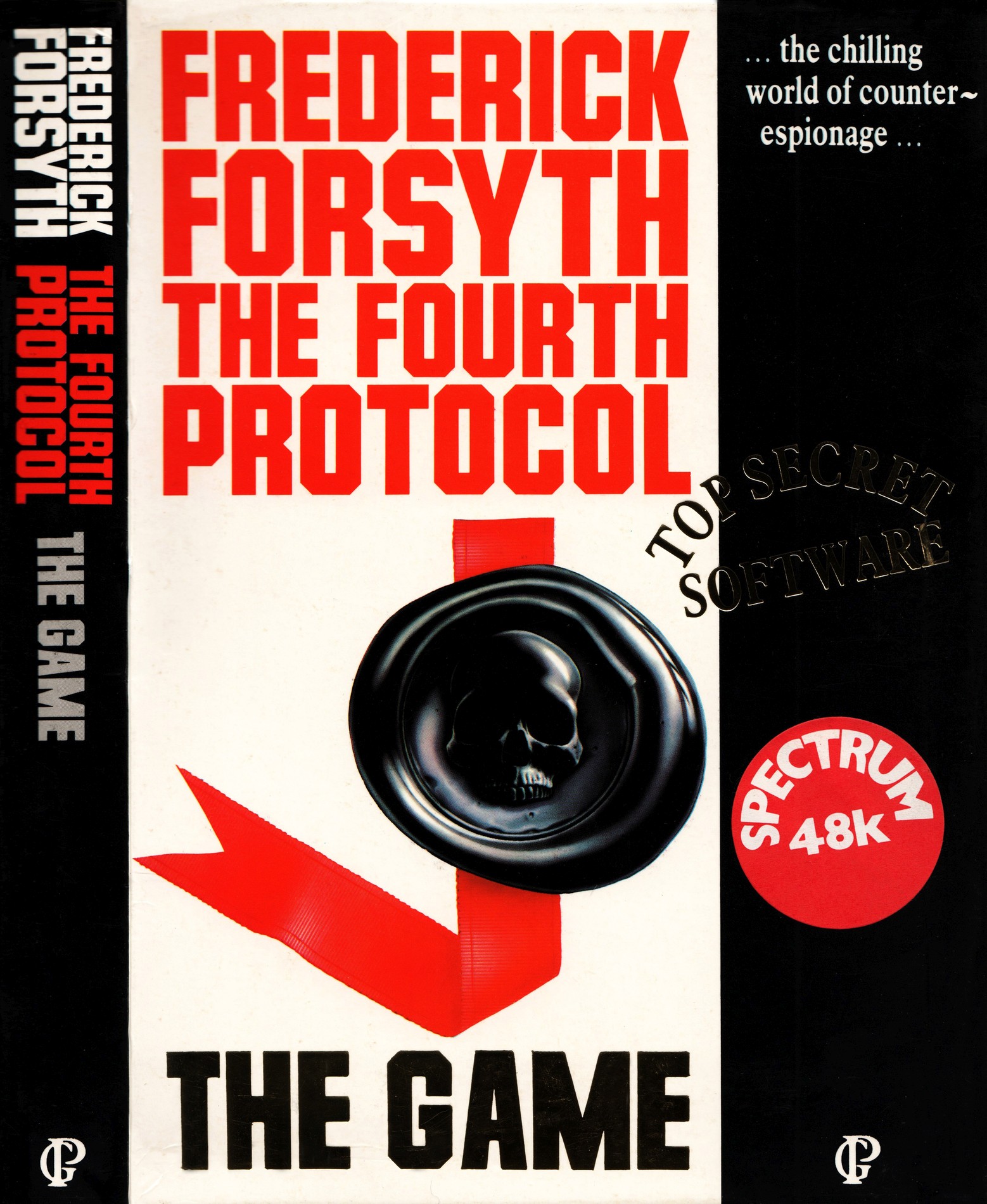
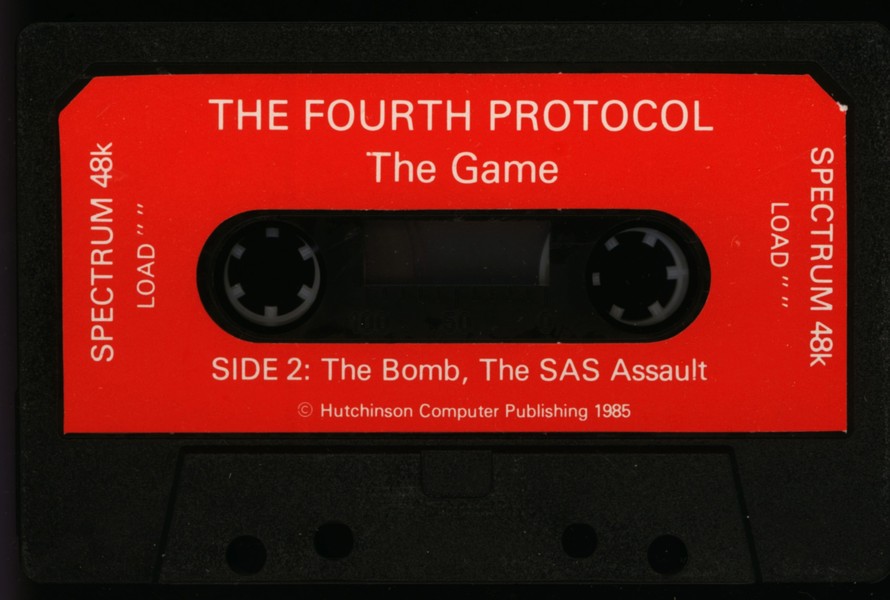
(Boots)_Back.jpg)
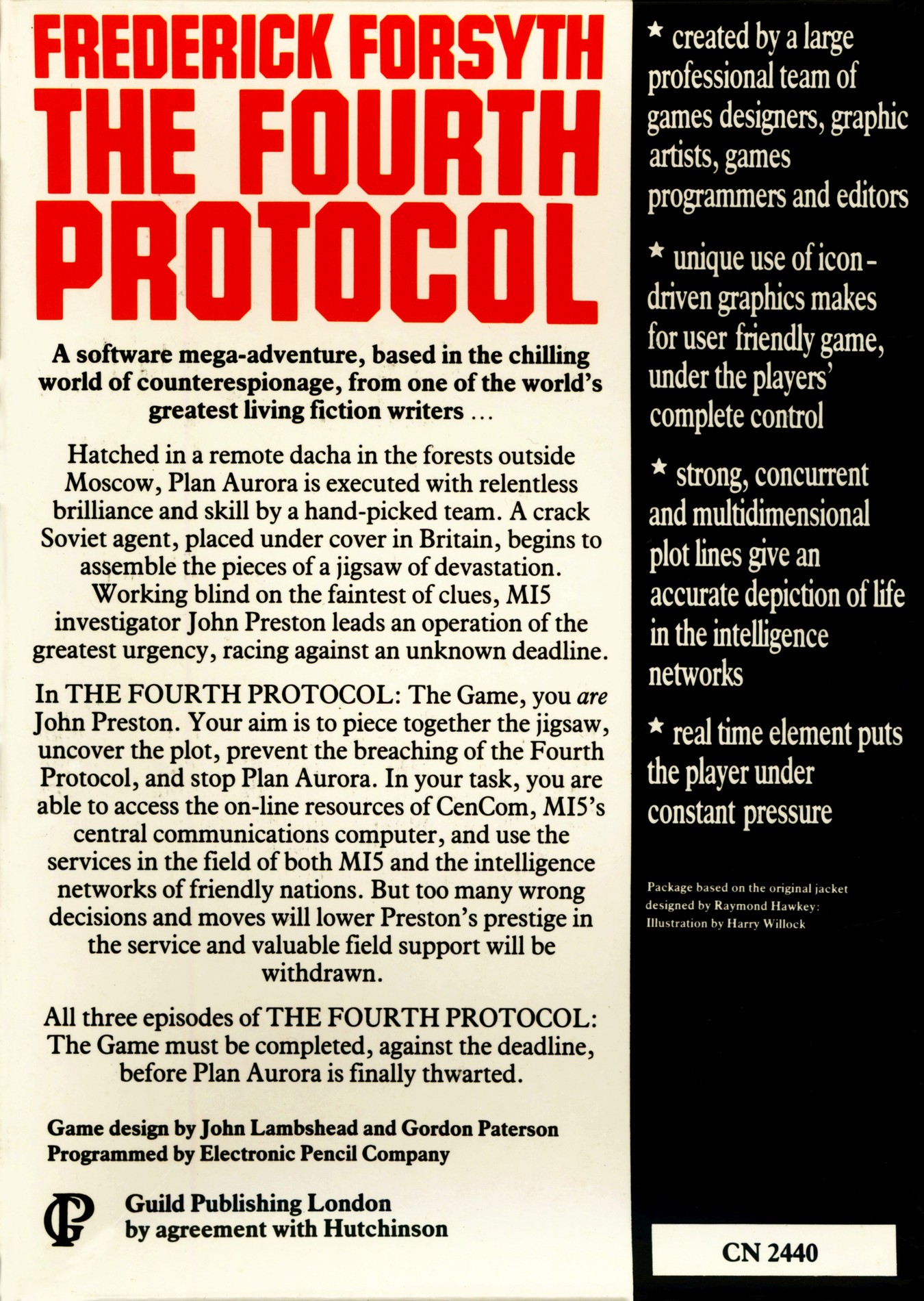
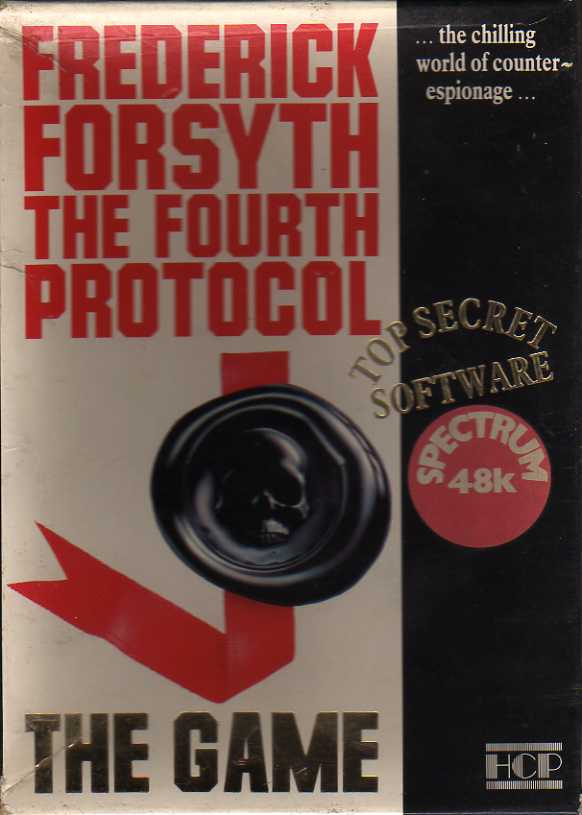
(Boots)_Front.jpg)
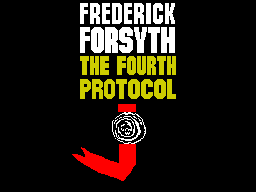
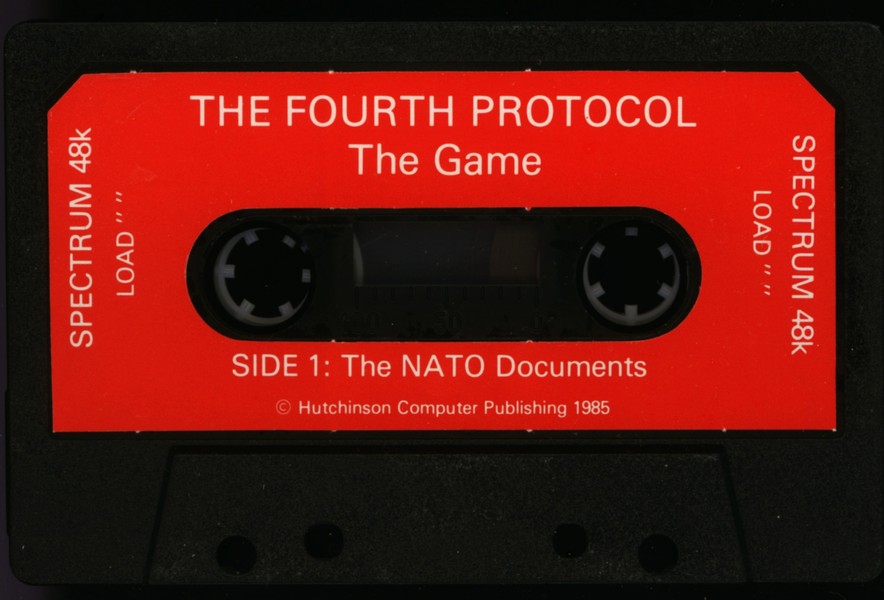
Discussion
Nobody has started a thread about this yet.
Remarks
This game has parts where you need to use a decoding pad included with the game, to decipher messages. According to a feature in the Big K magazine: "This will be engineered so that it is virtually impossible to photocopy [...] making life harder for pirates".
Publication
The game was intended to be released on May 23rd 1985, but it was delayed until June 20th due to a programming hitch.
Releases
- 20 Jun 1985Hutchinson Computer Publishing Sold as The Fourth Protocol - The GamePound sterling 12.95
- 1985Boots Sold as The Complete Fourth Protocol
- 1985Century Communications Ltd
- 1985The Home Computer ClubPound sterling 8.95
Play
- fourthprotocol.zipRZX playback file
- FourthProtocolThe.tzx.zipTape image English68 KB
- FourthProtocolThePart1.tap.zipTape image English39 KB
- FourthProtocolThePart2.tap.zipTape image English30 KB
- FourthProtocolThePart3.tap.zipTape image English17 KB
Documents
- FourthProtocolThe.txtInstructions English33 KB
- FourthProtocolThe(EN).pdfInstructions English1,992 KB
Files and rights
No permission is on record either way. Screens and pictures are copied here on a take-down basis: if you hold the rights and want something removed, say so and it goes.
Credits
- John LambsheadGame Design/Concept
- Gordon PatersonGame Design/Concept
- Andrew J. GlaisterCode
- David JonesCode
- Ray OwenIn-game Graphics
Sign in to credit somebody, or say what these people did.
Awards
- Crash SmashCrash19 · 1985
- Sinclair User ClassicSinclair User40 · 1985
Scores
In the magazines
- Sinclair User #401985 · Overall5/5
- Your Computer #81985 · Overall4/5
- Crash #191985 · Overall Value9/10
Elsewhere on the web
- WorldOfSpectrum 28 votes8.12
Awards and competitions
Computer Gamer's Game of the Year Awards 1985
- 2Best Adventure
In the magazines 76
ACE (Advanced Computer Entertainment) #12Sep 1988 · p.79
ACE (Advanced Computer Entertainment)
No longer available. Check for second hand stocks on Amstrad, C64 and Spectrum. It's a shame this highly enjoyable investigation game is no longer widely available because it's still one of the best of its kind. It's based on the Frederick Forsyth book, and was out before the film. It's in three parts, which are quite wide ranging, as you try to unravel an international plot. The first part of the game involves tracking down the person who leaked some documents, solving other cases and proving your ability along the way. Then it's off to locate and deactivate a nuclear bomb which has been planted in London. All three sections are well presented and use an icon system. You've got a lot of freedom in what you do, so it's easy to follow up on red herrings. The whole thing is very difficult to solve but is completely engrossing. If you haven't got a copy and can't get hold of one then you'll just have to wait till somebody has the gumption to re-release it or convert it for the 16- bit machines.
Sinclair User #44Nov 1985 · p.22
Part adventure, part arcade, part strategy, The Fourth Protocol heralded a new generation of icon-driven games software. As MI5 agent John Preston you use the manpower at your disposal, together with the computer databanks, to uncover a KGB plot to detonate a nuclear device in Britain. The fast detailed graphics realistically depict your office terminal, memos, reports and voice prints, and there is a suitably apocalyptic finale if you should fail. The only weak element in an otherwise impressive piece of programming is the lapse into traditional verb/noun adventure format towards the end of the game.
Your Spectrum #18Sep 1985 · p.34
Peter Freebrey
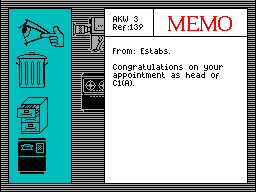
INTELLIGENCE TEST You can't trust anybody these days - or almost. What with spies, counter spies, double agents, triple agents, it's a relief to find someone you can rely on - Peter Freebrey takes you into The Fourth Protocol the adventure based on Frederick Forsyth's novel. Now it's up to you to find out who's on your side and who's on theirs. But you'll need all your intelligence for the task. AKW 3 Ref: 140 MEMO From: Sir Peter Freebrey To: John Preston, head of CI(A) Congratulations, John, on your appointment to head of CI(A) - long overdue, old chap. As you re now in charge of security for all government buildings, it falls within your jurisdiction to investigate the following, rather worrying case. A cache of top secret NATO documents has been send to the department anonymously. It looks like we have a very serious breach of security and it's down to you to find out who's leaking the documents. And we want to know where they're going and why. There's some evidence to suggest that this leak is behind a Russian plot that we have started to uncover - but I'll keep you posted on that one, old boy. As you're new to the department, I'll just give you a run-down on the facilities available to you. From your office you have access to the unit's central computer (Cencom). The principle options allow entry to the Cencom filing system, allocation of 'watchers', the making and receiving of telephone calls (you'll find your list of telephone numbers in the filing system) and access to three terminals that display various memos and reports. I know what you're thinking, old son; the romance has gone out of espionage. Like any other of Her Majesty's civil servants, you'll be more office-bound than Bond. As you'll need to keep tabs on suspects, you have been assigned fifty of the department's top watchers' Make sure you target them wisely, old boy. or you'll find some of your quota will be taken away. Well, you're on your own now, old son. As you uncover more info, you must decide what course of action to follow. You can dip into Cencom for more gen or assign more surveillance bods. Good luck and keep me posted. We must have a snifter at my club when all this has blown over. REPORT For the attention of John Preston. CI(A) The department's suspicions have been confirmed. There is a Russian plot afoot to explode a nuclear device somewhere in England and put the blame onto our American allies. If this is allowed to happen, the resulting political upheaval will be immense. Public pressure will undoubtedly force our withdrawal from NATO and may lead to the establishment of a totalitarian state in the UK Now that you've plugged the leak within MI5, you must use information gleaned from your previous investigations to find the nuclear device that has been smuggled into the country. On completion of your first mission, you will have been given a code-word that allows you to travel around the building and continue your investigations outside. Take with you from the department anything you feel may be of assistance. And a piece of advice - it is imperative you keep a map of all the locations you visit. And don't try to cut too many corners - it's not a good idea to cheat London Transport when travelling by tube. Remember you are operating undercover. You'll also find several locations that can be of great assistance - once you have something to analyse... You must act quickly - time is not on our side. The Prime Minister is watching your progress with interest.
THE BOMB Anything and everything can be of use to a good spy. This icon lets you get your mitts on the goods But be careful - it s all too easy to drop an object by mistake Now you're out of the office, this icon is pretty necessary for letting you get out and about. You're offered five immediate options: enter or leave doors, travel up or down stairs, or walk in one of four compass directions, reached via a sub-menu. Now you wouldn't expect to find a telephone on a tram would you? That's why not all of the options are available to you at all times - only when they're highlighted can you access them. Here you can take a general look at your surroundings, examine a specific object at that location, an even closer look at objects in your possession to see how useful they are at each point in the game and a general inventory.
THE NATO DOCUMENTS When the phone rings, answer it - it's for...! Make a careful note of telephone messages as you can't file them for later perusal. You can also make out-going calls if you know the number - a TELEPHONE list may be found in Cencom. If you're rushed off your feet elsewhere, an incoming call can be put on 'hold' till you're ready to take it. Here you'll be granted access to some of the most closely guarded secrets in the free world. You'll be able to see files transferred via the telephone from the main computer at Blenheim or reaccess memos and reports you've filed during the game. Reports are of a somewhat more formal and secret nature than memos but they're treated in the same manner. Occasionally you'll be expected to choose a specific course of action arising from a report. A list of choices is displayed and awaits your decision. Your effectiveness will be assessed according to how well you handle the situation. Sitreps (situation reports) from your team of watchers may not be very formal but they're very important. It might sound as though you've got a bunch of comedians working for you but underneath they're real professionals. Any leads derived from these sources must be followed up... and promptly Watchers are your prime weapon - they're your eyes and ears whilst you're in the office. At the start you are assigned fifty of these highly trained men and women - chameleons who can blend into any background as they stalk their prey! But only by assigning watchers to suspects at the right time can you be sure of learning who is doing what to whom, where... and when. Read these carefully and make notes of events and names mentioned for possible future action. If you reckon you'll want to read a memo again, file it in the Cencom filing system - you choose the file name. A stacking system operates with memos, so you must trash the top one before you can read the next.
THE SAS ASSAULT Investigations by John Preston of MI5 have led us to this warehouse Inside are a number (unknown) of KGB agents and a nuclear device. A crack six man SAS team has been called in to defuse the situation (and the bomb) Request your choice of weapons. Also, plan of attack and instructions for making the bomb safe. Remember, time is not the only thing that's ticking away... Inside is the nuke and the KGB. Outside is the SAS team, if you're to save Western civilisation as we know it, you're gonna have fo get in there and defuse the bomb. First arm your troops... This is certainly a sad ending to a game with a brilliant concept. No, you can wave goodbye to Coke and Levis — it's caviar and vodka from here on in.
Crash #19Aug 1985 · p.91Crash Smash9/10N/A9/109/109/109/10
Atmosphere 9/10
Vocabulary N/A
Logic 9/10
Addictive Quality 9/10
Overall Value 9/10
Derek Brewster 9/10
DEREK BREWSTER'S ADVENTURE TRAIL DON'T BLAME ME I'M ONLY THE PROGR.... One good rule in life is 'never boast about anything until you have seen it through'. And the other pearl of wisdom you tend to hear is 'things are always more difficult than they look'. Taking the first rule, I think we can safely say there have been many companies who, in retrospect, would have done well to take heed of it. You don't have to look too far for examples of games which demonstrated this rule; here are a few of the notables: Sherlock, The Great Space Race, Swords and Sorcery, and, of course, Psyclapse and Bandersnatch. Big things were expected of these games, not because of previews generating interest but on account of rather large advertising campaigns. Their high public profiles suggested that an enormous expenditure on hype could only possibly indicate a similar expenditure in time and effort on the program itself. Which leads me on to the second rule.... Things are always more difficult than they look but in the case of programming, things become nigh-on impossible. Take the balance between speed and length. The number of moving graphics will determine how quickly a game will play: too many moving graphics and all will be reduced to a snail's pace. If the graphics are stored in a compact form then the code to decipher them may well slow the game appreciably. The length of code becomes critical if the graphics are stored in the form to be displayed on screen, as a vast amount of memory is required. It is difficult to know how this balance between speed and memory will work out until the project is well under way. Indeed, it may only be at this later stage when it is discovered the whole programming project was too ambitious in the first place. This problem besets all programmers but will affect those who work on orders from above to a greater extent. Every software house worth its free publicity has a whole menagerie of Managing Directors, Marketing Managers, Public Relations Officers, Secretaries, Graphic Artists, Games Designers, Cover Artists and someone to make the tea (teaperson). This is a considerable number of people - even if the 's' signifies at the very most two people with each job title, and there is much overlapping of roles eg a Marketing Manager may make the tea, while Public Relations ensure each cup has the correct amount of sugar in it. The problem is that the orders from above can come down so thick and fast, that they soon form a heavy overburden which begins to exert a significant pressure on the poor guy at the bottom - who is none other than our poor little programmer, struggling with the implications of our second rule. He may be having difficulty implementing some big idea from above, perhaps a film/TV/superstar endorsement, and and be desperate to get the game finished knowing how much the software house paid to secure the rights. Don't get me wrong. The marketing, graphic and design skills are a very important part of the new mega-game blockbuster. All I am saying is spare some resources for the people actually programming - it may well pay off. THE FOURTH PROTOCOL Producer: Hutchinson Computer Publishing Retail Price: £12.95 Language: Machine code Author: J Lambshead, G Paterson, Electronic Pencil Co If the last book you read was the Beano annual 1978 then you may not be aware of the standing of The Fourth Protocol (the book) in the literary world - where it was received to great popular acclaim. Much of the panache of that Frederick Forsyth novel dealing with the murky depths of counterespionage is retained in this computer game. It boasts a development team of games designers, graphic artists and programmers, and on loading you can well believe it. The game's concept has been very well implemented and the graphics are attractive and impressive. The plot goes like this: in a remote cottage just outside Moscow a Soviet General Secretary and the British traitor Kim Philby plot the most audacious offensive of the cold war, codenamed Plan Aurora. The plan is to destabilize Britain and force the disintegration of NATO. With the NATO pact out of the way Soviet forces would then be free to overthrow Western Europe. The idea is to renege on the Fourth Protocol, a part of the Non-Proliferation Treaty signed by the 1968 nuclear powers of Britain, USA and Russia. This involves the smuggling of a nuclear device into the UK and exploding it there just before the 1987 General Election. A KGB disinformation program will ensure the nuclear disaster is blamed on an American military installation. The election of a hard left government committed to withdrawal from NATO will lead to a totalitarian state in Britain. Your role is to play John Preston, M15 investigator, who must uncover Plan Aurora and ensure that its insidious results are never realized. Even as you take up your post as head of CI(A) a burglary is taking place somewhere in England. The burglar steals the Glen Diamonds but, more important, disturbs some secret NATO documents. The MOD mandarins receive these files and immediately get the Paragon Committee, whose sole concern is the source of the lost documents, onto the case. Your task is to find who is leaking the secrets, to whom they are being leaked, and why. Meantime, however, you must run a busy secret service department from your Cencom control network, maintaining as low a public profile as possible. Nato Documents is the first of three parts on the tape and is an adventure/strategy game which uses an icon driven control system, i.e. you point to what you want and then press ENTER to reveal further options. The heart of the game is the Cencom display which allows access to news reports, sitreps (situation reports), files, telephone calls (both in and out), surveillance of suspects, and self-assessment to see how you are getting on in your role as head of CI(A). By way of this series of menus and sub-menus the player can effectively control the whole organisation: all its in- and outgoings of both personnel and messages. A file can be read into your Cencom system's memory over the telephone from Blenheim, a building which contains the vast archives of M15. As you might expect, however, codes must be deciphered and entered correctly. Playing, the first thing you might like to do is to track down your personal list of telephone numbers as there is some important information available to you at Blenheim. You will need your one-time decoding sheets in order to enter the code of the week (which, strangely enough, lasted well over a month when I played it). This allows you to download into your Cenco console valuable lists of Cabinet and Foreign Office staff who had access to the stolen documents. Those staff with access to photocopying facilities are shown - which may be significant, as the stolen documents were photocopies. All the while you must concern yourself with the running of a busy secret service department and this can even go as far as probing the private lives of the workers in your office. Miss Abbs has a fling with a foreign diplomat and you must decide what you are going to do about it, if anything. More important is finding out who leaked the NEC privatization documents to the national press and dealing with the culprit. An important part of security is surveillance and choosing the surveillance icon allows you the option of allocating up to 25 watchers to any one suspect, and withdrawing some or all of them as their activities become less critical. The assessment icon is also of great interest to the player as it reports back just how well the player is doing. Your prestige rating will change with the competence of your decisions and has a tangible effect on how many watchers MI5 are prepared to allocate you. These decisions are realistically difficult and you must take care not to air a scandal in public or feed the press any intrigue. The Fourth Protocol: The Game consists of three independent programs - The Nato Documents, The Bomb and The SAS Assault. Secret codes are given when programs 1 and 2 are successfully solved and these words allow entry to the next part. The different parts make up a game which is truly original. It has been exceptionally well planned in that it is very easy to play right from the start and keeps your interest throughout. COMMENTS Difficulty: intricate plot Graphics: good icon graphics Presentation: professionally designed Input facility: icon driven, sometimes has a tendency for an annoying auto repeat Response: instantaneous
Your Computer #8Aug 1985 · p.314/54/5
Overall 4/5
Paul Bond 4/5
Spectrum Hutchinson Computer Publishing Adventure £12.95 So you made it at last, Johnny. Congratulations, Bertie. This is the first phone call you take when as John Preston you take up your post as the new head of section CI(A), pan of MI5 responsible for the security of government buildings. But you'd better not rest on your laurels too long. A burglar steals some diamonds from a flat somewhere in England, but posts back to the MOD some NATO documents that he lifts by accident at the same time. Where's the leak? You'd better find out fast, or you'll end up being posted to the Falklands. Worse, a nuclear bomb may go off somewhere in the UK. The game is divided into three sections: The Nato Documents, the Bomb and the SAS assault. You must solve the first pan to get the password for the second part and so on. The game is a high resolution, predominantly monochrome icon-driven adventure. On the first screen you have representations of three VDUs, a filing cabinet, a VCR camera, a cassette (this is for utilities related to saving the game for continuation at a further date), a graph, and a date pad which can be used to advance time in the game. You just move a pointing hand around the screen to select what you want to do. if you go through the VDU displaying memos a subset of icons is overlayed on the screen enabling you to read, file or bin documents. A dustbin icon is used for the latter function, as on the Macintosh computer.
C&VG (Computer & Video Games) #45Jul 1985 · p.86
Keith Campbell
Paul Coppins
It sure is tough mixing in the world of counter-espionage, high-powered politics, bluff and double bluff. But that's the world of The Fourth Protocol, the new offering from Hutchinson Computer Publishing, based on Frederick Forsyth's best selling novel. A crack Soviet agent has been placed undercover in Britain to work on Plan Aurora which could spell devastation for the United Kingdom. Your mission as MI5 investigator, John Preston, is to head the operation to expose and thwart Plan Aurora... meanwhile, time races on towards an unknown deadline and an appointment with doom. Preston has on-line access to the resources of Cen Com, MI5's central communications computer, and use of the intelligence networks of friendly nations. During the game Preston's rating and progress are constantly monitored by the powers that be. If he fails to impress, the unfortunate spy-catcher could find himself moved out of his job to a less demanding position - perhaps in the Falklands as Chief Security Officer in charge of penguins The first sections of the game use icon-driven graphics enabling you to access the computer, use files, telephones etc. They are easy and - above all - fun to use. Used properly, they will enable you to keep a close watch on all the information and clues gathered. Needless to say, the C&VG team did not manage to save the world. But that could be that the game was a pre-production version which lacked certain screens, music, some graphics and one or two objects. No wonder we didn't get very far! The Fourth Protocol will cost £12.95 for the Spectrum and Commodore 64 on cassette and £15.95 for the Commodore disc.
Sinclair User #40Jul 1985 · p.17Sinclair User Classic5/55/5
Sinclair UserSinclair User Classic
Overall 5/5
John Gilbert 5/5
Publisher: Century/Hutchinson Price: £12.95 Memory: 48K Warning - possible breach of the Fourth Protocol... As John Preston, and newly appointed head of C1(A) it is your job to look after military security and, ultimately, uncover a British traitor and a plan to destabilise a nation of the Western Alliance. The game comprises three sections, called The NATO Documents, The Bomb and The SAS Assault. In order to get into the last two you must use a code which is given to you in the previous section. You begin in your office, reading memos sent by your superiors, using the phone, despatching watchers to tail suspects and receiving reports on the movements of potential traitors. The game is controlled using a series of innovative and visually attractive icon screens. All input is made by moving a pointing finger to one of the icons and pressing ENTER. Three terminals at the bottom of the screen provide contact with the outside world. The one on the left is used to read reports from watchers, the middle one gives you access to your reports and the one on the right allows you to read your memos. File access is gained through the CenCom computer located in the basement of your office building. You can put your own files on the system or run checks and voiceprints on characters. Files not held on CenCom can be accessed by ringing Blenheim and entering the correct code. Once you have the file code the second section of the game can be loaded. The Bomb covers a trip around the building picking up useful objects for your search across Britain to find the nuclear device. The building has four floors, connected by lifts. Although icon-driven, the options are flexible enough to allow characters to talk to you and for you to move easily and quickly. Once you have located the bomb you can access the third and undoubtedly the weakest part of the game, The SAS Assault. You must arm your squad and place them around the building using a schematic plan. In this sequence you use simple verb/noun sentences with a list of words available on request. Having blasted your way to the room containing the bomb, you have only seconds in which to defuse it, all the while fighting off KGB guards. Two seemingly irrelevant bits of information, chanced upon earlier in the game, are necessary to successfully render the device harmless. The Fourth Protocol is the work of the Electric Pencil team and that is shown in the professional polish of the game. The icon graphics are excellent and the speed is incredible. Although some icon actions, such as those used for movement, can take longer than traditional adventure text input, their use generates a high tech atmosphere in keeping with the game. It is one of the most enjoyable, complex but easy to operate games which I have played in a long time. Even if you do not like the Frederick Forsyth's book you will, nevertheless, like the software.
Tips27
- Your Sinclair #27Mar 1988 · p.84
- Crash #48Jan 1988 · p.58
- Your Sinclair #20Aug 1987 · p.80
- Crash #43Aug 1987 · p.75
- Your Sinclair #18Jun 1987 · p.74
- Computer Gamer #25Apr 1987 · p.30
- C&VG (Computer & Video Games) #66Apr 1987 · p.61
- Sinclair User #57Dec 1986 · p.100
- Your Sinclair #11Nov 1986 · p.64
- Your Sinclair #10Oct 1986 · p.69
- ZX Computing #30Oct 1986 · p.86
- MicroHobby Especial #3Jun 1986 · p.22
- Your Sinclair #6Jun 1986 · p.66
- Sinclair User #51Jun 1986 · p.57
- C&VG (Computer & Video Games) #56Jun 1986 · p.87
- C&VG (Computer & Video Games) #56Jun 1986 · p.86
- C&VG (Computer & Video Games) #55May 1986 · p.71
- C&VG (Computer & Video Games) #53Mar 1986 · p.71
- Sinclair User #47Feb 1986 · p.12
- Crash #24Jan 1986 · p.169
- C&VG (Computer & Video Games) #51Jan 1986 · p.104
- Crash #24Jan 1986 · p.117
- C&VG (Computer & Video Games) #50Dec 1985 · p.48
- C&VG (Computer & Video Games) #49Nov 1985 · p.40
- Crash #21Oct 1985 · p.115
News/Note21
- Sinclair User #62May 1987 · p.20
- Your Sinclair #9Sep 1986 · p.79
- C&VG (Computer & Video Games) #58Aug 1986 · p.38
- Computer Gamer #16Jul 1986 · p.7
- Sinclair User #52Jul 1986 · p.10
- Popular Computing Weekly #24Jun 1986 · p.21
- C&VG (Computer & Video Games) #51Jan 1986 · p.102
- Crash #23Dec 1985 · p.56
- Sinclair User #39Jun 1985 · p.7
- Sinclair User #38May 1985 · p.7
- Computer Gamer #2May 1985 · p.5
- Crash #16May 1985 · p.12
- ZX Computing #18Apr 1985 · p.21
- Home Computing Weekly #107Apr 1985 · p.4
- Popular Computing Weekly #14Apr 1985 · p.4
- Sinclair User #35Feb 1985 · p.10
- Personal Computer Games #15Feb 1985 · p.9
- Crash #13Feb 1985 · p.7
- Home Computing Weekly #91Dec 1984 · p.10
- Micro Adventurer #13Nov 1984 · p.7
- Popular Computing Weekly #41Oct 1984 · p.5
Feature6
- ACE (Advanced Computer Entertainment) #14Nov 1988 · p.28
- ACE (Advanced Computer Entertainment) #12Sep 1988 · p.77
- Your Spectrum #18Sep 1985 · p.34
- Crash #18Jul 1985 · p.72
- Computer Gamer #3Jun 1985 · p.14
- Big K #10Jan 1985 · p.91
Full-page ad6
- Sinclair User1986 · p.132
- Sinclair User #45Dec 1985 · p.155
- Sinclair User #44Nov 1985 · p.131
- Sinclair User #43Oct 1985 · p.131
- Computer Gamer #3Jun 1985 · p.2
- Computer Gamer #2May 1985 · p.2
Letters5
Information1
- SSD-IISep 1999
Review1
- MicroHobby #70Mar 1986 · p.15
CompoResult1
- Sinclair User #42Sep 1985 · p.8
CompoEntry1
- Sinclair User #40Jul 1985 · p.103
Licensed from
- The Fourth ProtocolBookFrederick Forsyth
Related
- Ports
- (Amstrad CPC), (Commodore 64), (PC/DOS)
- Elsewhere
- WikipediaCASASpectrum +2A/+3 IncompatibilityCentre for Computing HistoryMobyGamesRZX ArchiveThe TipshopUVLRZX Archive - YouTube
- Same entry at
- Spectrum ComputingZXInfo
Reviews from people here
Sign in to write about this, or make an account. It takes a minute and lets you correct the catalogue too.
Everything ZXDB can hold about this is here.
Sign in to correct or add to this.
Hold the rights to this and want it taken down?