
Bridge Player
Casual Game: Card · ZX-Spectrum 48K · 1 players · English
CP Software · 1983 · Pound sterling 8.95
BridgePlayer, 1 of 3
Discussion
Nobody has started a thread about this yet.
Play
- BridgePlayer.tzx.zipTape image English16 KB
- BridgePlayer.tap.zipTape image English15 KB
- BridgePlayer.tzx.zipTape image English13 KB
Documents
- BridgePlayer.txtInstructions English9 KB
Files and rights
No permission is on record either way. Screens and pictures are copied here on a take-down basis: if you hold the rights and want something removed, say so and it goes.
Credits
- Richard Wheencredited
Sign in to credit somebody, or say what these people did.
Scores
In the magazines
- Sinclair User #261984 · Gilbert Factor8/10
- Personal Computer News #461984 · Overall Value2/5
Elsewhere on the web
- WorldOfSpectrum 3 votes6.67
In the magazines 48
ZX Computing #13Jun 1984 · p.58
S. Datoo
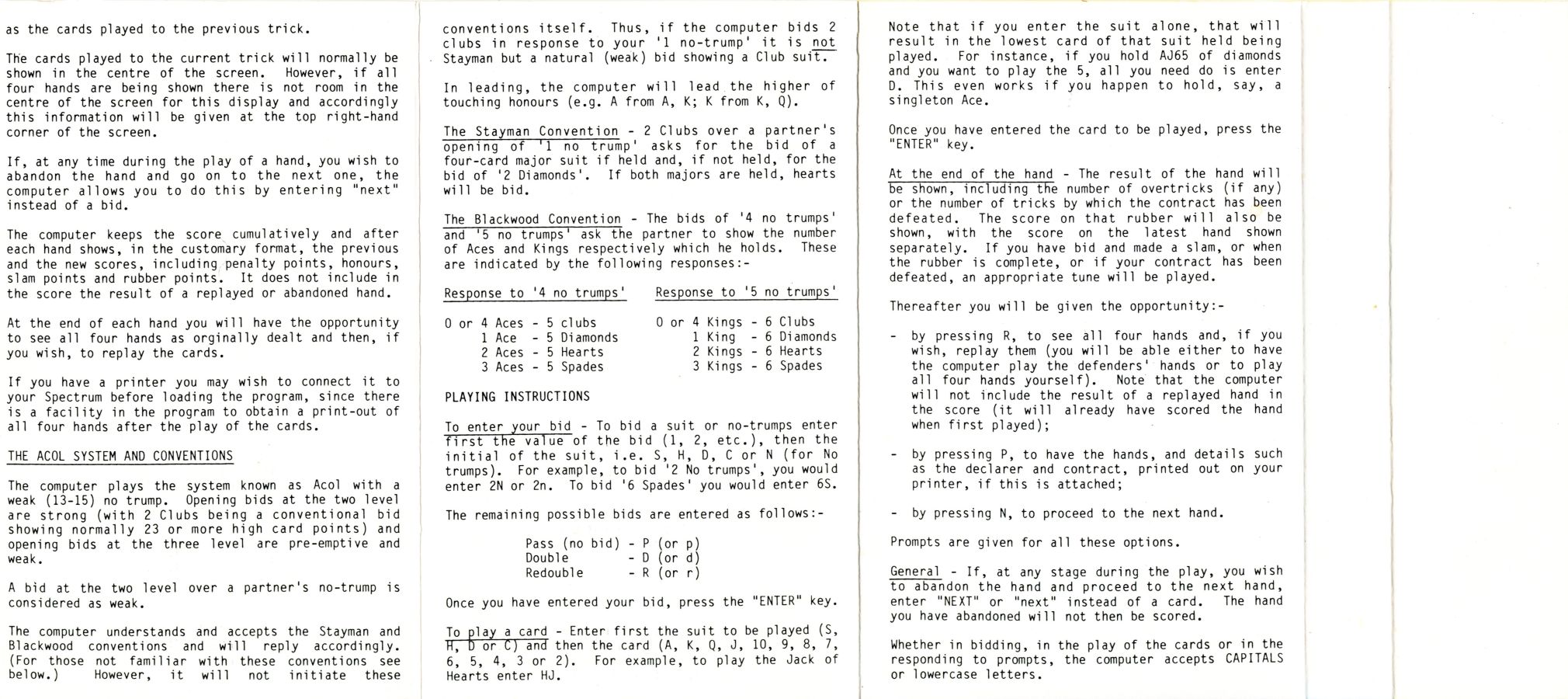
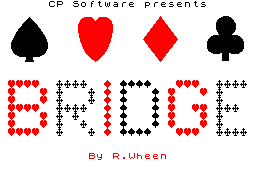
READERS' REVIEWS Once again we throw caution to the wind and air your opinions on the software currently available for the ZX machines. BRIDGE PLAYER CP Software S. Datoo If you are a keen bridge player and have sometimes been stuck at making up a foursome, then I can recommend CP Software's 'Bridge Player' for the 48K Spectrum. Unlike some other bridge games software on the market which basically consist of bridge tutors with predetermined hands and play, Bridge Player allows you to actually bid for your contract, as well as play each hand as you see fit. On loading the program, you are greeted by a very cleverly designed title, making use of the four suits. You are then asked to wait while the computer shuffles, deals and sorts the cards. Following that you are given the option of either playing the game properly, so that only your hand is revealed and the bidding for the contracting commences, or alternatively you may 'cheat' and see all four hands and then decide on the contract. The play then begins with the lead from East or West, depending on who is declarer, after which dummy's hand goes down. You are always South. As far as the bidding goes, the computer uses the standard ACOL system and also understands and accepts BLACKWOOD and STAYMAN conventions. It will not however, generate bids using these conventions, but will only respond to them. Apart from the 'table' in the centre of the screen and declarer's and dummy's hands, the display shows the hand number, the dealer, whether any pair is vulnerable and the contract. The number of tricks won by each pair is shown at the bottom left of the screen, and a flashing indicator on the bottom right shows the winner of the last trick. The faint hearted have the option of quitting if they find they have entered into an impossible contract. This is done by entering the word "next" instead of a card, and the Spectrum goes on to the next hand. If you play the wrong card when you should follow the suit being played, the Spectrum will forgive your "faux-pas" and revoke the trick without penalty. When the hand has been played, the display changes to a score card and here a nice little touch has been added. If the contract has been defeated you will be commiserated with a few bars of "The Funeral March" but if you have won the rubber, the Spectrum will play some of Cliff Richard's "Congratulations". You will also be told how much you have won if each point is worth one pound! The only criticism I have of the program is that you always have to play the contract as declarer and dummy and East/West are always the defenders. You may certainly, during the bidding stage, leave East/West in a contract but you will be informed that you and your partner have the majority of points between you. You will then be asked if you wish to rebid or play the next hand, without the computer having to play as declarer/dummy as well as your partner. It would improve the program immensely if the opposition could also play as declarers.
Sinclair User #26May 1984 · p.358/10
Gilbert Factor 8/10
BRIDGE THAT GAP AND MAKE THAT CONTRACT BRIDGE PLAYER Memory: 48K Price: £8.95 BRIDGE TUTOR (ADVANCED) Memory: 16K Price: £5.95 If you are an avid bridge player you will know that it is often very difficult to find three other people to play what is perhaps the most exciting and complex of card games. Unless you go to classes it is also difficult to have the opportunity to learn more advanced play without upsetting expert partners or losing a little cash. CP Software has come to the rescue with two programs designed to meet the problems - Bridge Player and Bridge Tutor - Advanced. Both programs use the Acol bidding system and accept most conventional bids, including the Stayman and Blackwood conventions. Full cassette notes supplement the programs and give comprehensive instructions on the playing method. In Bridge Player it is assumed that you have some idea of the basics of bridge playing. The computer will shuffle and deal a new random hand each time and you can then elect either to bid your hand in the normal way, following it with the game, or you can choose to see all four hands, decide the contract and declarer, and then play out the contract. When the play is completed, the score is displayed with details of vulnerability. If you did not make the contract, the program even plays the Dead March in sympathy. You can review and replay the hand if you wish, though a replayed hand will not count towards your score. Each hand can be printed-out if you have a printer and general operating procedure is very simple, enabling you to get straight into the play. Remember, every hand is new, so you can go back to Bridge Player time after time. Bridge Tutor - Advanced offers 40 pre-dealt hands for the more competent player. Each hand must be loaded separately after you have loaded the main program, so do not forget to follow the instructions on-screen - the prompts are very helpful. The play is similar and will allow only the recommended card to be put down. After the hand has been played, there is a very full explanation of the bidding and play it was designed to illustrate. You may go direct to the explanation at any time or replay the hand. Both programs are well-designed, with clear graphics using a green table. They are of a high quality and will be of great use to players who want to improve their game.
Personal Computer News #46Jan 1984 · p.502/52/53/54/54/52/52/5
Features 2/5
Documentation 2/5
Performance 3/5
Usability 4/5
Reliability 4/5
Overall Value 2/5
Ted Ball 2/5
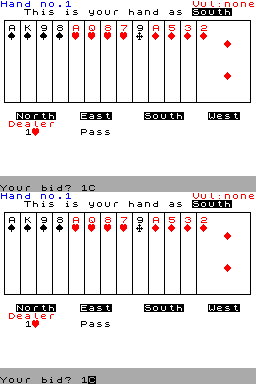
NAME: Bridge Player SYSTEM: ZX Spectrum, 48K PRICE: £8.95 PUBLISHER: CP Software, [redacted] FORMAT: Cassette OTHER VERSIONS: None OUTLETS: Mail order BRIDGING THE DIFFERENCE Two bridge packs for Spectrum and Dragon are dealt by Ted Ball, but does either come up trumps? Bridge is a new arrival on the home computer scene, probably because it is more difficult to program. CP Software's Bridge Player for the 48K Spectrum is the first program I have seen to actually play random bridge hands. The other bridge programs available are for teaching and allow you to play only predetermined hands. The program deals random bridge hands. You bid the south hand while the program bids the other three hands, and at the end of the bidding you play the contract as declarer and the program plays the two defenders' hands. IN USE The instructions for using the program and some information about the Acol bidding system used by the program are printed on the cassette insert. The program is very easy to use, with prompts appearing on the screen whenever necessary. There is not a lot in the way of graphics, you get a full size display of your hand in the bidding but during the play the hands are laid out like a diagram in a book. The program is accurate on opening bids and first round responses to opening bids, and gives the correct replies to the Stayman and Blackwood conventions. Apart from that it is very erratic, sometimes making the right bid but more often under or overbidding, calling a suit instead of no trumps, or vice versa. But, if your own bidding is steady you can get into a reasonable contract, although it will not always be the best. The program is similarly erratic in its defence. The opening lead usually attacks your weak point, probably because it 'cheats' and looks at all four hands, and the program will cash enough top tricks to defeat the contract whenever it can. The rest of the defence is very poor, apparently worked out on a trick by trick basis rather than planned ahead. The program makes elementary mistakes like establishing a long suit but getting it blocked so it can't run the suit. The worst mistake I found, was when it ruffed with a card that could be overruffed by dummy although it had a trump higher than any in dummy. The program is written entirely in Basic, but the only really slow part is when it shuffles, deals and sorts hands. In bidding and playing, the program responds in seconds. VERDICT Bridge Player is good enough to give you an enjoyable game and shows a home computer can play the game. Although it is likely to be superseded by machine code programs it is a creditable first attempt.
Advert40
- Your Spectrum #8Oct 1984 · p.64
- Sinclair User #31Oct 1984 · p.145
- Your Spectrum #7Sep 1984 · p.22
- Sinclair User #30Sep 1984 · p.119
- Personal Computer Games #9Aug 1984 · p.114
- Sinclair User #29Aug 1984 · p.42
- Your Computer #7Jul 1984 · p.22
- Sinclair Programs #21Jul 1984 · p.25
- Sinclair User #28Jul 1984 · p.24
- Sinclair User #27Jun 1984 · p.42
- Your Computer #6Jun 1984 · p.22
- Your Computer #5May 1984 · p.134
- Sinclair User #26May 1984 · p.90
- Sinclair User #25Apr 1984 · p.112
- Your Computer #4Apr 1984 · p.203
- Your Computer #3Mar 1984 · p.218
- Sinclair User #24Mar 1984 · p.52
- Your Computer #2Feb 1984 · p.231
- Sinclair User #23Feb 1984 · p.56
- Your Computer #1Jan 1984 · p.22
- Sinclair User #22Jan 1984 · p.158
- Your Computer #12Dec 1983 · p.88
- Sinclair User #21Dec 1983 · p.163
- Home Computing Weekly #36Nov 1983 · p.19
- Home Computing Weekly #35Nov 1983 · p.24
Letters3
- Sinclair User #26May 1984 · p.21
- Personal Computer News #53Mar 1984 · p.8
- Sinclair User #23Feb 1984 · p.26
Review2
- Popular Computing Weekly #18May 1984 · p.56
- Home Computing Weekly #45Jan 1984 · p.24
Licensed from
- BridgeCardunofficial
Related
- Tags
- Bridge
- Elsewhere
- UVL
- Same entry at
- Spectrum ComputingZXInfo
Reviews from people here
Sign in to write about this, or make an account. It takes a minute and lets you correct the catalogue too.
No description recorded.
Sign in to correct or add to this.
Hold the rights to this and want it taken down?