Address Manager
General: Business · ZX-Spectrum 16K · 1 players
Oxford Computer Publishing · 1983 · Pound sterling 8.95
Also known as Adress Manager (German), Gestion de Fichier (French)

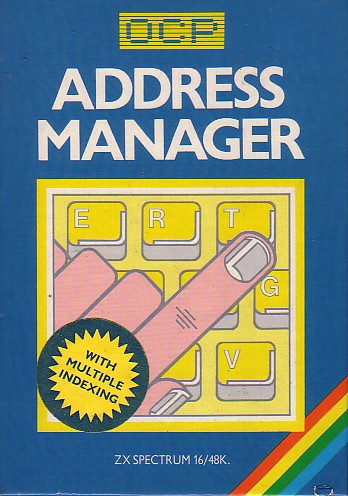
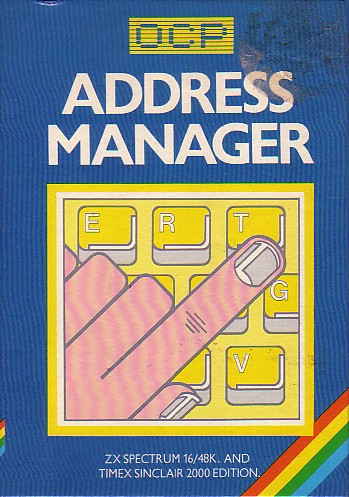
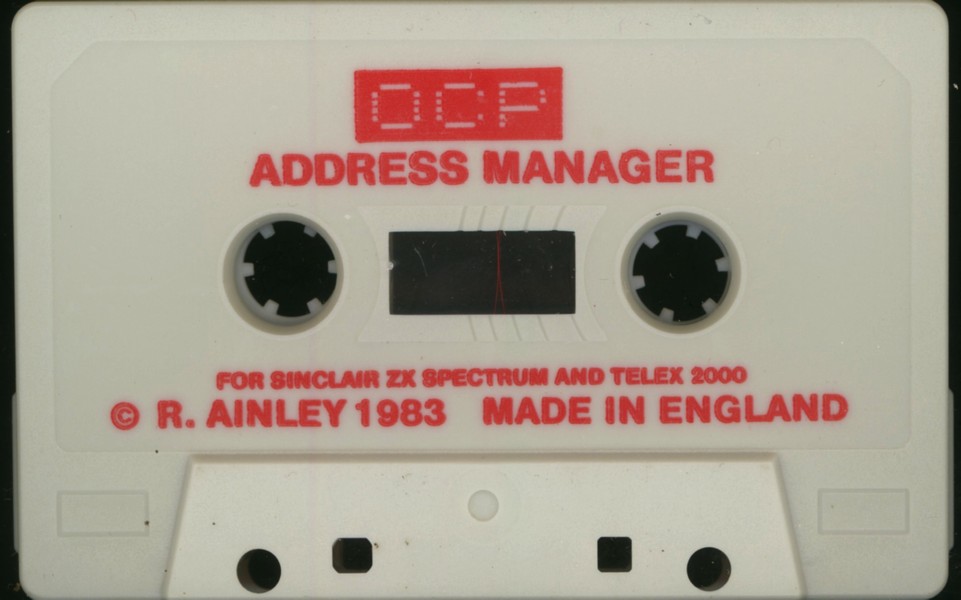
.jpg)
.jpg)
Discussion
Nobody has started a thread about this yet.
Remarks
cf. {Plus 80 Address Manager|Oxford Computer Publishing|0008569}. Also came as a freebie on side B of {Word Manager|Oxford Computer Publishing|0012236}.
SPOT: also "+80" version at £19.95; separate standard/"+80" prices £8.95/£19.95
Releases
- 1983Oxford Computer PublishingPound sterling 8.95
- 1983ABC SoftSpanish peseta 2500.00
- 1985Oxford Computer Publishing Sold as Adress Manager, Gestion de Fichier
Play
- AddressManager.tzx.zipTape image English9 KB
- AddressManager.tap.zipTape image English5 KB
Documents
- AddressManager(EN).pdfInstructions English303 KB
Files and rights
No permission is on record either way. Screens and pictures are copied here on a take-down basis: if you hold the rights and want something removed, say so and it goes.
Credits
- Francis O. Ainleycredited
Sign in to credit somebody, or say what these people did.
Scores
In the magazines
- Personal Computer News #151983 · Overall Value4/5
Elsewhere on the web
- WorldOfSpectrum 1 votes5.00
In the magazines 87
Personal Computer News #15Jun 1983 · p.324/5
Overall Value 4/5
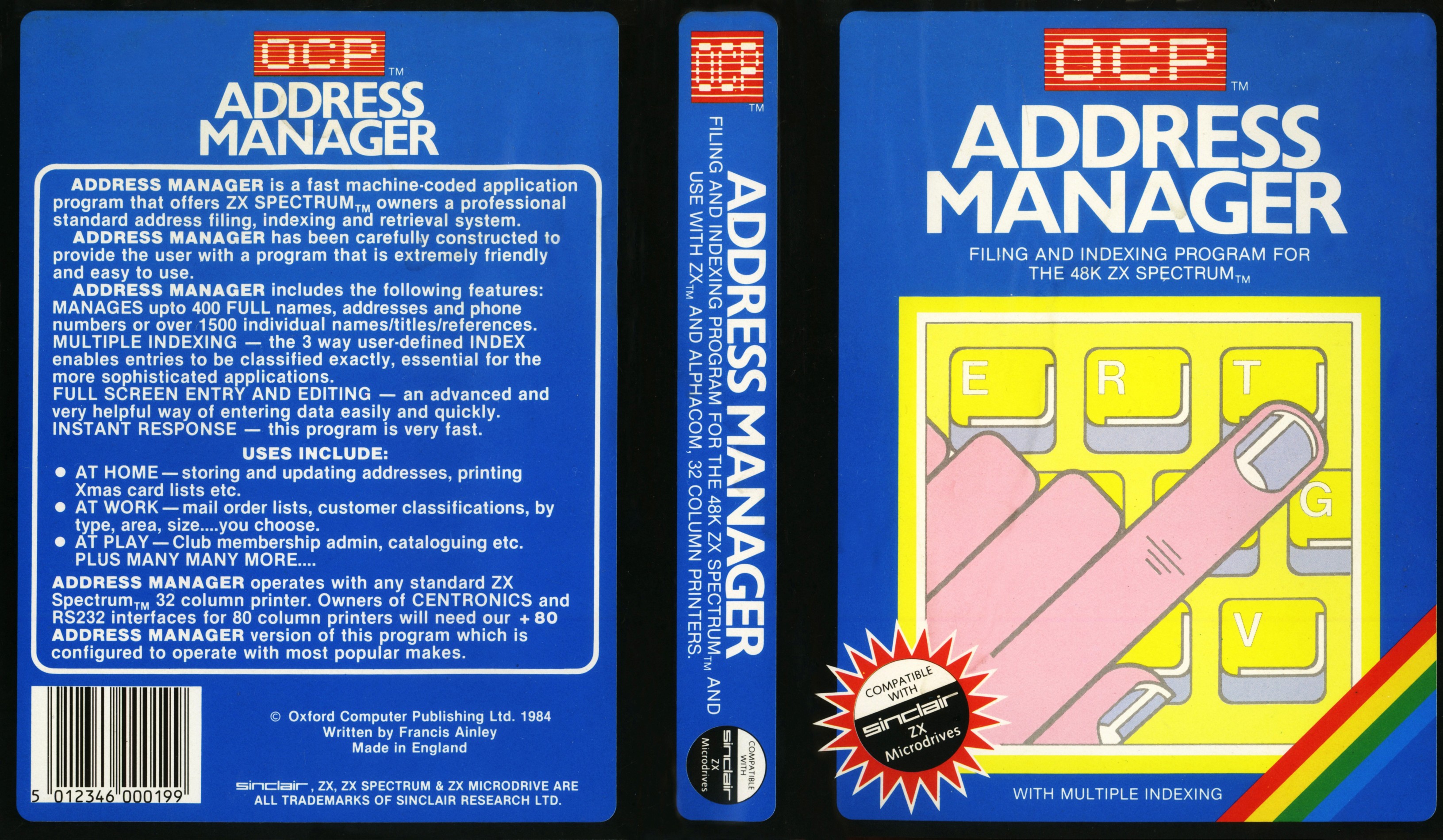
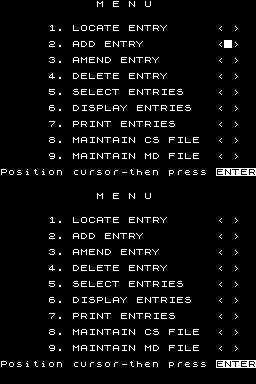
NAME: Address Manager APPLICATION: Computerised address book SYSTEM: ZX Spectrum PRICE: £8.95 PUBLISHER: OCP, [redacted] FORMAT: Cassette LANGUAGE: Machine code. ZX COMPRESSES ADDRESSES Address Manager is primarily for home use, allowing you to keep your address book on cassette and use your Spectrum to find and update addresses. FEATURES The program is menu-driven, the menu coming tip on the screen when you load the tape and after you have finished each operation. The options available are Locate Entry, Add Entry, Amend Entry, Delete Entry, Select Entries, Display Entries, Print Entries, and Maintain File. The Select Entries option is a multiple indexing facility. When you enter a name and address into a file you can specify three index keys, of three characters each, and you can ask the program to search for combinations of index keys and print out the entries that match. As well as the program there is a simple file of names and addresses on the tape, which you can use to learn the controls and editing methods. PRESENTATION Address Manager comes in a colourfully printed box which contains the program cassette and instruction leaflet, and there is space provided in the box for you to keep your address file tape. The leaflet is nicely printed, with explanations and examples of the program's features, and illustrations to show the screen layout for all of the menu options. IN USE Address Manager is generally quite easy to use, allowing you to select options and move around the different fields of an entry by pressing the cursor control keys. There are, however, some features that are a little more complicated and confusing than they need to be. The editor, which you use when entering or altering names and addresses, can work in several different modes, where you have different ways of getting upper and lower case letters, or numbers and cursor movement. As you will probably use the editor only occasionally, having all these different modes is more likely to be confusing than helpful. I was unable to crash the program, even when it was loading, saving, and printing, and the program performed correctly, doing everything exactly as described in the instructions. The only problem I had was with the tape, which has the program on both sides, but one side would not load correctly. Faulty tapes may not be common, but it is important, and if anything goes wrong with the tape you will not be able to get at your address file until you can get another copy. VERDICT Address Manager is a well-designed program, and the multiple indexing facility is a sufficient advantage to compensate for the extra trouble involved in loading a tape instead of using an old-fashioned address book.
Advert75
- ZX Computing #24Apr 1986 · p.73
- Your Sinclair #1Jan 1986 · p.11
- Crash #24Jan 1986 · p.155
- Sinclair User #46Jan 1986 · p.77
- Your Spectrum #21Dec 1985 · p.7
- Crash #23Dec 1985 · p.19
- Sinclair User #45Dec 1985 · p.11
- Your Spectrum #20Nov 1985 · p.6
- Crash #22Nov 1985 · p.31
- Sinclair User #44Nov 1985 · p.12
- Sinclair User #43Oct 1985 · p.81
- Sinclair User #42Sep 1985 · p.73
- Sinclair User #40Jul 1985 · p.10
- Sinclair User #36Mar 1985 · p.62
- Your Computer #2Feb 1985 · p.84
- Sinclair User #34Jan 1985 · p.62
- Your Computer #1Jan 1985 · p.26
- Sinclair User1985 · p.92
- Sinclair User1985 · p.101
- Your Spectrum #10Dec 1984 · p.21
- Personal Computer News #92Dec 1984 · p.46
- Personal Computer News #87Nov 1984 · p.34
- Home Computing Weekly #87Nov 1984 · p.41
- Home Computing Weekly #89Nov 1984 · p.41
- Sinclair User #32Nov 1984 · p.133
Full-page ad5
- Your Spectrum #11Feb 1985 · p.32
- Sinclair User #33Dec 1984 · p.48
- Sinclair User #32Nov 1984 · p.135
- Sinclair User #31Oct 1984 · p.108
- Sinclair User #30Sep 1984 · p.90
Review2
- Home Computing Weekly #83Oct 1984 · p.8
- Home Computing Weekly #58Apr 1984 · p.47
News/Note2
- Home Computing Weekly #25Aug 1983 · p.7
- Home Computing Weekly #15Jun 1983 · p.11
Feature1
- MicroHobby Especial #2Mar 1986 · p.14
Classified1
- Home Computing Weekly #2Mar 1983 · p.44
Related
- Tags
- g280
- Elsewhere
- Centre for Computing History
- Same entry at
- Spectrum ComputingZXInfo
Reviews from people here
Sign in to write about this, or make an account. It takes a minute and lets you correct the catalogue too.
No language recorded.
Sign in to correct or add to this.
Hold the rights to this and want it taken down?