
VU-Calc
Utility: Spreadsheet · ZX-Spectrum 16K · 1 players
Sinclair Research Ltd · 1982 · Pound sterling 8.95
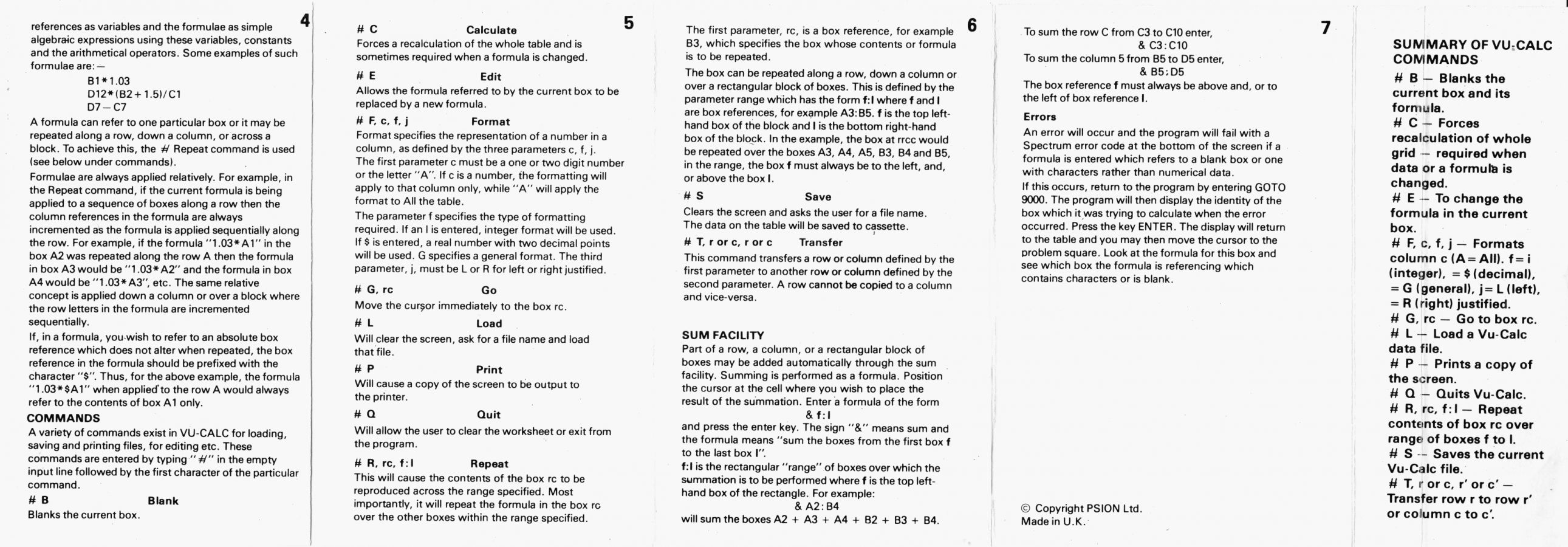
.jpg)
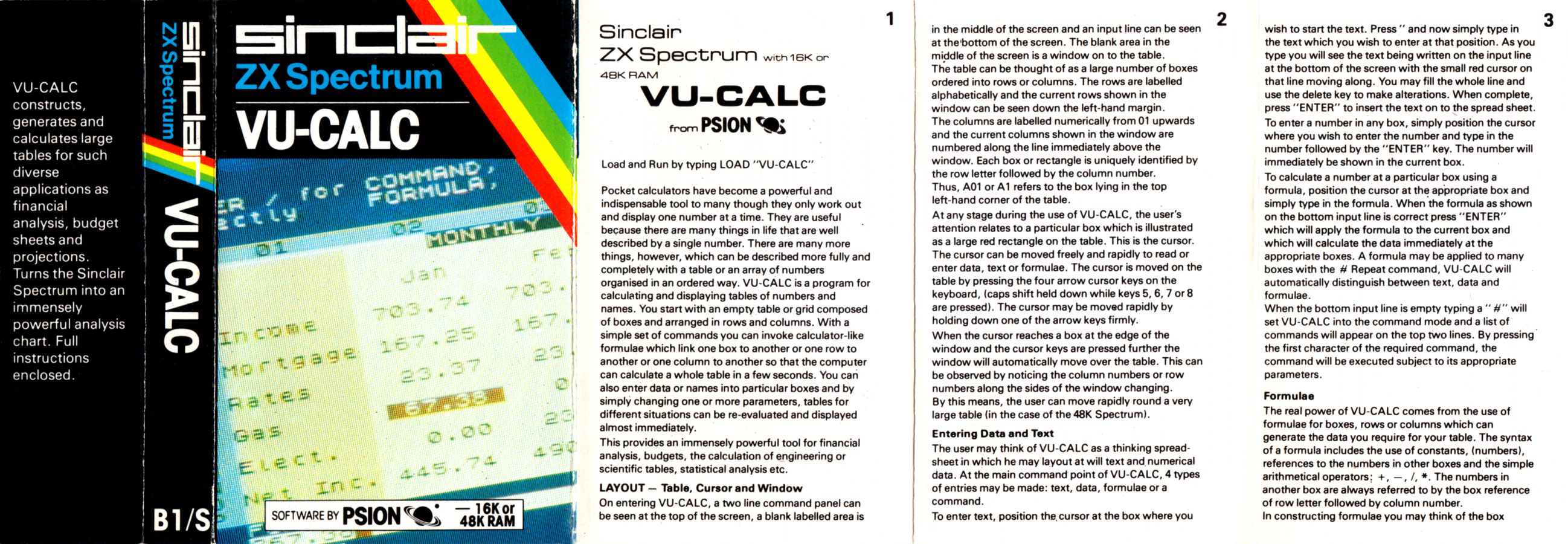
.png)
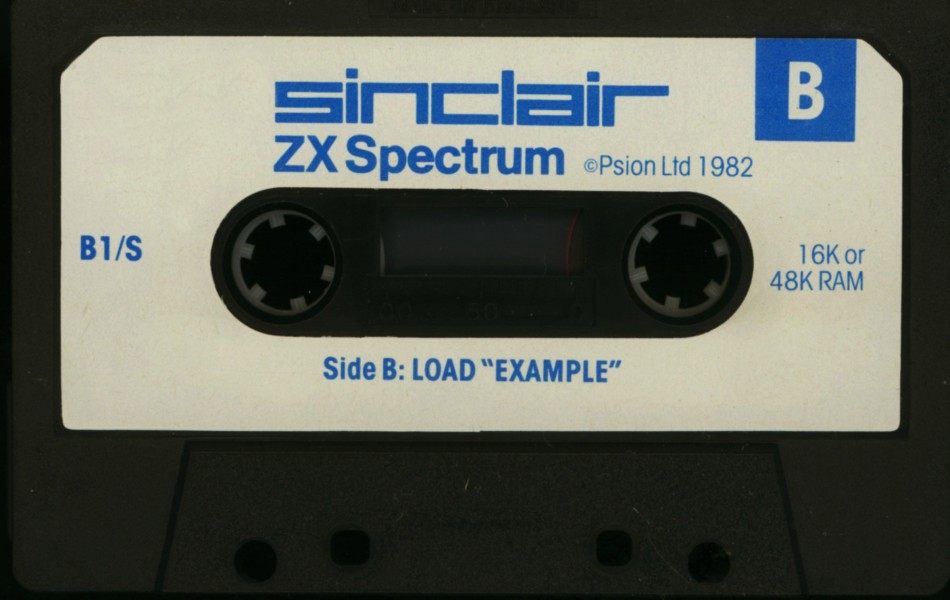
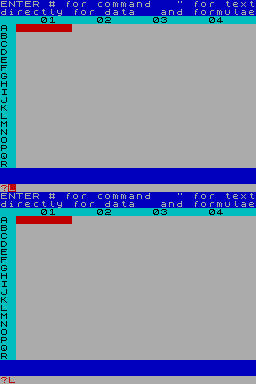
Discussion
Nobody has started a thread about this yet.
Releases
- 1982Sinclair Research LtdPound sterling 8.95
- 1982Investronica S.A.Spanish peseta 2675.00
- 1982Rebit Computer
Play
- VU-Calc.tzx.zipTape image English10 KB
- VU-Calc.tap.zipTape image English6 KB
- VU-Calc(example).tap.zipTape image English5 KB
- VU-Calc(InvestronicaS.A.).tzx.zipTape image Spanish10 KB
- VU-Calc(RebitComputer).tzx.zipTape image Italian10 KB
Documents
- VU-Calc.txtInstructions English11 KB
Files and rights
Distribution permission is on record, granted to another archive rather than to this one. Screens and pictures are copied here; everything else links to the archive that holds it.
- AllowedSinclair Research Ltd → WorldOfSpectrum
Credits
- Psion Software Ltdcredited
Sign in to credit somebody, or say what these people did.
Scores
In the magazines
- Sinclair User #91982 · Gilbert Factor7/10
- Sinclair User #151983 · Gilbert Factor7/10
- Sinclair User1984 · Gilbert Factor7/10
In the magazines 14
Sinclair User1984 · p.227/107/10
Gilbert Factor 7/10
John Gilbert 7/10
APPLICATIONS FOR THE SINCLAIR AT HOME AND THE OFFICE Why not stop playing games and do something interesting with your computer? John Gilbert assesses the software. Both Sinclair machines can be used for storing data of any kind, such as names and addresses, telephone numbers and even an ever-changing record of appointments. The ZX-81 needs the 16K RAM pack for any kind of data storage and both information and program have to be SAVEd together. That operation can take up to six minutes and is not very reliable. The Business and Household cassette was one of the first packages available from Sinclair for the ZX-81. It contains three programs. One will keep a record of names and addresses, the next will keep a diary of events and the final program will handle all your financial transactions. The first two programs worked well but the Bank Account program on side two took six minutes to load and SAVEing the program back on to tape with the data proved very difficult. The Business and Household cassette may not be very reliable but it is good value at £3.95. One of the best data management systems available for the ZX-81 is The Fast One, from Campbell Systems. It allows the user to set up files of information in any way which suits him. The program will sort and search for specific bits of data and if numbers are being used it is possible to total them. The program is a step forward for the ZX-81 and is very flexible. It will do any kind of filing job, given the limitations of the machine. The Fast One costs £15 and has a comprehensive manual. Spreadsheet programs are an easy way to store numerical data in a format in which it can be used for calculations. The spreadsheet is a matrix, or table, on the screen and any box, or cell, in the table can be addressed by using the letters and numbers which run horizontally and vertically at the sides of the sheet. This type of program can be used to plan the family budget and calculate automatically running totals of family expenditure. That is only one of the many applications for which it can be used in the home. MiCROL produces a spreadsheet program called Matrix Planner. It is easy to use and has a spreadsheet of eight rows by 30 columns. That configuration can be changed by the user through the program variables. Approximately 300 cells can be created in the matrix before all the 16K of memory is used. Sinclair Research markets two programs similar to the Matrix Planner. Vu-Calc is a program which uses the spreadsheet. It has limitless possibilities and can be used for financial modelling, keeping track of bank accounts and even setting-up scientific experiments which rely on number-crunching for their outcome. The second is Vu-file. It is like Vu-Calc but the user can only store information and not perform calculations on data. Both programs are available for the ZX-81 and Spectrum. ZX-81 versions cost £7.95 and Spectrum versions £8.95. The arrival of the Spectrum set software houses the task of writing programs which can use data files separate from the programs. It has opened the way to storing large amounts of data on cassette and, when the Microdrive arrives, on floppy tape. There are several good programs for data storage on the Spectrum but most of them can be used only on the 48K version. The Database from MiCROL is one such program. The files can be split into documents. Those documents are useful in splitting-up topics within the machine. You can give each document a heading, such as tax, income or budget, and you can have several of them in memory at one time. Documents are split further into records, with one record corresponding to each datum. With that system it is possible to do your tax and budgets at the same time, without having to load the computer twice with information. The program can store up to 999 record lines in memory. The Database costs £9.95 and is complete with handbook. The Masterfile program from Campbell Systems is the most comprehensive of the databases available. It is the successor to The Fast One for the ZX-81 and provides fast access to large amounts of information. The user can also model the program to meet specific requirements. Data can be sorted and searched and reports can be compiled using the system. Masterfile costs £15 for the 48K version and £12 for 16K. The spreadsheets which proved so popular with the ZX-81 are starting to creep on to the Spectrum market. The best, so far, are from MiCROL and Microsphere. Both are remarkably similar. The MiCROL version costs £9.95 and provides the basic calculating power of most spreadsheet programs. It is easy to use and can help the business or home user with complicated calculations. Omnicalc is the spreadsheet from Microsphere. It is ideal for someone who has just found the spreadsheet concept but it is also a very powerful tool for anyone who has used one previously. The program seems to work faster than the MICROL spreadsheet and information can be accessed almost immediately. The screen format is easily understandable and very clear for the first-time user. The program contains a help option which lists the commands available through the spreadsheet. Omnicalc costs £9.95. It is complete with a user manual. All-Sort is an interesting utility program for the 48K Spectrum. It enables a user to sort data which has been set up within a home-built program. The data is stored initially in an array and All-Sort can sort up to four of them at once. It can be obtained from Alan Firminger. The program is useful and very fast but at £18 exclusive of VAT it is expensive. Listfile is a program which does exactly what its name suggests. The program allows a user to store lists of data, such as names and addresses, and to access that information very quickly. Data is entered in blocks which can be up to eight lines of 26 characters long. An extra line, called the info line, can be used to index information but that is not printed-out when the printer is used to list the information. Listfile is available for the 16K and 48K Spectrum and can be obtained from G and J Bobker. It costs £10 and has full documentation. Now that the Spectrum has arrived, software manufacturers are beginning to think about software uses other than games on Sinclair machines. The data processing programs could handle many tasks which are centred on the home. Databases, such as the one from MiCROL, are useful for storing textual information, such as a list of favourite records or even knitting patterns. The Microdrive could expand the data processing capabilities of the Spectrum. Information can be accessed more quickly and as a result bigger programs could be stored in memory and data could be fed in bit by bit. The capabilities of the Spectrum could be extended in this way but soon we will have to decide whether it is necessary. Most data processing programs can already deal with more information than the ordinary user needs. It may be proved that that type of application for the Microdrive is a waste of time. Sinclair Research, [redacted]. MiCROL, [redacted]. Campbell Systems, [redacted]. Microsphere Computing Services Ltd, [redacted]. Alan Firminger, [redacted]. G and J Bobker, [redacted].
'Most data processing programs can already deal with more information than the ordinary user needs.'
'There are programs for data storage on the Spectrum but most of them can be used only on the 48K version.'
Sinclair User #15Jun 1983 · p.447/107/10
Gilbert Factor 7/10
John Gilbert 7/10
APPLICATIONS FOR THE SINCLAIR AT HOME AND THE OFFICE Why not stop playing games and do something interesting with your computer? John Gilbert assesses the software. Both Sinclair machines can be used for storing data of any kind, such as names and addresses, telephone numbers and even an ever-changing record of appointments. The ZX-81 needs the 16K RAM pack for any kind of data storage and both information and program have to be SAVEd together. That operation can take up to six minutes and is not very reliable. The Business and Household cassette was one of the first packages available from Sinclair for the ZX-81. It contains three programs. One will keep a record of names and addresses, the next will keep a diary of events and the final program will handle all your financial transactions. The first two programs worked well but the Bank Account program on side two took six minutes to load and SAVEing the program back on to tape with the data proved very difficult. The Business and Household cassette may not be very reliable but it is good value at £3.95. One of the best data management systems available for the ZX-81 is The Fast One, from Campbell Systems. It allows the user to set up files of information in any way which suits him. The program will sort and search for specific bits of data and if numbers are being used it is possible to total them. The program is a step forward for the ZX-81 and is very flexible. It will do any kind of filing job, given the limitations of the machine. The Fast One costs £15 and has a comprehensive manual. Spreadsheet programs are an easy way to store numerical data in a format in which it can be used for calculations. The spreadsheet is a matrix, or table, on the screen and any box, or cell, in the table can be addressed by using the letters and numbers which run horizontally and vertically at the sides of the sheet. This type of program can be used to plan the family budget and calculate automatically running totals of family expenditure. That is only one of the many applications for which it can be used in the home. MiCROL produces a spreadsheet program called Matrix Planner. It is easy to use and has a spreadsheet of eight rows by 30 columns. That configuration can be changed by the user through the program variables. Approximately 300 cells can be created in the matrix before all the 16K of memory is used. Sinclair Research markets two programs similar to the Matrix Planner. Vu-Calc is a program which uses the spreadsheet. It has limitless possibilities and can be used for financial modelling, keeping track of bank accounts and even setting-up scientific experiments which rely on number-crunching for their outcome. The second is Vu-file. It is like Vu-Calc but the user can only store information and not perform calculations on data. Both programs are available for the ZX-81 and Spectrum. ZX-81 versions cost £7.95 and Spectrum versions £8.95. The arrival of the Spectrum set software houses the task of writing programs which can use data files separate from the programs. It has opened the way to storing large amounts of data on cassette and, when the Microdrive arrives, on floppy tape. There are several good programs for data storage on the Spectrum but most of them can be used only on the 48K version. The Database from MiCROL is one such program. The files can be split into documents. Those documents are useful in splitting-up topics within the machine. You can give each document a heading, such as tax, income or budget, and you can have several of them in memory at one time. Documents are split further into records, with one record corresponding to each datum. With that system it is possible to do your tax and budgets at the same time, without having to load the computer twice with information. The program can store up to 999 record lines in memory. The Database costs £9.95 and is complete with handbook. The Masterfile program from Campbell Systems is the most comprehensive of the databases available. It is the successor to The Fast One for the ZX-81 and provides fast access to large amounts of information. The user can also model the program to meet specific requirements. Data can be sorted and searched and reports can be compiled using the system. Masterfile costs £15 for the 48K version and £12 for 16K. The spreadsheets which proved so popular with the ZX-81 are starting to creep on to the Spectrum market. The best, so far, are from MiCROL and Microsphere. Both are remarkably similar. The MiCROL version costs £9.95 and provides the basic calculating power of most spreadsheet programs. It is easy to use and can help the business or home user with complicated calculations. Omnicalc is the spreadsheet from Microsphere. It is ideal for someone who has just found the spreadsheet concept but it is also a very powerful tool for anyone who has used one previously. The program seems to work faster than the MICROL spreadsheet and information can be accessed almost immediately. The screen format is easily understandable and very clear for the first-time user. The program contains a help option which lists the commands available through the spreadsheet. Omnicalc costs £9.95. It is complete with a user manual. All-Sort is an interesting utility program for the 48K Spectrum. It enables a user to sort data which has been set up within a home-built program. The data is stored initially in an array and All-Sort can sort up to four of them at once. It can be obtained from Alan Firminger. The program is useful and very fast but at £18 exclusive of VAT it is expensive. Listfile is a program which does exactly what its name suggests. The program allows a user to store lists of data, such as names and addresses, and to access that information very quickly. Data is entered in blocks which can be up to eight lines of 26 characters long. An extra line, called the info line, can be used to index information but that is not printed-out when the printer is used to list the information. Listfile is available for the 16K and 48K Spectrum and can be obtained from G and J Bobker. It costs £10 and has full documentation. Now that the Spectrum has arrived, software manufacturers are beginning to think about software uses other than games on Sinclair machines. The data processing programs could handle many tasks which are centred on the home. Databases, such as the one from MiCROL, are useful for storing textual information, such as a list of favourite records or even knitting patterns. The Microdrive could expand the data processing capabilities of the Spectrum. Information can be accessed more quickly and as a result bigger programs could be stored in memory and data could be fed in bit by bit. The capabilities of the Spectrum could be extended in this way but soon we will have to decide whether it is necessary. Most data processing programs can already deal with more information than the ordinary user needs. It may be proved that that type of application for the Microdrive is a waste of time. Sinclair Research, [redacted]. MiCROL, [redacted]. Campbell Systems, [redacted]. Microsphere Computing Services Ltd, [redacted]. Alan Firminger, [redacted]. G and J Bobker, [redacted].
'There are programs for data storage on the Spectrum but most of them can be used only on the 48K version.'
Your Computer #1Jan 1983 · p.50
Simon Beesley
SPECTRUM SOFTWARE Simon Beesley brave attacks by trolls, bombardment by meteoroids, alien invasions and even English literature to bring you up to date with Spectrum software. The quality of Spectrum software has improved since our last survey but originality remains in short supply. Most of the programs looked at are games programs and the bulk of these are modelled on the arcade classics, Space Invaders, Pac-Man, Defender and Asteroids. Perhaps this is because the games-buying public is only interested in games that fall into a recognisable category. Some of the programs are written entirely in Basic. This need not count against them unless the program displays moving graphics. The Spectrum's keyboard is not very suitable for fast-moving games although Quicksilva and Softek offer a joystick option on some games. Sinclair has released a large range of programs written for them by ICL and Psion. By and large the ICL programs compare badly with those from Psion and have a rather amateurish look to them. Each of the tapes in the ICL games series, Games 1 to 4, contains four short Basic programs with titles such as Galactic Invasion, Skittles and Train Race. These are the sort of programs a reader might like to key in from a listing in a magazine. They are fairly simple and afford a limited entertainment for a short period. In view of their variety each package represents reasonable value although they are perhaps more suitable for young people. ICL has also produced five titles in a Fun to Learn series covering Music, History, English Literature, Geography and Inventions. They present a variety of quizzes on their respective subjects. Players can compete against each other in a race in which correct answers send them further along the track. It is difficult to know who these programs are aimed at. One soon runs through the stock of questions and the same names appear in different types of question. Some of the information presented is too obscure or eccentric to make the programs suitable for schools. In the English Literature quiz, for example, Ian Fleming rubs shoulders with Shakespeare and little-known seventeenth century playwrights. Psion's collection of programs is far more satisfactory. Hungry Horace is loosely related to Pac-Man but has a number of original features. Horace has to eat the flowers in a park while avoiding the park guards. Sinclair gives a fair description of Horace as a subtle and amusing cartoon-style game. Psion's 48K chess program was written in conjunction with Microgen. It plays a remarkably strong game even at the lower levels. As an averagely competent player I found it quite hard to beat at level two, although its play seemed to come adrift under pressure. The program's response time is quick and the pieces are quite easily distinguished. Space Raiders and Planetoids are Psion's versions of the arcade games Invaders and Asteroids. Anyone who still has an appetite for these games will find the Psion products more than adequate. With Vu-Calc, Psion has scaled down a Visi Calc-type program to the dimensions of the home micro. These programs, which are commonly used on business micros, are usually described as providing a financial spreadsheet. They enable the user to lay out financial data in rows and columns and enter formulae to run calculations on parts or all of the table. Vu-Calc supplies a range of commands for entering data, text or formulae and performing calculations. Basic programs which have been compiled by Softek's compiler, Super C, run - typically - 10 times faster. The compiler sits at the top of memory above RAMtop and is unaffected by a New command. It leaves room for a Basic program of up to 8K and a further 10K for data. The present version cannot cope with decimals, arrays or string variables. These limitations need not be too constricting. Strings, at least, can be stored in the data areas as ASCII codes and accessed through Peeks. At £14.95 this is good value; particularly since it enables people to write commercially respectable programs without having to master machine code. However Softek insists that anyone planning to sell programs created with the compiler should negotiate for the rights. Softek claims that trace elements have been included to detect code written with Super C. The arcade game Asteroids crops up on almost every micro. Softek's version Meteoroids is one of the fastest for the Spectrum with good colour and sound. Softime supplies the Spectrum with a digital clock and alarm at the top of the screen which remains there while other programs are loaded and running. The last program in Softek's list is Zolan Adventure, a standard text adventure game which has the merit of fitting into 16K. Quicksilva gave Time Gate considerable advance publicity claiming it would make as great an impact on the computer games' world as had Atari's Star Raiders. As it turns out the game closely resembles Star Raiders. Given that the Atari is a rather more sophisticated computer it is not surprising that the Spectrum version of the game does not match the original. Time Gate presents a view from the cockpit of a spaceship. An instrument panel below contains a long-range scanner and a variety of other indicators giving information on the ship's position and damage incurred. Your mission is to clear 18 galactic sectors of enemy craft. The business of locating and firing on enemy ships is not as interesting as attending to all the other procedures. The controls are not as responsive as on the Atari. Nonetheless this is an elaborate game with excellent graphics - certainly one of the best so far for the Spectrum. In an impressive piece of synthesised speech Quicksilva's chess program announces itself at the beginning with 'this is the Chess Player'. Rather startlingly the packaging relates how the Chess Player, an Evil Being, has called for a challenger from Earth. The planet's survival hangs on your game - and you thought you were just going to have a quiet game of chess. In the event the program plays quite a strong game with the option of six levels of play. The board is clearly displayed and the pieces are well designed. Psion's chess program, however, is probably the better player. Meteor Storm, another version of Asteroids, also announces itself but rather indistinctly. There is not much to choose between this and Planetoids or Meteoroids. The major problem for software companies writing an Asteroids-type game must be in finding an alternative title. Spectres from Bug-Bvte gives a novel twist to the Pac-Man concept. Eddie the electrician has to rewire a haunted house. Instead of eating or picking up objects in his path he lays down light bulbs. Reaching one of the four power generators enables him to illuminate the house and drive off ghosts. The game has a highly individual flavour. The characters which glide around at a fairly leisurely pace, are engagingly different from the standard Pac-Man figures. This is one of the more original games yet to appear for the Spectrum. Gulpman from Campbell Systems is also based on Pac-Man but refreshingly breaks away from the standard format. It offers a choice of 15 different mazes and allows the speed of play to be set. At the highest levels your little man dashes around the maze at quite a pace. By contrast Jega's Specman, written in Basic, is dismally slow. Sometimes the ghosts seem to be stricken with paralysis and unwilling to take up the chase. Escape from New Generation Software is a variation on the maze theme which involves escaping from dinosaurs. The dinosaurs - brontosauri, pterodactyls and such like - pursue the player's character with considerable animation through the maze which is shown in bird's-eye view. Silversoft's games Orbiter and Ground Attack are probably the best Spectrum versions of the arcade games Defender and Scramble. Ground Attack requires the player to fly a plane through a series of caverns and avoid or destroy missile attacks from the ground. Scramble from Work Force is similar but marginally slower. Likewise Avenger - Abacus' version of Defender - is competent but not quite as accomplished as Silversoft's. MYSTERY MEETING A gold sundial worth £6,000 is the prize for the first person to solve all the clues in the adventure game Pimania. As in Kit Williams' book Masquerade, deciphering all the clues will lead the winner to a meeting at a specific time and place with representatives from the authors of the game, Automata Ltd. The other side of the program tape contains a disco single. Automata say that the clues are scattered in the music, the program and the graphics. Although we did not proceed very far with the quest the music and opening graphics seemed to bear out Automata's claim that the world of the Pi Man is totally bizarre. Melbourne House has based The Hobbit, on the novel by Tolkien. It helps to have read the book in finding your way about. The Hobbit is claimed to be an advance on other adventure games because it introduces other characters from the book who react to the player in the role of Bilbo with an independent life of their own. It also allows you - in a limited fashion to enter sentences rather than single words as commands. In practice these extra features do not amount to much and give the program greater scope for the sort of inconsistencies adventure programs are prone to. Thorin, for example, repeatedly enters the scene and tells you to hurry up. This is irritating because you were unaware that he had left and he seems to be totally devoid of constructive ideas. It is not a good idea, however, to kill him off since he sometimes proves too strong for your attack. Furthermore the manual suggests that you should stay on good terms with the other members of your party if you are to succeed in your quest. Many of the locations in the adventure are illustrated by some excellent graphics. We only managed to complete 7.5 percent of the game during which the text was accompanied by six different pictures. The graphics coupled with a more varied plot than usual make The Hobbit superior to any other adventure games available for the Spectrum. Both the assemblers tested, from ACS and PI software, require Z-80 mnemonics to be entered in Rem statements and both allow addresses to be replaced by labels. The ACS assembler, Ultraviolet, costs twice as much at £7.50 but offers several extra features. It allows multiple statement lines and provides five pseudo-instructions such as DEFS, which inserts a string of ASCII characters at the current assembly position. ACS also supplies a disassembler, infrared. Like the assembler this has two different versions for 16K or 48K machines. The program is easy to use and docs all you might expect from it. Company: SN Program Name: Games 1-4 Memory Required: 16K Price: £4.95 Company: SN Program Name: Hungry Horace Memory Required: 16K Price: £5.95 Company: SN Program Name: Fun to Learn Memory Required: 16K Price: £6.95 Company: SN Program Name: Chess Memory Required: 48K Price: £7.95 Company: SN Program Name: Vu-Calc Memory Required: 48K Price: £8.95 Company: SN Program Name: Space Raiders Memory Required: 16K Price: £4.95 Company: SN Program Name: Planetoids Memory Required: 16K Price: £4.95 Company: QS Program Name: The Chess Player Memory Required: 48K Price: £6.95 Company: QS Program Name: Time Gate Memory Required: 48K Price: £6.95 Company: QS Program Name: Meteor Storm Memory Required: 16K Price: £4.95 Company: SF Program Name: Super C Memory Required: 48K Price: £14.95 Company: SF Program Name: Meteoroids Memory Required: 16K Price: £4.95 Company: SF Program Name: Softime Memory Required: 16K Price: £3.95 Company: SF Program Name: Zolan Adventure Memory Required: 16K Price: £4.95 Company: SS Program Name: Orbiter Memory Required: 16K Price: £5.95 Company: SS Program Name: Ground Attack Memory Required: 16K Price: £5.95 Company: MH Program Name: The Hobbit Memory Required: 48K Price: £14.95 Company: AU Program Name: Pimania Memory Required: 48K Price: £10 Company: WF Program Name: Scramble Memory Required: 16K Price: £4.95 Company: AB Program Name: Avenger Memory Required: 16K Price: £4.95 Company: CS Program Name: Gulpman Memory Required: 16K Price: £5.95 Company: JS Program Name: Specman Memory Required: 16K Price: £5.95 Company: AC Program Name: Ultraviolet Memory Required: 16K Price: £7.50 Company: AC Program Name: Infrared Memory Required: 16K Price: £6.75 Company: PI Program Name: Assembler Memory Required: 16K Price: £3.75 Company: NG Program Name: Escape Memory Required: 16K Price: £4.95 Company: BB Program Name: Spectres Memory Required: 16K Price: £8
Sinclair User #9Dec 1982 · p.487/10
Gilbert Factor 7/10
John Gilbert
SINCLAIR RESEARCH OPENS ITS SPECTRUM SOFTWARE LIBRARY John Gilbert assesses the new major range of cassettes and finds they do not compare to the machine's qualities. When the Spectrum was launched, Sinclair stressed that a software library containing business, household and games cassettes would be released soon. The first batch of tapes was launched at the Personal Computer World Show in September. The launch was billed as one of the great attractions of the show. Spectrum owners were looking forward to putting their machines to good use. Unfortunately, unlike the Spectrum computer, the new tapes are disappointing. The Spectrum library, with a few exceptions, seems to be a repeat of the ZX-81 range of tapes launched in early 1982. The new software library comprises several sections which include the Fun to Learn series, Pastimes and Games. There are also several cassettes, such as Bio-rhythms and Vu-calc, which stand alone. There is a set of five games cassettes. Each contains four 16K games which have been written for Sinclair by ICL. The games are very simple and it is easy to lose interest in them in a very short time. Several of them, such as Martian Knockout, Invasion from Jupiter, and Galactic invasion, are all based on the same principle - guessing the velocity at which you have to fire a laser cannon at a group of marauding aliens. The game consists of entering the guessed velocity and pressing NEW LINE. That becomes incredibly tedious after the first 10 minutes' play. The rest of the games are either of the Invader, Mastermind or maze types. Daylight Robbery is not only the phrase which might be used to describe some of the new software but is also on the Games Three Cassette, although it has slightly more depth to it than some of the others. The player moves around a maze full of safes. For every safe which can be cracked the player will have the amount of money in it added to the total score. The only danger encountered with entering the safes is that the player must dodge the guards in the maze. The game is enjoyable for a short time but it plays rather like Pacman and is much less addictive. Of the five games tapes in the series so far, Games One seems to be the best value. It contains one of the few games which will last longer than five minutes. Labyrinth is an adventure maze game in which the player must fight monsters to find hidden gold in the maze. Each of the games cassettes costs £4.95, which is somewhat expensive for what they contain. It would have been better to have sacrificed quantity for quality on this occasion. The illustrations on the insert cards are of good quality but people expect better games for the price. Two of the cassettes in the library mysteriously are labelled Pastimes but would have been better-placed in the Games series. They include a Mastermind game called Secret Code; a memory game Kim; and a puzzle, Magic Square. Magic Square is interesting for a time but soon it becomes just another trivial observation game. The computer displays a square filled with rows of letters of the alphabet in a jumbled sequence. One space in the square is empty. Letters can be shifted around using the blank to place the alphabet in the correct sequence. Kim also displays a square but with numbers in it. The numbers disappear one at a time in a random sequence and the player must guess which letter has disappeared each time. Again, the game is interesting but becomes dull and repetitive after a time. The games on the two cassettes do not warrant the title of Pastimes as they are too repetitive and because of the lack of depth the player may soon begin to feel disappointed. Pastimes cost £4.95 each. The Fun to Learn cassettes provide the user with a series of question-and-answer races on various subjects. With only one exception the graphics capabilities and sound facilities of the Spectrum are not used to full advantage. Neither is there a real reward at the end of the tests to induce the user to try again. The cassette which redeems the whole Fun to Learn series is Geography. The computer displays maps labelled with numbers and the user has to guess which numbers correspond to towns and countries displayed below the map. The idea behind the cassette is good and the map display is reasonably detailed. The cassettes in the Fun to Learn series are £6.95 each. The Bio-rhythms cassette from ICL is also very good value. The program will plot bio-rhythms and also calculate the critical days for the intellectual, physical and emotional cycles. The graphics are fairly good but the display is confusing when all the cycles are plotted on one graph. The best cassettes in the range have been produced by Psion. They include Vu-calc, Space Raiders, Planetoids and Hungry Horace, a new Pacman-type game. Space Raiders is an addictive space invaders game. The only thing wrong with it is that it is too easy to achieve a high score. Scores of 10,000 have been reached in less than 10 minutes. Planetoids is an above-average asteroids game which is very difficult to beat for any length of time. The asteroids are displayed in 3D and the players'ship is easy to move around the screen. The game is more difficult to beat, faster, and much more fun than Space Raiders. Hungry Horace is an ideal game for young children. It uses the Pacman mould but is a great improvement on the popular arcade game. Horace is a large purple blob with arms and legs. He wanders up and down the maze-like park eating everything in his path and avoiding the guards who try to capture him. He can scare away the guards by ringing-the alarm in the maze. If he can reach the exit he enters another sector of the maze and continues to the next exit. The game is difficult but after a time a degree of skill can be developed in evading the guards. The mazes become more difficult as the game proceeds and we managed to reach only the third section of the maze. Hungry Horace costs £5.95 and is well worth the money. The cassettes in the new Sinclair range can be split into programs which can be played and enjoyed again and again and those with which the user will easily become bored. There are no really outstanding cassettes in the range so far, although Planetoids, Bio-rhythms, Space Raiders and Hungry Horace can be recommended. These games have the depth in them to be played for months, while the others may leave the Spectrum owner disappointed. All the cassettes mentioned use 16K memory. Further details about the range can be obtained from Sinclair Research, Camberley, Surrey GI15 3BR.
'Of the five games tapes Games One seems the best value'
'There are no really outstanding tapes in the series so far'
Feature4
- Sinclair User1984 · p.22
- Sinclair User #15Jun 1983 · p.44
- Your Computer #1Jan 1983 · p.50
- ZX Computing #3Oct 1982 · p.74
Letters3
- Sinclair User #31Oct 1984 · p.125
- Sinclair User #28Jul 1984 · p.117
- Computer Answers #15Apr 1984 · p.98
Review2
- Home Computing Weekly #12May 1983 · p.32
- Popular Computing Weekly #15Apr 1983 · p.14
Code1
- ZX Computing #30Oct 1986 · p.27
Related
- Elsewhere
- Centre for Computing History
- Same entry at
- Spectrum ComputingZXInfo
Reviews from people here
Sign in to write about this, or make an account. It takes a minute and lets you correct the catalogue too.
No language, description recorded.
Sign in to correct or add to this.
Hold the rights to this and want it taken down?