
Empires
Strategy Game: Management · ZX-Spectrum 48K · 3 players · English
Imperial Software · 1984 · Pound sterling 19.95
Also known as The Challenge of Empires (English)


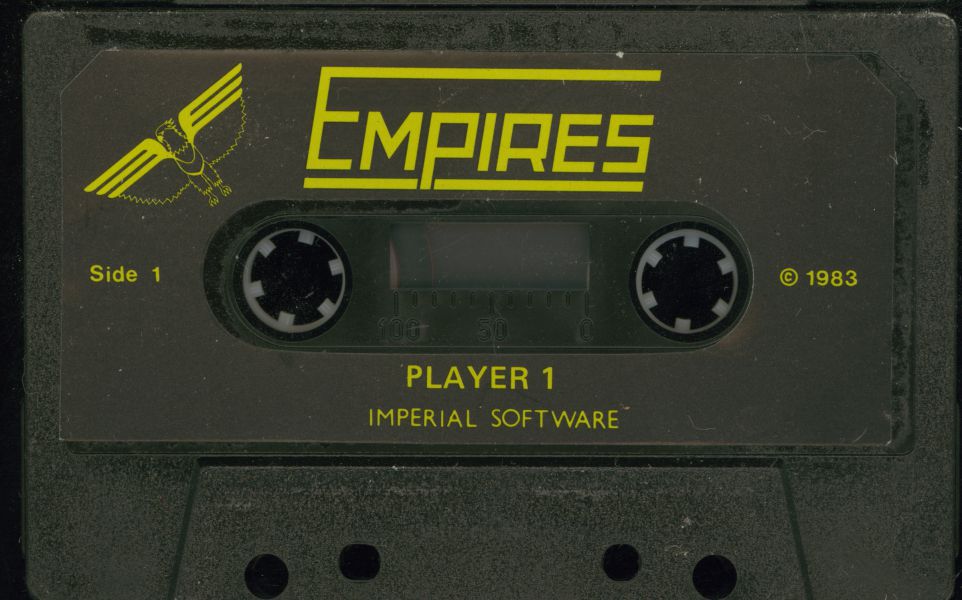
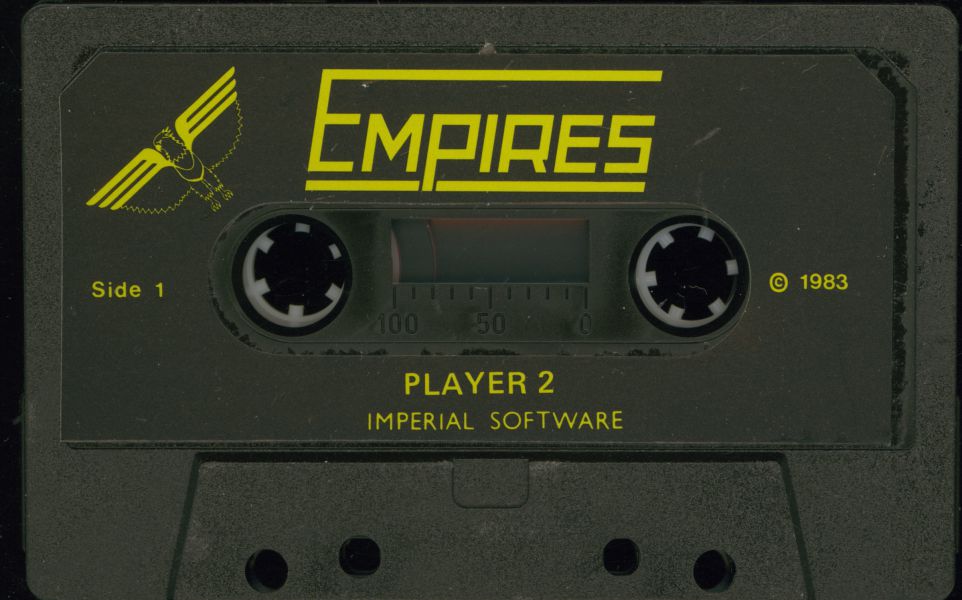
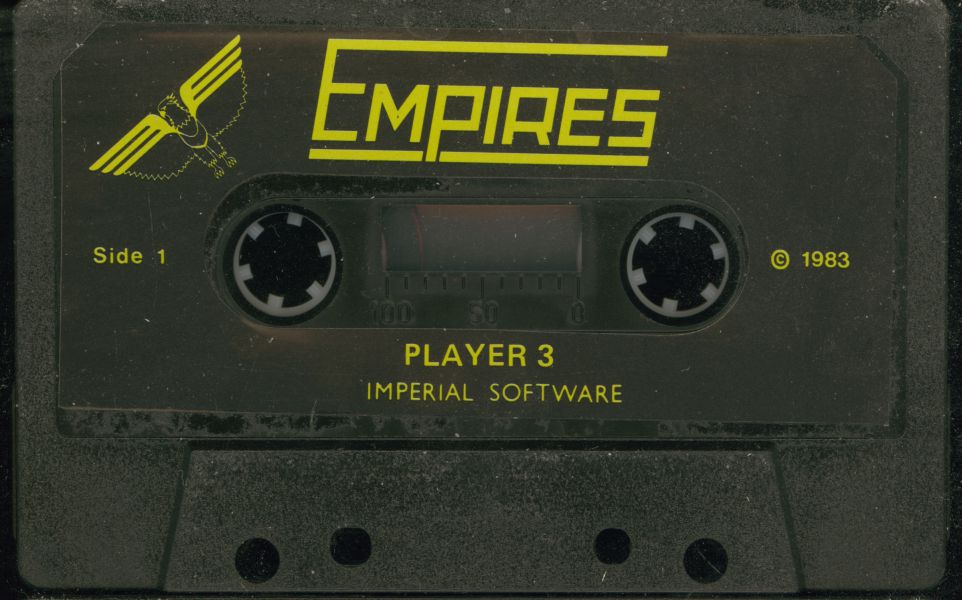
Discussion
Nobody has started a thread about this yet.
Remarks
3 Players and 1 umpire. The game can be expanded to 6 players with the expansion set {The Umpire Strikes Back|Imperial Software|0023350}.
Play
- Empires.tzx.zipTape image English94 KB
Documents
- Empires(EN).pdfInstructions English567 KB
Files and rights
No permission is on record either way. Screens and pictures are copied here on a take-down basis: if you hold the rights and want something removed, say so and it goes.
Credits
- E. Loigorricredited
- G. Morleycredited
Sign in to credit somebody, or say what these people did.
Scores
Elsewhere on the web
- WorldOfSpectrum 1 votes4.00
In the magazines 23
Micro Adventurer #16Feb 1985 · p.12
Ken Matthews
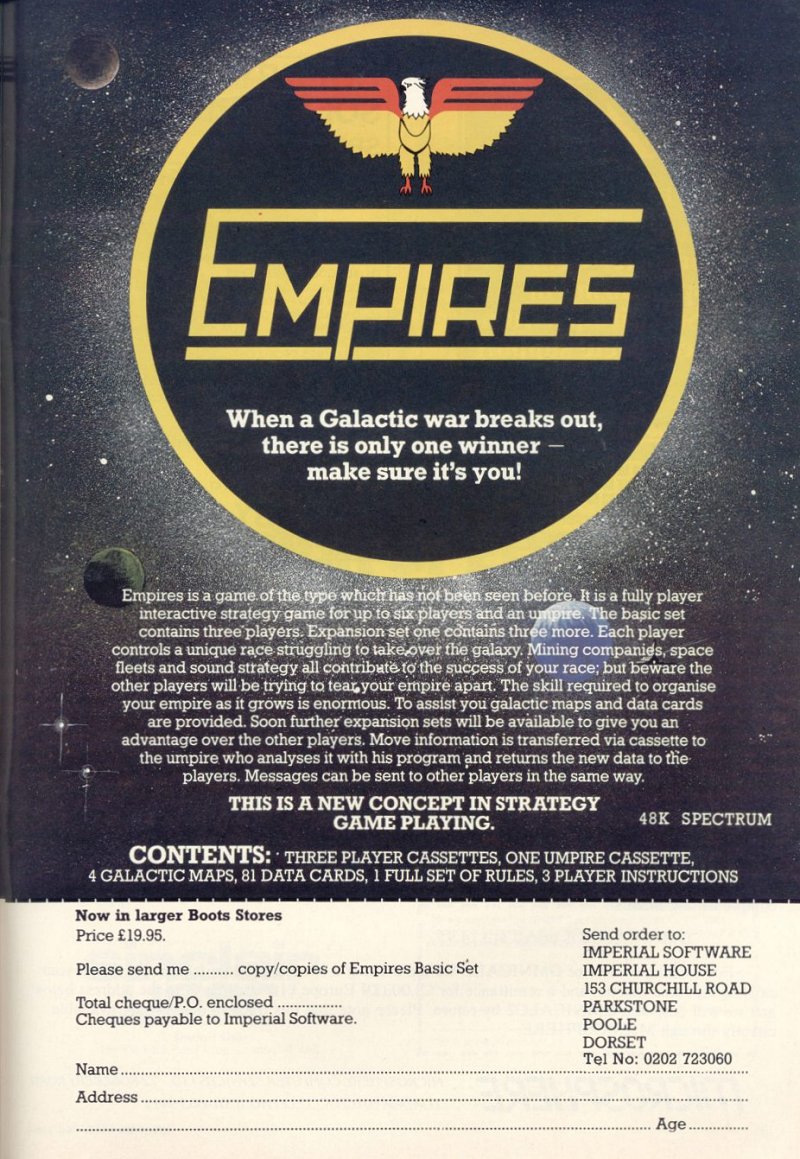
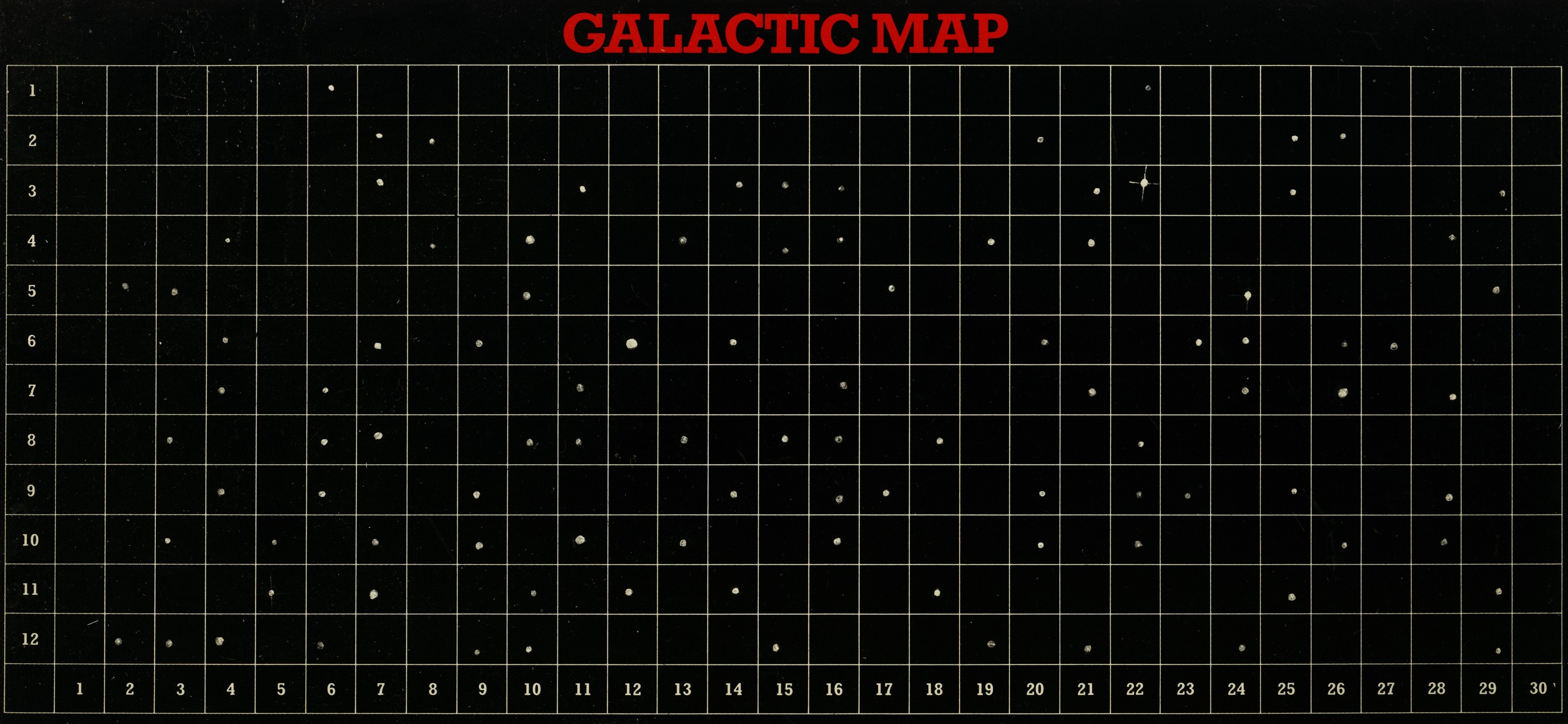
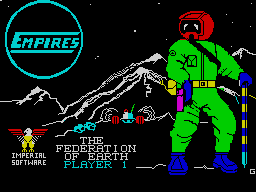
VASTER THAN EMPIRES These are the voyages of the starship Ken Matthews - visiting Imperial Software's Empires. MESSAGE BEGINS... Intruders, your warships have violated Tyrrinian space. Unless your fleet is withdrawn immediately, it will be destroyed. War will continue until every humanoid in the Galaxy is annihilated. Warlord SKYTH for the Imperial High Council of Tyr. Message End.3025.1 And so you realise why four mining expeditions to that sector of space mysteriously disappeared. The crazed messages about giant lizards make sense as you study the hideous reptilian features of the Warlord of Tyr. Pausing only momentarily, you walk to the Com-link - your message to Admiral Ranshelm, your Starfleet Commander, is brief: OPEN FIRE. Raygen, Lord Emperor. It seems that, known only to a select few, Galactic War of incredible scale is being monitored all over Britain. I refer to Empires, a computer moderated wargame from Imperial Software of Imperial House, 153 Churchill Road, Poole, Dorset. The program is probably best termed a play-by-mail game, although there is no reason why a group of friends living locally to one another or meeting at school, computer club and so on should not have a go - indeed such groups as the South London Warlords already have. Empires has been around since early 1984 and already two expansion packs are available and a Newsletter has been published by Imperial to give some idea of the game's growing number of supporters. The Basic Set contains three Player Tapes, an Umpire Tape, data cards, Galactic maps and four sets of instructions. Thus, for £19.95, four people can get into the struggle for dominion of the Universe at £5.00 each, that's not bad! Expansion Set One consists of three more sets of player equipment to allow a total of six players plus the Umpire. As far as playing the game is concerned, each player is given his own tape containing the Main Programme, First Move Data, a message program and a loader program more details later. The Umpire has his own tape containing two Main, First Move, message and loader programs. Each player has his own rule book, but they are identical except for details of the player's Home System on the back cover. War is waged on a grid of 12 x 30 light years containing some 100 star systems. All the players and the Umpire have copies of this map. Now you have a good idea of what you get with the game, let's take a more detailed look at play. To begin, each player loads his own main program followed by the first move data on the reverse of the cassette. He then has one game 'year' to complete his move using options from the menu-driven, machine code program. The player has the task of balancing the generation of military strength to defend/expand his Empire, and the mining of other systems to provide the income to keep the Empire solvent. On each turn, providing the cash holds out, the player may build scout ships, battle cruisers, cargo or mining ships. Occasionally, when enough credits have been amassed, the player is given the opportunity of commissioning a Starship - a vessel of truly awesome power! Obviously, such undertakings are not completed in a day and several game years may pass before a commissioned fleet can take to the spaceways. Once completed, a battle fleet can be assigned to any of your nine commanders or a prospecting fleet to any of your nine mining companies providing they are in the home system. Battle fleets may be used to guard your mining operations, garrison the outposts of your Empire or take the initiative against your enemies. Mining fleets must travel to and return from a prospected system before the wealth they have mined reaches your coffers. At least one year is required to extract the mineral wealth and you must be sure to send enough cargo ships to bring the plunder home. The data cards supplied are invaluable in keeping track of the systems visited and the movements of battle fleets and mining companies. The Umpire's rule book contains clear examples of how the cards should be filled out. At the end of each turn, the player program generates small pieces of data which are saved on a separate tape which is then passed to the Umpire. The message program allows a player to generate and receive messages as data, to pass to the Umpire and other players. The Umpire simply collects the data returned from each of the players and loads it into his program. This masterpiece assimilates all data received and resolves any conflicts caused by opposing fleets arriving in the same system. The program then generates new pieces of data for each player which are saved and returned to the player, along with any messages, for the next move. The Umpire tape cleverly incorporates the player's build-in racial characteristics and the morale of his officers. The Umpire is also responsible for passing on any messages between players, together with any of his own. The loader program allows players and Umpire to set volume and tone levels to eliminate differences between recorders. There are six races in the Galaxy of Empires: The Federation of Earth - a basically peaceful bunch, keen to explore the secrets of the Universe. To boldly go The reptilian Warlords of Tyr the oldest race in the Galaxy, now free of the sulphurous atmosphere of their own world. The Robozons - the evolved product of a long-dead master race, created to perform menial tasks but now with a will of their own. The lovable Lortep - War is unknown to them but these Kermit-like creatures have staggering technical ability. The Murtceps - a (backward?) boorish, aggressive race, bent on the enslavement of any life form they encounter. The Clone Masters too are the product of superior minds but their nature and, it seems, the purpose of the Clone's expansion into the Galaxy remains something of a mystery. Galactic War continues until only one player survives - there are three ways in which a player can lose and be removed from the game: Population can be reduced to drastic levels - an unlikely prospect. Your Empire's outgoings could exceed the income - you could go bankrupt imagine that! Your Home System could be destroyed - watch your back. The first two situations are dealt with by the player's own program. Destruction of the home system will be revealed by the Umpire programme as battles are resolved. Planetary defence systems are very powerful however, and any unassigned vessels are incorporated into the defence network. For the more diplomatic player, it is possible to form alliances, up to a maximum of five, but of course there can only be one winner... unless the Umpire rules differently. Looking back over what I've written, I can see there is a great deal of information which might make the game seem incredibly complex. This is not the case. Of course, the strategies and moves you can try are virtually limitless, and so there is no clear optimum sequence of moves. The cassette sized rule book is laid out neatly and logically and only takes about 10 to 15 minutes to read quite thoroughly. Personally, I'd have liked them to have been bigger, perhaps with some of the artwork shown in the Newsletter to break up the text. Those of you who have refereed wargames or roleplaying games needn't worry about Umpiring either - your book is even shorter than the player's. The work is done by the program leaving you to work your own imagination into the game - this is the whole point of Empires. The best way to understand Empires is to play, and over the last few days, with a group of friends, that's just what I've done. Loading the game takes only a few minutes - just enough to make a coffee and sit down to ponder your first move. During this time your player number and a high-res picture of your race is shown. Once you've loaded the first move data, the screen displays a menu of options. The current stardate is shown and it increases by one 'month' each time you return to the main menu. I always completed my move within the twelve months - maybe I was missing something? There is no reason why you shouldn't play out several different moves to decide which to use, providing you don't mind reloading the game each time - I very soon got a feel for the game and the data cards made it very simple to make a record of my progress before saving out my 'final' move data. The message program is the way in which players can really get into the spirit of things to express their individuality within the persona of their race. The Newsletter showed some very imaginative and amusing examples. Hard copies of messages and some game screens are made whenever a printer is attached to the machine. This feature makes it even easier for the players to keep track of events. The Umpire has the most 'work' to do in terms of loading and saving up to six lots of player data, but only he sees the full picture and we found watching the war unfold an exciting experience - much better than waiting for the football results. The Umpire too, because of his almost total control, has the most opportunity to use his imagination to add realism for the players. Many suggestions for added detail are given in the Umpire's rule book and the Imperial Newsletter such as rumours passed to all players, leaked information and even subtly changing players' messages as though they were garbled in the ether. Ex-D&D players should take to this readily there is a chance to build a full fantasy world about the central theme of Empires. The review material included a set of data from a six player game at move 25. After playing the opening moves to get the hang of things, it was really exciting to take over a more fully developed system with large fleets and extensive mining operations. The only thing we lacked was a knowledge of how things had developed to this stage, when ships had been ordered, what alliances made and so on. Nevertheless, we were all soon engrossed in making sure our race would become masters of the Universe. For those with more time on their hands, or just an urge to play God, Expansion Pack Two allows you to create and populate your own Galaxy. The first move data is also generated by the Umpire so it is possible to devise a scenario where one race has a distinct advantage and could, perhaps, only be beaten by other players forming and maintaining an Alliance. "The Umpire Strikes Back" also allows for more interference with player's fleets and money supply - a truly devilish twist! There were a few minor points I'd like to see added; an option to restart a move for example and some notification of shipbuilding progress, alliances and other details. There were also a few that should be removed, like the tendency of the program to crash if you make the wrong input during a move. All in all though, I found Empires an absorbing and compulsive game with a potential that is almost limitless. If any players are reading this, I (and Imperial) would be pleased to see any ideas and tips you've used to add to your game or any routines you've written to aid or enhance play. In the meantime, the Murtceps have declined to answer my ultimatum and Admiral Ranshelm is impatiently waiting for his orders.
Crash #10Nov 1984 · p.134
Angus Ryall
FRONTLINES From our correspondent at the front Angus Ryall. Allo mes petits sossions! I was much disappointed by the lack of libel suits, threats against life and limb, etc, resulting from the last FRONTLINE, so this issue I'm going to be tightening up and telling the real truth about some more strategy turkeys. Actually, I must tell you that CRASH has been told that its review of a certain game, should have been upgraded and we have risked losing the advertising from the company that produces it (money we get from advertising pays a large proportion of running costs, so it keeps the cover price down). I'd just like to point out to these cowboys that this kind of petty blackmail produces, if anything, an even more negative approach from writers. It's about time some of these people realised that a reviewer is paid to write what he or she feels about a game, and not what the game producer feels about it. For the record, as I didn't write the review, I've reviewed this particular game again and found myself in agreement with the previous reviewers. You'll have to guess which one it is, but I expect that even those of you with really short memories will get it. And while I'm having a gripe, I spent a knackering couple of days at the PCW show recently, and were there any decent strategy games there? In a word, no. Good old Lothlorien were there, of course, and there was one other excellent strategy game which I can't tell you anything about (ahh, conflict of interest...) but I was very rapidly reduced to discussing the moribund state of the industry with a nubile you cocktailperson in leopardskin shorts. Actually, I can't stand exhibitions you know, but when duty calls... EMPIRES Producer: Imperial Software A very quick one this. The copy I received to review would not load. I mean, none of it would - the game comes with three 'player cassettes', on 'umpires cassette', and in my case, as a reviewer, a special 'reviewers cassette' containing excerpts from the 25th round of play (!). Apparently you can extend the game to a six-player one (at a price), but for all that, this seems to be very much a pass-the-note-and-wait-for-the-reply type of game. The boards look nice, even if the rest of the packaging is dire (the instructions are printed in the kind of ink that renders the Daily Mail useless for anything except, um, eating your chips out of); but I think if I'd shelled out twenty quid for this lot I'd be a bit annoyed to find I couldn't load any of it. It I get a loadable copy I might have another go at this next month. Get it in gear, men.
C&VG (Computer & Video Games) #36Oct 1984 · p.55
Mike Singleton
MIKE SINGLETON'S 5TH COLUMN A players guide to strategy and war games ALL TIME IS GAME TIME Have you ever fancied yourself as the new, improved Genghis Khan, Julius Caesar minus the noble hindrance of Brutus or, perhaps, not being an ambitious type, Emperor of the Galaxy? No? Well, there's a first time for everything I'm told - this may be yours! I suspect you are thinking, gentle reader, that you have somehow blundered into the section of the magazine devoted to apprentice dictators and that this column might be more aptly titled Megalomaniacs Corner. Sorry to disappoint you. The Fifth Column is here to bring you inside information on games of strategy and it is just a fact of life that the struggles of men for power offer the richest themes for computer simulation - struggles that mean war on the battlefield, in the boardroom or at the ballot box. So, I will make no apologies that the Fifth Column will be discussing war-games, anymore than an historian would apologise for having to mention the Battle of Hastings. Suffice it to say that, in any case, venting a lust for power or destruction at the keyboard (if that really is what makes people play war-games) is a darned sight healthier than venting it in real life. As far as the Fifth Column is concerned, all time is game time and any connection with reality is purely coincidental. REMOTE CONTROL Games that need more than one player are always beset by one crucial problem - finding enough sane, rational human beings who are crazy or gullible enough to fritter away their valuable time actually playing them with you. A lot of games solve the problem by assigning the computer the role of opponent but, let's face it, there is something psychologically more challenging in playing against other people. Imperial Software's unique solution is Empires, a game of galactic warfare involving both military and economic decisions. The game is beautifully packaged and comes complete with four cassette tapes, four rule-books, four galactic maps and a pack of blank record cards. My only major criticism of Empires is the patience and dedication it needs to see a game through to its conclusion. On the other hand, if you do get to play Empires, you will find the sheer time-scale creates all the tensions and nail-biting of a titanic struggle. If you want a game that will keep you engrossed for months, this could be it. SALT-CELLAR SOFTWARE The ladies have retired to the drawing-room, the subtle aroma of brandy and cigar smoke wafts through the air and Carruthers is energetically manouevring the salt-cellar, which he strangely refers to as the 21st Panzer Division, across the desert of the tablecloth. Now is the perfect time introduce our imaginative guest to Lothlorien's Confrontation. It's a clever concept. It's not just a war-game but a whole system for recreating any modern warfare scenario you choose. The Master Tape allows you to design your own map, select your own units and set your own objectives. Your selection is made from a comprehensive range of terrain features and unit types, including air squadrons and paras as well as conventional ground units, so that virtually any land battle of the 20th century can be simulated. Three of the tapes of player tapes. The fourth is the umpires tape, and this is the key to the game. Imperial Software has created a play-by-mail system which uses cassette tapes as the medium for passing information and orders back and forth. Your personal player tape enables you to load and scrutinize the latest turn's data which the umpire has sent you on a cassette. At your leisure, you check the status of your battle fleets, the profitability of your mining companies and ponder the significance of newly explored solar systems. It may take you hours to decide on your next moves - it may take you days! Eventually, you give a fresh set instructions to your computer which then records the data back onto the cassette the umpire sent you. Now you must return the tape to the umpire for processing. Having received a fresh batch of tapes from all the players, it's the umpire's turn for some fun. Using his special umpire's tape, he first collates and processes the data that's been sent to him. Ships make landfall on new planets, battles rage in the starry blackness, great fortunes accrue in the interstellar treasuries but each event is handled impartially and automatically by the umpire's Spectrum which finally records the new turn's data to be dispatched to the players. So where's the fun? Well, the umpire has access to a lot of information that the players don't. Whereas an individual player knows only the location of his own ships and mining operations plus the odd enemy force he has chanced upon, the umpire knows all. Imperial suggests that the umpire uses this knowledge creatively to leak facts selectively to individual players. The umpire's task, if he so chooses, is to add the spice of his imagination to the game. The game itself is well presented on screen, all information about your race's galactic dispositions being routed through a convincing representation of a computer console and attention detail is good. Imperial has even designed a different character set for each interstellar race. A pity, then, that this outstanding concept is not quite so outstanding in actual play. It is interesting and can be engaging but somehow it doesn't stimulate quite as well as it simulates. The battle system which gave no clues as to damage inflicted, save a burp from the loudspeaker or the actual disappearance of a unit from the screen, was needlessly uninformative. In particular, the on-screen map, which was very attractive to look at casually, was not quite as nice to look at when you were trying to decide if your unit was armoured, mechanized infantry, artillery or whatever. This is what comes of trying to cram a large map onto a small screen. If only Lothiorien had gone for a scrolling screen and units occupying four cells instead of one! Still, ours is not to reason why. It's an ideal simulation if you've got eyes like a hawk and an eidetic memory . Sometimes, I suspect all of my opponents have! Full marks, Lothlorien, for originality but please spare a few thoughts for the poor old player next time. We aren't all perfect.
Big K #6Sep 1984 · p.101
Richard Burton
INTERACTIVE BREAKTHROUGH - OR LOGISTIC PAIN? Let me tell you, this Galactic Domination lark is real hard graft. There are fleets to build and dispatch, mining operations to set up, battles to be fought and alliances to be formed. If that wasn't enough there's the constant threat of that awesome pan-galactic entity known as the Post Office to contend with. Heavy stuff. You're confused? I can dig it. But what we have here is one of the more unusual offerings in the field of computer games - Imperial Software's Empires. More than a game really, since Imperial refer to it as a "... Fully interactive strategy game". Interactive it certainly is with room for up to six people (plus one umpire) to play - none of whom need ever meet any of the others. Such a unique, untypical games situation comes about by each player only having his or her own part of the game to contend with and communicating with the others through the umpire. Let me explain, The basic Empires kit comes in a cardboard box looking not unlike a traditional board game. Only a flash containing the words "For 48K Spectrum" gives away the true nature of the game. Inside a styrofoam tray contains four program cassettes, 3 for the players and one for the umpire, individual player rulebooks plus a larger Umpire's manual, four cardboard Galactic Maps and a large wedge of small record cards to keep track of individual movements once the game really gets into its stride. An Expansion Kit (the first of several that are promised) contains 3 more cassettes to bring the player roster up to six plus fresh supplies of Galactic Maps, record cards, etc. When you're a long way from home you can never have t oo many Galactic Maps. Once the basic kit has been acquired three aspiring, power-hungry tyrants, each with access to a 48K Spectrum, are chosen at random and supplied with one of the player cassettes plus rulebook and all the trimmings. A fourth individual, who knows where the true power lies, takes the umpire's cassette and rulebook and all four depart to their corners (homes?) to prepare to intergalactic conflict. NUMBERS Depending on numbers players find themselves as either a human of the Federation of Earth, a reptilian Warlord of Tyr or a mechanical Robozon of Tyr. Each has a home star system, a population to protect and a budget. However, regardless of race, creed or date of manufacture, the subsequent gameplay is the same. First the program is loaded and a name and security code chosen which will stay with the player throughout the game. The Main File gives three main options: Military, Strategic and Mining. Military is to do with building ships (battlecruisers and scout ships) and assigning officers to them from a roster supplied. Strategic Command handles all military and civilian movement. Solar systems can be scanned for information before committing forces to them. The on-screen map matches the card Galactic Maps supplied with the game so that constant checks on deployment of forces can be kept. Once all the data has been fed in the player's first move is complete. The data is SAVEd onto a blank cassette and given (sent?) to the umpire. Depending on how widely scattered the players are, this is where the awesome cosmic power of the Post Office could come in, by sending important data into the nearest black hole. A serious flaw in the system, we think. Assuming that all the players' moves arrive safely and before interest flags the umpire, using his own special program, evaluates the total situation. He has the power to resolve the outcome of battles, communicate with players individually, even (sneaky devil) send false data or garbled messages. Once battles have been decided, claims staked, etc., the updated blanks are returned to the players ready to begin the second move. As the game progresses alliances can be formed between players, secret messages exchanged, etc. Be warned that Empires could go on for a very long time - games of months in duration are not expected to be uncommon. The objective is simply to trash every other race in the universe and become the Supreme Ruler. There are only three ways to lose: if a player's population drops below a danger point (not very likely), total bankruptcy, or an enemy race destroying a home planet's defences (most likely). Without doubt Imperial Software have an extremely impressive product in Empires. It's state-of-the-art in computer strategy games. Their approach is thoroughly professional. Screen graphics are very good with fast, menu-driven commands. Empires is complex and stimulating enough to keep a player's attention for a long time (it will need to) and has the potential for expansion (already started). But - it has to be said - who will buy it?
C&VG (Computer & Video Games) #32Jun 1984 · p.22
BUILD YOUR OWN EMPIRE - BY POST! When a Galactic war breaks out there is only one winner - make sure its you. This rather apocalyptic message is the slogan behind a brand new strategy war game just going into the shops. Empires is the name of the game and building empires is the object of this tour player game. You choose to play the part of Earthlings, Robozons or The War Lords of Tyre. One player must be the Umpire - though this does not mean he doesn't take part. The designers of the game say that there is a large amount of role playing in the game, similar to Dungeons and Dragons. By exploring neighbouring solar systems, mining minerals, and increasing your wealth, you can build powerful space fleets. Cultural and communications differences soon bring you into conflict with the other players. By doing battle with your opponents, you can assess their strengths and weaknesses. You have won the game when your opponents have all been destroyed and you totally dominate the galaxy. Each player has his own cassette which loads his characteristics into the computer. The relevant program must be loaded into the Spectrum to enable the player to take his go. During a turn, the options open to a player are typed in and the computer taps out its response - scrolling horizontally across the screen. Also in the box are four cardboard maps of the galaxy to enable the player to keep a track of his moves, data cards for recording the movements of ships, and four separate sets of rules - one for each player. Empires was dreamed up by a new three-man software house called Imperial Software. It has been designed so that it can be expanded to add greater complexity and realism and also to enable more players to take part - including a play-by-mail option. If you fancy yourself as an intergalactic Emperor, you'll first have to find £19.95 and own a 48K Sinclair Spectrum. Imperial are based in Poole, Dorset.
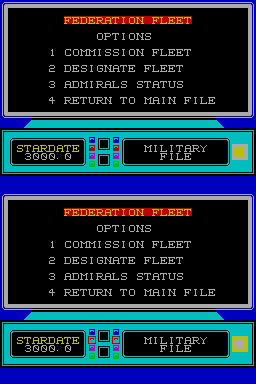
Screens from Empires.
Full-page ad11
- Sinclair User #28Jul 1984 · p.121
- Popular Computing Weekly #30Jul 1984 · p.2
- Your Computer #7Jul 1984 · p.144
- Personal Computer Games #8Jul 1984 · p.2
- Sinclair User #26May 1984 · p.66
- Your Computer #5May 1984 · p.118
- Micro Adventurer #7May 1984 · p.15
- C&VG (Computer & Video Games) #31May 1984 · p.71
- Popular Computing Weekly #18May 1984 · p.46
- Personal Computer Games #6May 1984 · p.65
- Popular Computing Weekly #16Apr 1984 · p.2
News/Note5
- Your Spectrum #12Mar 1985 · p.6
- C&VG (Computer & Video Games) #36Oct 1984 · p.55
- C&VG (Computer & Video Games) #32Jun 1984 · p.22
- Popular Computing Weekly #18May 1984 · p.5
- Personal Computer News #57Apr 1984 · p.5
CompoEntry1
- Micro Adventurer #16Feb 1985 · p.42
Review1
- Home Computing Weekly #69Jul 1984 · p.16
Related
- Tags
- Turn based
- Same entry at
- Spectrum ComputingZXInfo
Reviews from people here
Sign in to write about this, or make an account. It takes a minute and lets you correct the catalogue too.
Everything ZXDB can hold about this is here.
Sign in to correct or add to this.
Hold the rights to this and want it taken down?