
Treasure
General: Education · ZX-Spectrum 48K · 1 players · English
Fernleaf Educational Software · 1986 · Pound sterling 11.50
Discussion
Nobody has started a thread about this yet.
Play
- Treasure.tzx.zipTape image English8 KB
Files and rights
No permission is on record either way. Screens and pictures are copied here on a take-down basis: if you hold the rights and want something removed, say so and it goes.
In the magazines 1
Crash #34Nov 1986 · p.59
Rosetta McLeod
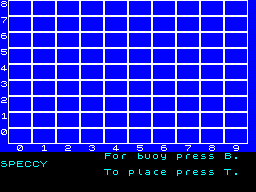
CRASH COURSE By Rosetta McLeod GIVE GIRLS A BREAK A few months ago, I mentioned the problems that schools and parents are facing in interesting girls in computers. The London Borough of Croydon has now published a fascinating document entitled Girls and information Technology which reports the results of a survey commissioned by the Equal Opportunities Commission. It discusses the observation that computers seem to be used more by boys and male teachers than by their female counterparts, and refers to a study carried by the MEP Primary Project which showed that twice as many boys as girls have access to a micro at home. Why should this be? Are girls intrinsically less interested in computers than boys are? If parents consider it more important to provide home computers for sons rather than daughters what implication does this have for the future of women in an age of technology? In many secondary schools, computers have been linked with the mathematics department and too much emphasis has been placed on programming and numerical uses rather than data-processing and other social implications. Another problem is that traditional stereotyping seems to occur very early with boys being perceived to have more interest than girls in new technology. Girls may be keen to learn word-processing but seem to have little curiosity about other computer uses. Perhaps the problem lies in the content of the commercial software available. Girls are not nearly so interested as boys in arcade-type games and even educational software tends to be directed towards male interests. Luckily though, the programs I've looked at this month are of a particularly high standard and will appeal equally to boys and girls. TREASURE Producer: Fernleaf Educational Software Retail Price: £11.50 Age Range: 8-12 years The main objective in this game is to offer practice in multiplication, though there is also considerable scope for deductive reasoning. A grid is displayed on the screen and the object is to find the treasure which has been hidden at random in one of the squares. The game has been designed to be played by two groups of children who take it in turns to position marker buoys. If, for instance, a group choose to set a marker buoy in a square with the co-ordinates 4, 2, they first have to find two factors which make 42 and enter the command 6x7 or 7x6. The buoy will be one of three colours: red means next to. or on, the position of the treasure; purple means within three squares: white means not near the treasure. Younger children will find this game quite difficult especially as 1x a number is not allowed, but much discussion can be generated in the groups as the children work out the best strategy for revealing the treasure without giving any advantage to the opposition. A work sheet containing a blank grid is provided for use with the program and players are encouraged to record the clues given and work out their reasoning on the sheet. This is a very useful strategy program which provides a practical stimulus for learning multiplication tables. COMMENTS Control keys: number keys and single letter commands Keyboard play: fast Graphics: none, apart from grid Use of colour: simple but effective
Related
- Ports
- (Amstrad CPC)
- Same entry at
- Spectrum ComputingZXInfo
Reviews from people here
Sign in to write about this, or make an account. It takes a minute and lets you correct the catalogue too.
No credit, description, tag recorded.
Sign in to correct or add to this.
Hold the rights to this and want it taken down?