
Turntaking
General: Education · ZX-Spectrum 48K · 1 players · English
The Learning Process · 1985 · Pound sterling 5.95

Discussion
Nobody has started a thread about this yet.
Play
- Turntaking.tzx.zipTape image English11 KB
Files and rights
No permission is on record either way. Screens and pictures are copied here on a take-down basis: if you hold the rights and want something removed, say so and it goes.
In the magazines 3
Crash #21Oct 1985 · p.90
Rosetta McLeod
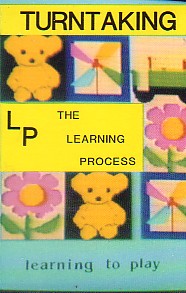
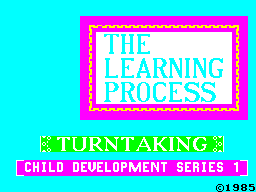
CRASH COURSE By Rosetta McLeod COMPUTERS AS COMMUNICATORS... How do you feel about a computer program for babies? I must admit that when the tape Turntaking arrived on my desk, with its claim to be 'simple enough for babies', my initial reaction was one of horror! The picture came into my mind of helpless babies propped up in front of a TV Screen to amuse themselves with the game while harrassed parents got on with the chores, or snatched the opportunity to put their feet up for ten minutes. But this, of course, is not what it's all about. No matter what sort of educational programs we're talking about-' whether it's ones like this for the very young child, or an exam revision program for older teenagers - working with the computer should not be seen as a solitary activity. Yet many people still look at micros as being useful only in a one-child-one computer situation, where the child is assumed to be taught by the computer which is taking the place of an adult instructor. I know there are some educational programs (which have been reviewed in Crash Course), which are marketed on the fact that they can be used by children without any adult supervision whatsoever. No parent, though, who wishes to do the best for his or her child, should be happy to delegate the responsibility for home education to the computer. When the television became a common piece of furniture in the home, it was criticised for destroying family life. 'Families don't talk any more', became the cry. 'Everyone just sits impassively in front of the screen. The only discussion that takes place is when there is a disagreement over which programme to watch.' Now that a vast number of homes possess micros, modern technology has been blamed for being the ultimate destroyer of any interaction between parents and their children. I believe, however, that used correctly the computer can increase communication between children and adults. The best home computer education programs are those which encourage the parent to work alongside the child, helping and directing progress. This is not to say that the child must never be left atone with the computer: as the notes for the Turntaking program say, 'If you are busy you will be able to leave children to play with the program themselves and they can tell you about it when you come to see how they are getting on...' It's this 'telling about it' process which is so important Let's start thinking about computers as an aid to communication for a change! TURNTAKING Producer: The Learning Process Memory Required: 48K Retail Price: £5.95 Age Range: babies and toddlers Turntaking is the first program I have come across specifically aimed at babies and toddlers. But how old is a baby? The notes which accompany the tape tell us about the reaction of an eighteen-month old child, who realised the connection between pressing the keys and the image which appeared on the screen. I was interested to see if the program would appeal to even younger babies, and so I tried it out with thirteen-month old twins, Andrew and Gavin. When the tape is loaded, the player can select the game required from a pictorial menu - obviously, for such young players, the printed word would be inappropriate. The easiest of the six options is Building Bricks, where the next brick is displayed each time a key is pressed or if the child lust watches, the next brick will appear after a short period of time without a keypress. The twins enjoyed seeing the colourful bricks appearing on the screen, though initially they did not grasp that they could use the keyboard to control the action. After a while, however, young as they are, they got the idea, but only when one key was selected for them to depress. The attention span of very young children is obviously extremely limited, but the variety of games on the tape kept the twins interested for quite a time. The Grow a Flower game seemed to appeal to them, especially when the head of the flower began to appear on the stem, and the Engine game was also popular as the engine is seen to move across the screen when a key is depressed. The twins' parents certainly felt that the program would he very useful to support the children's learning, and that it would help older children learn to make choices, to take turns in playing a game and to control events. The only real criticism they had was that sound could have been used to even greater effect in the games. The ideal situation for using the program would be to have it set up so the child could leave it and return to it at will, with, of course, an adult present to support the learning activities. COMMENTS Control keys: any key can be pressed Keyboard play: very responsive Use of colour: bright and attractive Graphics: simple but eye-catching
Advert1
- Your Computer #12Dec 1984 · p.270
Classified1
- Sinclair User #31Oct 1984 · p.168
Reviews from people here
Sign in to write about this, or make an account. It takes a minute and lets you correct the catalogue too.
No credit, description, tag recorded.
Sign in to correct or add to this.
Hold the rights to this and want it taken down?