
Ian Weatherburn
Person · UK
?-early 90's
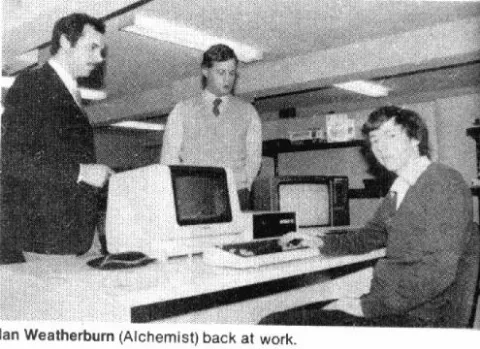
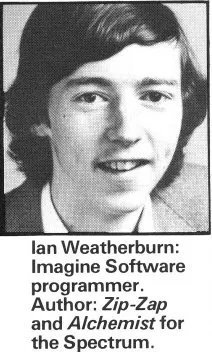
Tribute
Ian Weatherburn was a Spectrum games pioneer and a significant influence on the realisation of the Spectrum as a computer with real potential to entertain. Weatherburn's early creation, "The Alchemist" (1983) was one of the first ever attempts at a "collect and use" arcade adventure, a game mechanic that was refined and enhanced through the Spectrum's most successful years by other coders - in the shape of the Dizzy series as well as many other Spectrum games. Weatherburn's creative ability to tap straight into the imagination of a child was continued in games like "N.O.M.A.D." and "The Neverending Story". His versatility beyond these can also be seen in the coding of the Leaderboard golf games for the Spectrum, which emphatically raised the bar for that genre. Ian Weatherburn remains largely an enigmatic figure in the Spectrum community because of his reclusive nature and eccentric habits. A persona that was magnified when news of Ian's tragic death (apparently he commited suicide) hit the community. Simon Butler, who worked together with Ian on many titles, tells us more about Ian: I met Ian way back in the mists of time at the Imagine offices and he treated me then with pretty much the same disdain he did until the end of our working relationship together. But that was just Ian. He was a self-absorbed with few people skills, which worked to his detriment in the social arena but was one of his strengths in the games field. This distance that was always present between Ian and the rest of the human race only brought him closer to the thing he was best at, writing games. His games were more than usually well-crafted with a lot of man-hours put into each. He was sarcastic to a point where it was almost painful to hear some of the things he said. His idea of humour was almost always at somebody else's expense... but again this was just part of Ian Weatherburn and you either got over it, ignored it or if you couldn't, then stayed away. We worked quite extensively, just the two of us in our freelance days and because of his intractable manner he always said exactly what he wanted and left no room for error. Would that other coders in years to come had been as blunt or as focused. There was no room for niceties, he was a man of few words so whenever work started, work was all there was and you did it until you finished; then it was time to clock off until tomorrow. No shooting the breeze or winding down, just down tools, goodbye, see you tomorrow. While other, younger people came into the industry and matured and grew, Ian stayed a kind of Peter Pan figure in the background. His hands later came to hold the reins of his own company but he was always a figure on the edge of things and even though the whole ball of wax was his, he never entered centre stage. His only true failing that led to his downfall was his trust in people he considered friends. Ian was led astray and his financial dealings only got worse. It was sad to see but, Ian being the person he was, would not take kindly to being offered advice and told he had made a mistake. His judgement was absolute and no-one could tell him otherwise. We parted on far from good terms. Ian could have, I can only conjecture, been a pretty damn good coder, but I believe his communications skills or lack of would have held him back. Most likely he would have gone Stateside and followed his first love, the almighty dollar. I can see him now, alone but unconcerned in a house with a beach view, a fast car in the garage and the world's dodgiest collection of 80s female rockers in his CD collection. He could have been happy. But sadly he never was. <B>Acknowledgements:</B> Jumping_Stack and Simon Butler for the write-up. -- Ian Weatherburn fue un pionero de los juegos de Spectrum así como una destacada influencia en la materialización del Spectrum como un ordenador con un firme potencial para el entretenimiento. La primera creación de Weatherburn, "The Alchemist" (1983) fue uno de los primer�simos intentos en crear una videoaventura del tipo "recoger y usar"; mecánica de juego que ser�a refinada y perfeccionada a través de los años más exitosos del Spectrum por otros programadores - en forma de la serie sobre Dizzy, así como en muchos otros juegos de Spectrum. La habilidad creativa de Weatherburn para introducirse en la imaginación de un niño tuvo su continuación en juegos como "N.O.M.A.D." y "The Neverending Story". Más allá de estos, su versatilidad queda reflejada en la programación de los juegos de golf Leaderboard para Spectrum, qu� elevaron notablemente el listón para este género de videojuegos. A pesar de ello, Ian Weatherburn sigue siendo una figura enigmática en la comunidad del Spectrum a causa de su naturaleza reclusiva y sus hábitos excéntricos. Una imagen que result� magnificada cuando las noticias sobre la trágica muerte de Ian (presumiblemente, se suicidó) golpearon a la comunidad. Simon Butler, quien trabajó junto a Ian en muchos títulos, nos cuenta más sobre Ian: Conocí a Ian all� en tiempos remotos en las oficinas de Imagine, y �l ya me trataba entonces con más o menos el mismo desdén con que lo hizo hasta que finaliz� nuestra relación de trabajo juntos. Pero es que Ian era así. Él era un chiquillo ensimismado con muy poca habilidad interpersonal, lo que le perjudic� en el ruedo social pero que fue una de sus fortalezas en el campo de los juegos. Esta distancia que estaba siempre presente entre Ian y el resto de la raza humana s�lo le llev� m�s cerca de la cosa en la que él era mejor: programar juegos. Sus juegos estaban extraordinariamente bien producidos, con un montón de horas-hombre invertidas en cada uno. Era sarcástico hasta un punto que resultaba casi doloroso escuchar algunas de las cosas que dec�a. Su concepción del humor era casi siempre a costa de algún otro... pero nuevamente esto formaba parte de Ian Weatherburn y, o bien lo superabas, lo ignorabas o, si no podías, entonces te mantenías lejos. Trabaj�bamos mucho, s�lo nosotros dos en nuestros días como freelance, y dados sus intratables modales siempre decía exactamente lo que quería y no dejaba lugar para el error. Ojalá que otros programadores en los años venideros hubiesen sido tan directos o tan centrados. Con él no había lugar para las delicadezas, era un hombre de pocas palabras y por tanto, cuando el trabajo comenzaba, no existía nada más all� del trabajo, y hac�as eso hasta que hubieses acabado; entonces era momento para fichar, fin de la jornada y hasta mañana. Nada de darle a la lengua o relajarse; s�lo paramos, adiós, te veo mañana. Mientras otra gente m�s joven lleg� a la industria y madur� y creci�, Ian se fue quedando como una especie de Peter Pan en segundo plano. Más tarde sus manos llegaron a coger las riendas de su propia compañía, pero él siempre fue una figura marginal, e incluso a pesar de que ten�a todo el control, nunca se puso en el centro de la escena. Su único verdadero fallo, que le condujo a su caída, fue confiar en personas a las que consideraba amigos. A Ian lo llevaron por el mal camino y sus acuerdos financieros se fueron a pique. Era triste darse cuenta pero, siendo Ian como era, no acoger�a de buen grado que se le ofreciese consejo y se le dijese que hab�a cometido un error. Su juicio era absoluto y nadie podía llevarle la contraria. Nos separamos no precisamente como amigos. Ian podría haber sido, me atrevo a conjeturar, un programador alucinantemente bueno, pero creo que sus habilidades comunicativas, o la falta de ellas, le habrían retenido. Muy probablemente se habr�a ido a Estados Unidos en busca de su primer amor, el todopoderoso dolar. Puedo verle ahora, solo pero sin preocupaciones en una casa con vistas a la playa, un cochazo en el garaje y la colección más chunga posible de cantantes femeninas de rock de los 80s en su colección de CDs. Podría haber sido feliz. Pero nunca lo fue. <B>Agradecimientos:</B> Jumping_Stack y Simon Butler por el artículo.
Credits
- 1983AlchemistCode · ZX-Spectrum 48K
- 1983AlchemistGame Design/Concept · ZX-Spectrum 48K
- 1983AlchemistIn-game Graphics · ZX-Spectrum 48K
- 1983Zip-Zap · ZX-Spectrum 48K
- 1985The NeverEnding Story · ZX-Spectrum 48K/128K
- 1986Hunchback - The AdventureCode · ZX-Spectrum 48K
- 1986N.O.M.A.D.Game Design/Concept · ZX-Spectrum 48K
- 1986Hunchback - The AdventureGame Design/Concept · ZX-Spectrum 48K
- 1987Leader Board with Canvas · ZX-Spectrum 48K
- 1987Leader Board Tournament with Canvas · ZX-Spectrum 48K
- 1987Super Cycle with Canvas · ZX-Spectrum 48K
Same person at Spectrum Computing