
The NeverEnding Story
Adventure Game: Text/Illustrated · ZX-Spectrum 48K/128K · 1 players · English
Ocean Software Ltd · 1985 · Pound sterling 9.95
NeverendingStory, 1 of 2

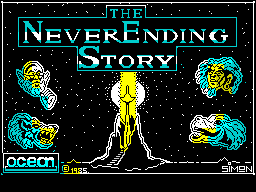
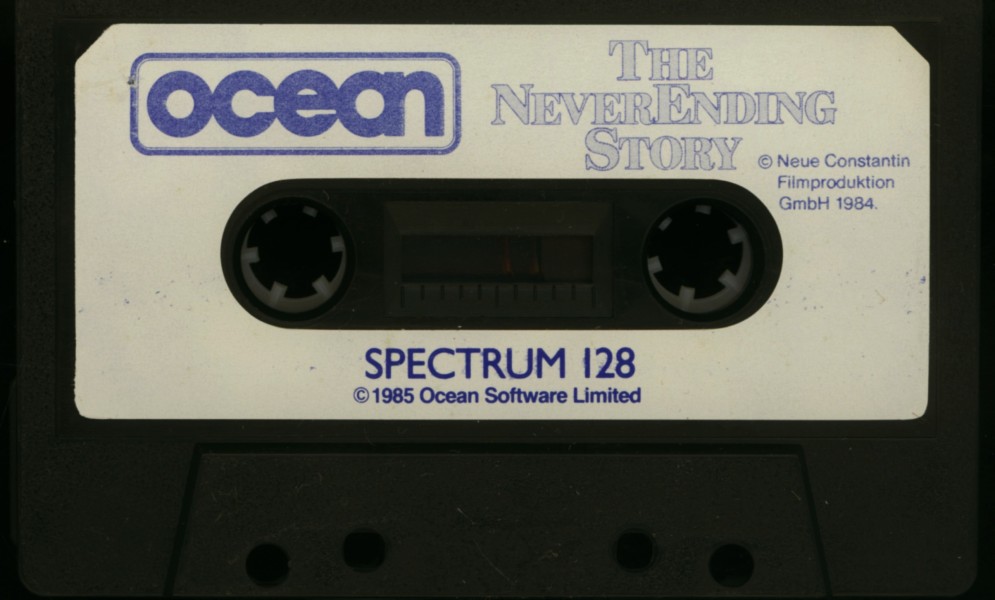
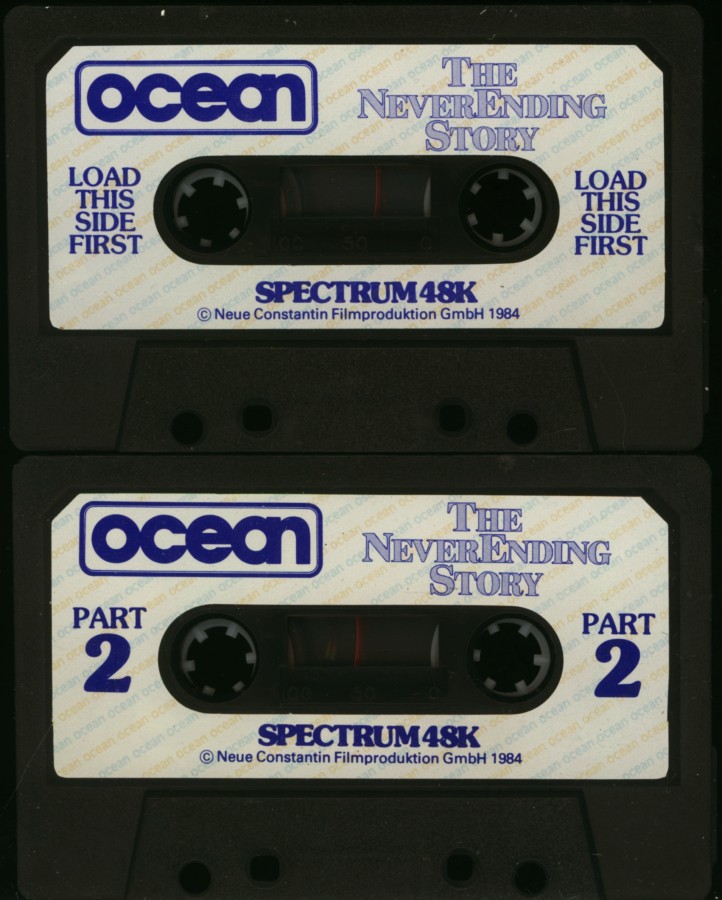
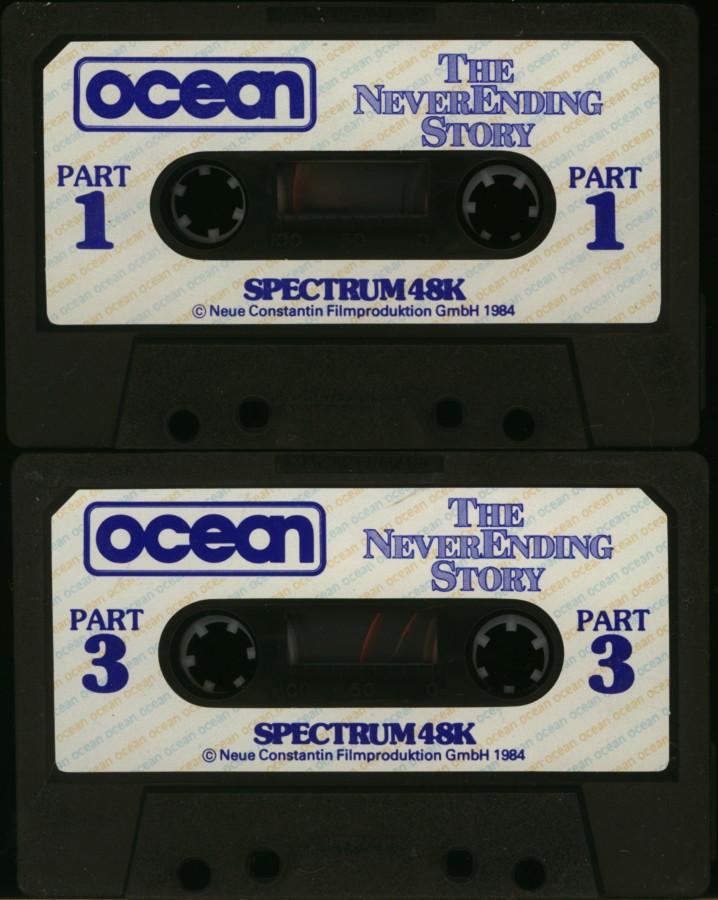
Discussion
Nobody has started a thread about this yet.
Remarks
ZXSR: Came free with the original Spectrum 128k along with Daley Thomspons Super Test.
Music References
Includes the following music: Giorgio Moroder, Keith Farsey, Limahl, "The Neverending Story"
Play
- neverendingstory.rzxRZX playback file
- NeverEndingStoryThe128.tzx.zipTape image English43 KB
- NeverEndingStoryThe48.tzx.zipTape image English45 KB
- NeverEndingStoryThe128.tap.zipTape image English46 KB
- NeverEndingStoryThe48.tap.zipTape image English45 KB
Documents
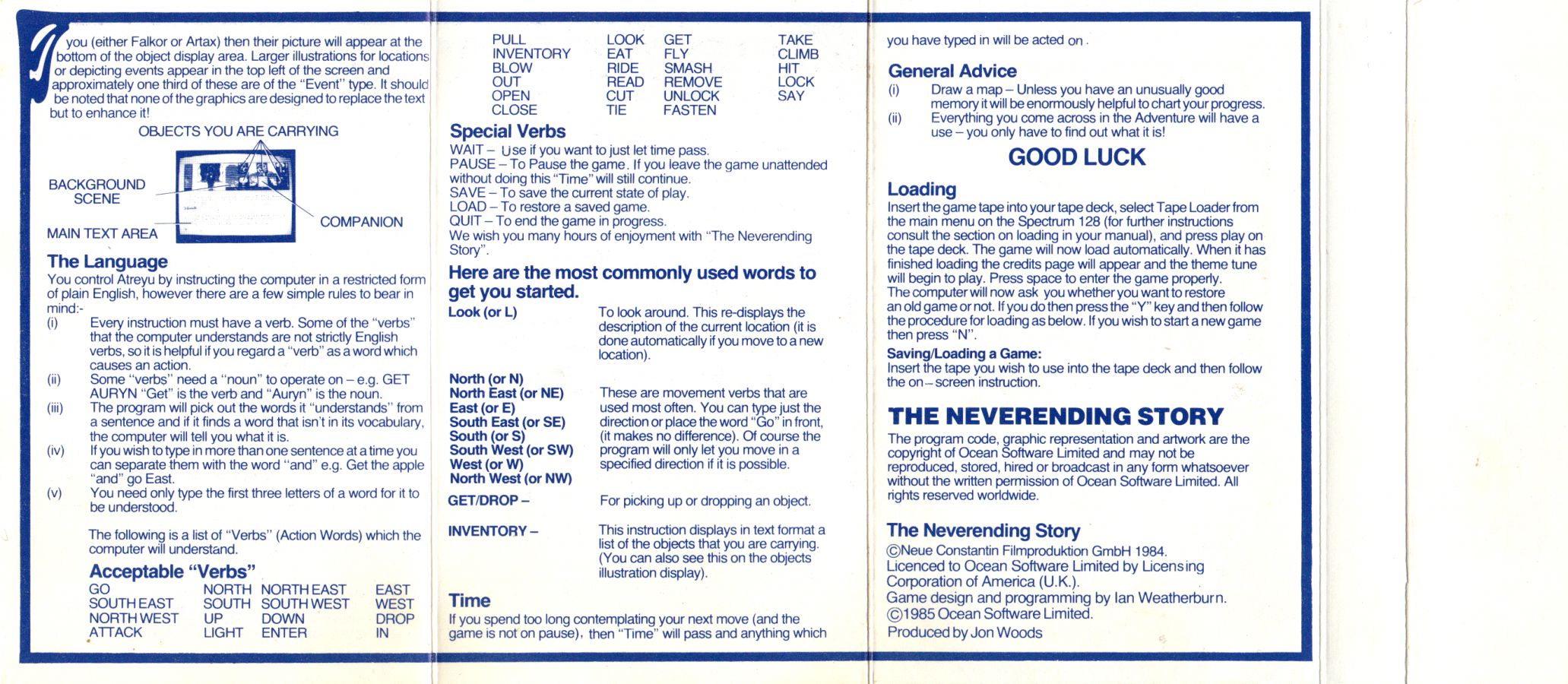
- NeverEndingStoryThe.txtInstructions English9 KB
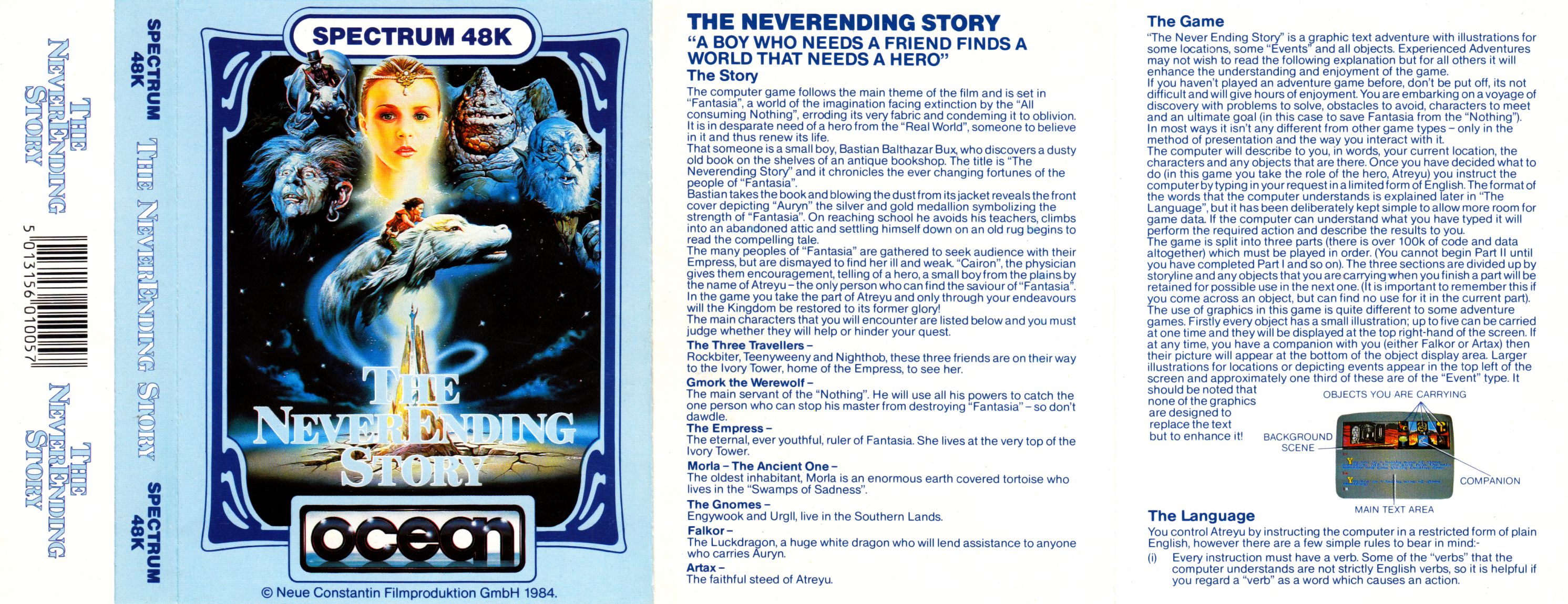
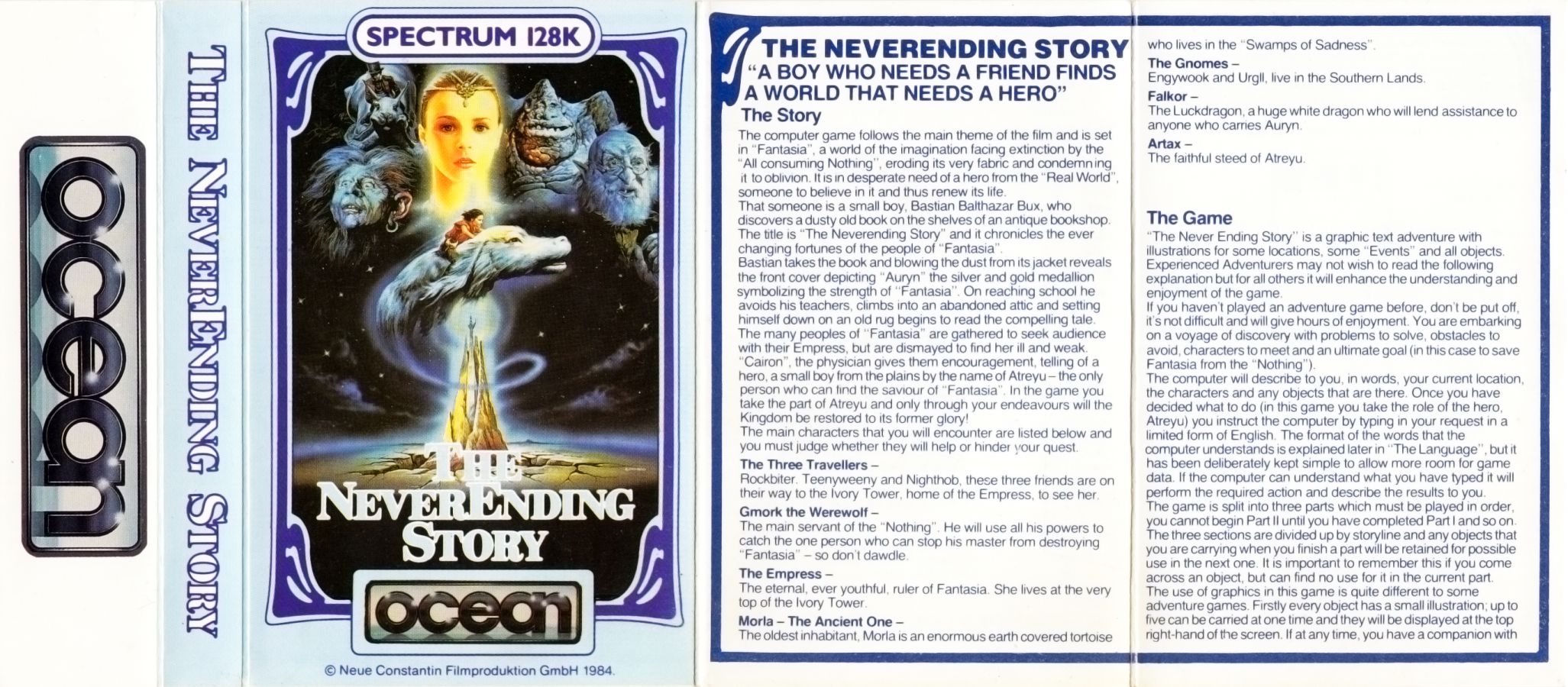
- NeverEndingStoryThe.zipScanned instructions English812 KB
Music
- NeverEndingStoryThe.ay.zipRipped in-game/theme music in AY format 1 KB
Files and rights
No permission is on record either way. Screens and pictures are copied here on a take-down basis: if you hold the rights and want something removed, say so and it goes.
Credits
- Ian Weatherburncredited
- Simon Butlercredited
- Fred Graycredited
- Renato CasaroInlay/Poster Art
Sign in to credit somebody, or say what these people did.
Awards
Scores
In the magazines
- Sinclair User #461986 · Overall4/5
- Sinclair User #491986 · Overall4/5
- Your Sinclair #11986 · Overall9/10
- Crash #261986 · Overall7/10
Elsewhere on the web
- WorldOfSpectrum 38 votes8.22
In the magazines 75
Your Sinclair #6Jun 1986 · p.73
Rachael Smith
128 GAMES And so they came - the first trickle of 128 games. Sinclair cleverly made sure that the software was there, ready for the new machine. But most of the first releases have been expanded versions of existing titles, and we all know, don't we, that bigger doesn't necessarily mean better? After all, it's what you do with it that counts. So here it is - the highly personal, Rachael J Smith guide to those first ten releases. THE NEVER ENDING STORY Ocean £9.95 Reviewer: Rachael Smith The other Ocean choice aims to woo the newcomer over to adventures. Once again it avoids the clumsiness and tedium of a multi-part load. Not that there's anything boring about this tie-in with the moderately successful German fantasy film. In fact, it's quite innovative in its use of illustration. It's annoying and surprisingly unprofessional that text sometimes scrolls too fast off the top of the screen. and the three channel theme song - an excellent rendition though it is - will seem pretty never ending itself unless you like pap pop. So there they are, ten offerings for the 128. All benefit from having their amplified sound blasted out through the TV, and where the new sound chip has been used to full effect it's like suddenly being able to hear after years of deafness. But while there are things here to appeal to the person who's never owned a Spectrum before, I can't see much point in duplicating a game unless you were a big fan of the original. And that means that we're not yet in a position to say whether the 128 itself is worth buying. We'll have to wait until games that make full use of that extra memory - that do things that can't be achieved in 48K - appear before we all decide to trade in our old machines.
Crash #27Apr 1986 · p.34
Julian Rignall
ALL THE LITTLE EXTRA BITS Julian Rignall, for it is he, puts down the joystick attached to his Commodore 64, wanders into the CRASH office and has a quick look at the game we've received for the 128K Spectrum. Between thee and me, he ended up well impressed - a diehard Commie 64 man, Jaz left the office muttering about buying the new Spectrum. Can't be bad news for Sinclair, that.... Hmmmm, a Spectrum with added bits? What would they be? I wondered. Wheels, a bit of whoosh, twiddly things? Nope, none of these - just extra RAM and an on-board hot plate to keep your coffee warm as you bash the baddies through the night. Well, it's not really a hot plate, but it doesn't half act like one. Anyway, what do these extra features mean to yer average gamesplayer on the street? Two 128 games are given away with the computer: Daley Thompson's Supertest and The Neverending Story. Daley's appeared on the Spectrum some time ago, and the original game had eight events which were loaded in two parts. The new 128 version has an extra four events: the javelin, 100m sprint, 110m hurdles and the triple jump along with the eight others and they're all loaded in a single go, making the game far more jolly and varied to play. Ocean have also made use of the 128's three-channel sound capability: excellent music accompanies the title screen and jingles play before and after each event. The whole game is far better than the 48K original and is a great freebie! The other game in the package is the official adventure of the film The Neverending Story. Again, the original version was a multiloader, although this time the game came in four chunks. The 128 version is another single load program, which makes it far more enjoyable to play. Again it's free, so you can't really complain. IN THE CHIP FACTORY Moving on to the 128 games you'll have to pay money for, Hewson's take the prize for releasing the very first 128K game - Technician Ted - the Megamix. Technician Ted 48K first appeared early last year, earning a CRASH Smash for programmers Steve Marsden and David Cooke. What Hewson have done is taken the original torturous platform arcade adventure and expanded it, making it twice as big - now there are over 100 different screens and thirty tasks to complete. AAAAAGGGH you might say, those lousy sadists... the original Tech Ted was bad enough!! The gameplay is radically different and the whole program has been 'tweaked' to take advantage of the new machine's capabilities. But don't fret poor things, each of the tasks has now been numbered so at least you know which task you're supposed to tackle next; the only problem is finding out how you complete them. Three channel music adds extra atmosphere to the game as you whizz around the factory. A special mention must go to the loader - it tells a story whilst the game loads and the music is superbly done. £7.95 buys you this piece of arcade adventuring action, only £2 more than the 48K original. ALL A BIT OF A WHIRL Gargoyle Games have also taken a tentative leap upon the 128 bandwaggon and whizzed out Sweevo's Whirled(sic) which is available for £9.95 - no increase. Capturing all those horrible Wijurs has now been made an even more difficult task with an extra fifty rooms to confuse and confound all you budding androids. There are some new images too - ginormous noses stick up through the floor (but luckily there are no huge bogeys to foul up our intrepid android's workings), fingers which make strange indecipherable (LMLWD) signs and there is also a curious lampost... I don't know what it does because I haven't seen the light (laugh, you philistines). Obviously there are no musicians at Gargoyle because there is no three channel sound, but the tune does sound better because it comes through the telly. CHATTY AND TUNEFUL Odin's Robin of the Wood and Nodes of Yesod have been souped up and join the handful of titles currently available for the 128K machine. The game elements and playing area of both 128 versions are unchanged but they now feature excellent music (as good as the Commodore any old day, believe me 'cos I'm a horrible ZZAP! reviewer). Also, a nice surprise awaits you... both programs talk. Yup, they do, and it's not too bad - a lot better than the dalek with laryngitis stuff that the old Spectrums used to burble out. 128 owners can hear Robin shouting "OW" when he gets an arrow in a painful place, and "give me a chance!!" a few seconds before he shuffles off this mortal coil. The game welcomes the player by saying "Can you help Robin in his quest for the silver arrow" upon loading - real arcade stuff! Nodes follows a similar path on the 128, with Champagne Charlie moaning and groaning as he trundles round the moon's underground caverns in his search for alchiems. You're also told when his life energy is running low, just in case you don't notice... wheee! Arc of Yesod is expected in the office any day now, and includes the fire option that was missing from the 48K version which should make it much more fun to play. Once again Odin have kept pretty much to the same game, but enhanced the product with speech and music. Odin are selling their 128 games for £9.95 - the same price charged for the originals. PARADISE EXPANDED Mikro-Gen's game Three Weeks in Paradise, which collected a CRASH Smash in its 48K incarnation last month, has been extended for the new machine and costs a pound extra, making it £10.95. The plot has grown a little, so completing the 128 game involves a lot more adventuring. Six new screens have been patched onto the game (go through the plug to find them). Some three channel music kicks the game off, otherwise the sound is much the same. FOR SKUFFLE FANS Fighting fans will no doubt be pleased to hear that Domark have added a pound to the price of Gladiator for the 128, making it £9.95. For the extra pennies you get two different graphics for the combatants - in the original version both gladiators were identical except for their weapons. Sound hasn't been upgraded a great deal - a sort of fairground tune plays on the menu screen and after a gladiator has been killed, and bopping noises indicate a hit on your opponent. One, two or four people can play the 128 version which includes ten new screens and a fairly polished demo mode. Essentially, however, the gameplay remains the same.
ZX Computing #24Apr 1986 · p.9
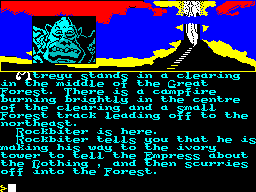
The Spectrum 128's that were ghosted into software houses around the country during the past few months came out into the open at the official 128 launch. Programmers have been feverishly preparing games to ensure the machine has credible software support. Despite assurances that 48k games run on the 128, to potential buyers this may seem like fitting a moped engine into a Ferrari. Compatibility is of course an asset but the machine's viability rests on the utilisation of its added features for games writing. The software houses have come up with a miscellany of revamped classics using the 128's new capabilities to varying degrees. Games written specifically for the 128 are in the pipeline but the first offerings are reviewed below. NEVERENDING STORY Ocean £9.95 The first adventure game to appear for the 128 comes bundled with the machine when you buy it. The original 48K version had to be loaded in three sections, but now with the 128's extra memory the whole game loads in one long chunk. Set in the land of Fantasia, which is being threatened by the menace of the Nothing, you play the part of the young hero Atreyu, who is the only one that can conquer The Nothing. The characters that Atreyu will come across are all similar to the characters from the film, the huge Rockbiter, Teenyweeny and Nighthob, who will all aid him in his quest, and others like Gmork who is in the service of The Nothing and will do all he can to stop Atreyu. The graphics in Neverending Story are cleverly used: as you progress through the game there are pictures of the main locations over which smaller illustrations are superimposed. These show the objects you are carrying and any characters that you may meet, and just for once these graphics do enhance the game rather than just replacing text. The text input isn't quite as friendly as it could be (and doesn't even seem to accept 'examine'), but I still found it sufficiently flexible to allow me to try most things that I wanted. Neverending Story may not be a classic adventure, but for the 128 owner who's into adventures it will come as a nice extra with the machine.
Neverending Story
Sinclair User #49Apr 1986 · p.554/54/5
Overall 4/5
Chris Bourne 4/5
Publisher: Ocean Price: Free with 128K Spectrum Memory: 128K Some of the best music I've ever heard on the 128 characterises Ocean's remake of The NeverEnding Story, which was originally launched just before Christmas as a three-part adventure game. The storyline follows that of the film, rather than Michael Ende's original tale. You play Atreyu, a young boy who must find the saviour of his land, Fantasia, threatened by the Nothing which consumes it. Various quaintly-named characters are there to help or hinder - Falkor the luckdragon, Morla the ancient tortoise, or the gnomes Engywook and Urgll. Gmork, the evil werewolf, will be hot on your tracks the whole time, so you have to move quickly. There's not really much I can say about NeverEnding Story as far as the game goes which hasn't already been said by our own Richard Price, who reviewed the original Spectrum version in the January issue. The 128 version is simply the three parts of that strung together in one almighty saga which, if you don't mind the fairy-tale elements, is thoroughly enjoyable and quite demanding. The main addition is the music, and that consists of an excellent and lengthy version of the theme tune from the film. Ocean has executed it well, using a fade-out at the end, and you can have it running continuously as you play if you like, and just turn down the volume on the TV if it gets too irritating. The graphics are just the same, and very good too. A split screen format has attractive pictures at the top, with pictures of the objects you are carrying or people with you superimposed. I was a little irritated by the way the program treats people and animals as objects to be 'got', but it does make the vocabulary simpler when you get the hang of it. The 128 is an ideal machine for really big adventures with lots of illustrations, and it shouldn't take those software houses with good adventure writing systems - one thinks of Level 9 - long to adapt to the new machine, with good original quests that take up all the available space. NeverEnding Story must come close to filling up the memory, and is a good choice for inclusion as one of the games given away with the machine.
The following pages show a selection of games for the Spectrum 128 and include Daley Thompson's Supertest and NeverEnding Story which come free with the machine.
Crash #26Mar 1986 · p.947/107/108/108/107/107/10
Atmosphere 7/10
Vocabulary 7/10
Logic 8/10
Addictive Quality 8/10
Overall 7/10
Derek Brewster 7/10
DEREK BREWSTER'S ADVENTURE TRAIL JOBS FOR THE BOYS I would like to turn my thoughts this month to a matter which has been on my mind for some time. As I go about my everyday life I meet people, both young and old, who are surprised at what I do for a living and are then interested in just what kind of a world games software is in particular, they marvel at how young programmers are, and at how easy it is to enter the field. These are factors which the average Crash reader will be very familiar with. What deeply concerns me is not the youthful nature of this industry, nor the lack of job security for established programmers, nor the ever increasing standards of new software and the exacting nature of today's programming. No, none of these things worry me and neither should they worry you. However, what should most certainly worry you is that you live in a society that ignores computer software for these very same reasons. We live in a society where people are more concerned with losing their jobs than entering new ones, more concerned with showing deference to employers than telling them what's what (unlike Japan where workers are actively involved) and where factories are closed rather than improved or, heaven forbid, rebuilt. Recently much time and space has been devoted in the media towards youth opportunities and careers, much more than in my day when there were far more career openings. All the old nonsense is still there about analysing your best skills, aptitudes etc etc. What use is this advice if it leads a pupil down a road where there are no jobs, and where it is nigh on impossible to work on a self-employed 'oasis in the field? With all due respect to old people, the future of Britain as a trading nation lies with the young of the country. Young minds can be turned to useful occupations or be left to wander in a confused vacuum. The answer does not lie in better careers guidance. The answer does not lie in creating artificial work or forever raking up age-old teenage problems. The answer is to encourage high technology and to train young people in how to use it. THE NEVER ENDING STORY Producer: Ocean Price: £9.95 Author: Ian Weatherburn, Simon Butler, Fred Gray 'A boy who needs a friend finds a world that needs a hero'. So goes the caption at the top of this story which follows the theme of the film about Bastian Balthazar Bux, a boy who discovers a dusty old book on the shelves of an antique bookshop. The book is titled the 'The Never Ending Story' and chronicles the ever changing fortunes of the people of Fantasia. Bastian takes the book and, blowing the dust from its jacket, reveals the cover depicting Auryn, a silver and gold medallion symbolizing the strength of Fantasia. On reaching school he avoids his teachers, climbs into an abandoned attic and settling himself down on an old rug begins to become absorbed in this compelling tale. Their Empress is weak and the peoples of Fantasia are badly in need of a hero. Cairon the physician tells them of a small boy, Atreyu, who is the only person who can find the saviour of Fantasia. You take on the role of the hero Atreyu. Only through your endeavours can the kingdom be restored to its former glory. The main characters are familiar from the film. The three travellers, Rockbiter, Teeny-weeny, and Nighthob are on their way to see the eternal, ever youthful, Empress ruler of Fantasia at the very top of the Ivory Tower. Gmork the Werewolf, the main servant of the dreaded Nothing, will range all his powers against you, the one person who can stop his master from destroying Fantasia. Morla, the Ancient One, is an enormous earth-covered tortoise who lives in the Swamps of Sadness. Two animals are of particular importance to Atreyu. Artax is the faithful steed of Atreyu while Falkor, the huge white Luckdragon, will lend assistance to anyone who carries Auryn. Never Ending Story is an unusual adventure in that it comes on two cassettes with a pre-game side to be loaded before the games proper. Each of the three games has a different backdrop along the top of the screen onto which token graphics are placed to represent the objects you are carrying and the companion who accompanies you. Confirmation also lies in the text of the location description and inventory. Up to five objects can be carried at one time and they are displayed at the top right-hand corner of the screen. Any companion, such as Falkor or Atrax, who is with you will have their picture appear at the bottom of the object display area. Larger illustrations for locations or events appear in the top left. Breaking the screen up in this way is rather novel and certainly works well. Never Ending Story is a very professional piece of software with really good looks. The pictures that represent the different locations, objects and characters are of a very high quality. It's debatable whether the game would really have needed so many parts were it not for the inefficient programming. Also, some location descriptions partly scroll off before you've had a chance to read them very irritating and unnecessary, and the input has a tendency to 'auto-repeat'. The lack of an EXAMINE command is quite a serious omission, as without such a command a game lacks depth. At the crystal/telescope problem a powerful EXAMINE command would have been extremely useful and would have added to the player's enjoyment and sense of participation in the game. Taking the first game as an example, there don't appear to be too many problems to solve; three to be exact. Apart from the crystal/telescope problem I can only recall how to get past the thorn bush, and how to get pass the multi-coloured desert. However the game is good fun to play and the solutions to the problems are logical and reasonable enough. All in all an enjoyable romp through the fantastical world of Fantasia. COMMENTS Difficulty: not so difficult Graphics: very good Presentation: very pleasant Input facility: verb/noun Response: fast
ZX Computing #23Feb 1986 · p.36
Brian Robb
Ocean Software £9.95 The Never Ending Story - was originally a novel, a film, and has now resurfaced as a computer adventure game. The micro version of the story is a graphic text adventure with illustrations for some locations, all objects and some special events. The game is split into three parts comprised of over 100K of data and code. Objects carried and the current 'condition' of your character is carried from one part to another. The use of graphics in the game is relatively unusual compared with the majority of graphic adventures. The screen display is split in two halves, with the lower section reserved for the adventure's text, the graphics inhabit the top half of the screen. This itself is in turn sub-divided. There is a background scene which fills the graphics area and other graphics are printed over this. These 'other' graphics include pictures of every object in the game. Although you can only carry five at a time only five can be displayed at one time. The sixth place in the object display area is taken up with a cute picture of one of your two possible companions. Larger screen illustrations for locations and special events are displayed in the top left of the screen. The instructions claim the graphics are not intended to replace the text but merely to enhance it. They are certainly not sophisticated enough to replace the text, but the neat layout and interesting little pictures certainly add something to an otherwise lacklustre game. As to the story itself, it broadly follows the plot of the original book. The game is set in Fantasia a world of the imagination facing extinction by the 'all consuming nothing', eroding its very fabric and condemning it to oblivion. The world needs a hero from the 'Real World' (that's you!), someone who will believe in Fantasia and so save it from disaster. In the game the player takes the part of Atreyu, and must find the saviour of Fantasia. Only through your endeavours will the kingdom be restored to glory. There is certainly nothing in the plot that adventurers would see as particularly original. It's another variation on the old fantasy land plot. The colour graphics, add something to this game, making it an enjoyable, if standard adventure.
Sinclair User #46Jan 1986 · p.744/54/5
Overall 4/5
Richard Price 4/5
RICHARD PRICE SEARCHES FOR A GENUINE HERO... In the pages of a dusty book. Judging by some of the mail I get, it seems that many adventurers think that game reviewers possess some form of magical amulet to help them solve any and every adventure without so much as a drop of perspiration. Not so. Like everyone else I've wasted hours, sometimes days, locked in cells, stuck in wells or straddled across some vertiginous chasm waiting for the stroke of genius that will get me home safe with the treasure, or the breathtakingly lovely princess. Verily the sweat has poured forth on those occasions. There's quite a lot of help around if you investigate. Naturally, you will first write to the Fat One at the Ogre. His Vastness' drinking habits put him in touch with many rumours and tips. Companies are surprisingly helpful and many provide help sheets - but remember, they won't give complete solutions. Level 9, Artic, Incentive, Adventure International and many others give help, though some may charge for booklets which list problems in more than one of their games. Modem users can access the accumulated knowledge of many dedicated players on Prestel Clubspot 810. There are pages giving hints on specific games and a large section for those seeking help. I've also been sent a mailshot from the Adventurers Club - [redacted]. They offer help, newsletters, discounted games and a telephone helpline. The subscription fee is £10.95 for those living in the UK. So, to business. Movie spin-offs are big business these days and it's often difficult for programmers to produce games of a film or TV series without causing pain to those punters who've already formed a clear view of the fantasy or storyline. Disappointed players of The Tripods game will know what I mean. NEVERENDING STORY Publisher: Ocean Price: £9.95 Memory: 48K Ocean has a justified reputation for doing well in the spin-off field. The latest offering is The Neverending Story, a text version of the fantasy film of the same name. The game comes in three sequential pans totalling more than 100K of code and data - a big, long game which should keep any player going for a long time. The setting and background story is fairly standard for this type of fantasy. The many peoples of the realm of Fantasia are full of sadness and dread. They face total extinction from the encroachments of the All-consuming Nothing and, because their magical world needs the belief and imagination of others to keep it alive, they desperately seek a saviour to show renewed interest in them. Back in reality, a young lad with a name calculated to give great joy to those who relish tasteless plays on words - Bastian Balthazar Bux - finds the book with which Fantasia exists. He reads The Neverending Story and raises the of the depressed Fantasians. They appoint small boy, Atreyu, as their hero and despatch him to find their saviour, the young Bux. You guide Atreyu through the landscape of Fantasia and will thus, hopefully, rescue the land from disaster. The game opens in the forest kingdom where the Empress of Fantasia dwells in her Ivory Tower. She too is suffering from the wasting away caused by Nothing. Time is short and you must search the forest to find the precious medallion Auryn which holds the strength of Fantasia. That is quite easy and you should also find other items scattered about. There is a horn which can be used to summon Falkor the Luckdragon and a useful piece of information about the rough location of the saviour. That is obtained from Mona, the ancient and gigantic tortoise who lives in a disintegrating and swampy region beyond the trees. There are a number of other characters in the game. Gmork the Werewolf is the most notable and the most dangerous, and, given a chance, he will trail and destroy you. If you dawdle, time will pass and danger will approach so it's wise to stay one step ahead of the evil one. The game presentation is very attractive. The top third of the screen contains a background picture of the area you're in. Superimposed on it are graphics showing your possessions and sometimes a picture of a particular character or action. The graphics are fast and don't interfere with the game at all. They're also very slick and good-looking. The text is displayed in a pseudo-uncial script. That gives a nice feel for the setting but can be occasionally difficult to read. The descriptions are long and evocative. Sometimes character actions occur at the same time as a location description and the whole location text scrolls up before you've had a chance to read it. Just retype 'look' to get it beck. Input and response are fast and the messages are usually useful. However, there is no examine function, which I found quite a disadvantage. All right, I know we're all meant to find out what objects are for, but examine is a fairly traditional way of getting extra information in adventures and I'm surprised to see it left out. On the other hand it does have the positive effect of making you work hard to solve the multitude of problems. All told Neverending Story is a big, attractive adventure with plenty of polish and professionalism in its production. The story line is no big deal but that's not the game's fault. The program playability, colour and speed all make up for that and with three parts to play, it's also good value for money.
Your Sinclair #1Jan 1986 · p.88Your Sinclair Megagame9/107/109/109/109/109/10
Your SinclairYour Sinclair Megagame
Atmosphere 9/10
Ingenuity 7/10
Size Factor 9/10
Value For Money 9/10
Overall 9/10
Mike Gerrard 9/10
ATTIC ATTACK 'Tis a dark and stormy night and all around is gloomy as you curl up to read your copy of YS. Strange things begin to happen when suddenly you're plunged into a world where... Read on and leave the real world behind. FAX BOX Game: The Never-Ending Story Publisher: Ocean Price: £9.95 Reviewer: Mike Gerrard The Never Ending Story is the never ending success that grew from a best-selling book into a blockbuster film and finally into Ocean's latest adventure. And what a mega-game it is too - it loads in four separate parts, has windowing graphics, over a hundred locations, and some very strange characters. Our epic hero spends his time hiding away in the attic. Well, wouldn't you if your parents christened you Bastian Balthazar Bux. But Bastian doesn't just run away and hide up there - he skips off to another universe. There he finds Fantasia, a world facing extinction. Predictably, the job sorting out the mess falls to him... Thing is, bits of Fantasia keep disappearing, swallowed by "The All Consuming Nothing'. At the start, a lad from the plains, Atreyu, is chosen by his people to dash off and face all manner of danger and devilry in the search for someone who can save the world. That someone, of course, is Bastian, sitting in his attic reading all about Fantasia and its inhabitants. How Atreyu manages to track him down is up to you. The display is one of the game's main attractions. On loading, a horizontal format picture of a vast plain beneath an evening sky appears across the top of the screen. Other images, such as little illustrations of what you're carrying and cameo pictures of your location, flash on and of Bastian in his attic, reading his Fantasia book. And if you're wondering what The Fantasians look like, well, take a look at their piccies on the screen. There are plenty of them - some pretty weird! You'll encounter rockbiter, Teenweeny, and Night- hob at the start but they'll promptly disappear for the duration of the first episode. There're also Gnomes, Giant Tortoises, and Sphinxes - not to mention your faithful steeds, Artax and Falkor the Luckdragon. All the characters have a significant game role, though you won't get much chance to talk to them. Mind you, the lack of an 'Examine' option is a far more serious loss. Even if everything you carry is illustrated, attribute problems and limited graphics resolution make some things unrecognisable - it'd certainly help if you could call up descriptions of the more obscure objects. This drawback apart, the game's well designed and gets the best from the words it does understand. The responses are helpful, specifying any unacceptable words rather than saying 'You can't do that'. You won't need to enter anything complex to solve the puzzle either - though that doesn't mean they're easy. You'll find yourself having to tie objects and problems together that occur at quite distant locations. This exercises the fingers as well as the brain cells! Never Ending Story's opening puzzles me - it's just so easy! You're unlikely to die unless you're dogged with real bad luck. Don't be put off, though. As time goes by you'll find yourself more and more up against it. Spook City, for example, has death waiting around every corner, so make sure you save the game at every opportunity - unless you want to keep going back to square one! This is definitely a hot-shot Christmas bonus if you're tired of sitting in the attic all day!
Auryn and Falkor, the Luckdragon, aren't at the start of the game's second section. Well at least you won't be taken for a ride! Things start to get pretty tricky now!
Guess who! Bastian Balthazar Bux - reading YS of course (well, he'd better be).
Help! This is what happens if you get too close to the All Consuming Nothing! Now don't say you weren't warned.
Here are the objects you're carrying. There's a limit to how much you can lug about, so make sure you gave the right things at the right time.
No, not a plucked chicken, it's a piece of leather. Then again some of the objects you pick up are mighty tricky to identify from the graphics.
Take a breather - you've had a nasty shock - luckily the game halts the display and waits for you to recover. Just press Shift to continue.
This is Auryn, the medallion - if you're going to get anywhere in the game, you'd better make sure you keep your grubby mitts on it.
Well, scroll on! You'll see your inputs and the responses to them here. And the character set's not too much of a strain on the old mince pies.
You're gonna have to get used to this landscape as it doesn't change throughout the game. It's there as a backdrop for all the other illustrations.
MORLA Morla squats in the heart of the swamp country, a cross between a tortoise and Mount Everest. He's a slow coach so you won't really find him that useful - still, he taught us a lot! Pay him a visit and he'll pass you a hint too. ARTAX Your faithful but heavy-footed steed. He waiting patiently in Atreyu's home village. But you might as well leave him where he is if you're planning a trip to the swamps. FALKOR THE LUCKDRAGON You won't get far without him. He looks like a giant Irish Setter, but can whisk you away into the wild blue yonder. He's an absolute must for getting across otherwise impassable locations. ENGYNOOK Weird name, but then these Fantasian gnomes are pretty weird! This one spends his time peering through a telescope at the Southern Oracle - perhaps she sunbathes topless or something!
OMNIPOTENT OBJECTS Without giving too much away, here's a quick guide to some of the objects you'll need if you're gong to save Fantasia and escape from the attic. AURYN This silver and gold medallion symbolises the life-energy of Fantasia. You'll stumble across it right at the beginning of the game, which is just as well you'll need it to command Falkor the Luckdragon. HORN Another essential item and again it's a doddle to discover it. Give it a good blow, but try not to get carried away - think of the neighbours! CRYSTAL Engynook the Gnome badly wants one for his telescope but don't expect to find it lying around in the open. LEATHER You'll spend quite a while wondering what this is for. You can't wear it, cut it, or do anything exciting with it. ANCIENT BOOK Some objects aren't in themselves useful but can still help solve other puzzles. The book tells you how to enter the Ivory Tower - though with a little bit of brain-power you could figure it out for yourself. APPLE Well? Should you eat it with all that talk of poisoned apples? One thing's certain - you won't get a good nights sleep until you find out!
C&VG (Computer & Video Games) #51Jan 1986 · p.1065/107/104/104/10
Vocabulary 5/10
Atmosphere 7/10
Personal Rating 4/10
Keith Campbell 4/10
SUPPLIER: Ocean MACHINE: Commodore 64/Spectrum/Amstrad/Atari PRICE: £9.95 Based on the film of the same name, this adventure is set in the land of Fantasia. Fantasia is faced with oblivion by the all-consuming Nothing, unless you, as Atreyu, can save it. Starting off in a forest of twisty turning paths, the location text is well merged into the rest of the text. But many of the locations have similar text, and wandering through the forest can get a little boring and a bit confusing. There are three parts in all, and each must be completed before loading in the next. To proceed from part to part, the program must be loaded with one of three sets of data. Any object carried at the end of a part is automatically transferred with you into the next one. The screen format is rather unusual. It has a very effective wide screen picture at the top, and scrolling gothic text beneath. During play, a mini-picture is superimposed upon the main graphic, this shows either an action or the current location. To the right of this, up to five objects - the inventory limit - are depicted in miniature, together with any companions that are accompanying you. The vocabulary leaves a lot to be desired. There is no EXAMINE verb, and HELP is an unknown word. What really niggled me was, for example, on entering the command THROW STONE AT (object), the reply I got was THERE IS NO VERB IN THAT SENTENCE. We all know, and forgive, the occasional "obvious" words that are missing from a game's vocab, but the reply shows a slackness in attention to detail in the programming, which loses the adventure all credibility. Play is in real time, and although there is a PAUSE command, I always find it irritating to be hurried through an adventure, for if one hangs around long enough to draw a respectable map, YOU WAIT appears on the screen from time to time, and lots of nasty things can be happening without your participation. The limits of Part 1 took me to a swamp and the foothills of a mountain, under which I found a crystal in a glass box. To be quite honest, from there on I found it difficult to know what I was supposed to be doing. By the time I had wandered around and got over a few minor obstacles, I had a potential weapon and no-one to kill with it. I couldn't end Part 1 and so proceed to Part 2. Never Ending Story is a passable adventure - but that is all.
Stars on the 128K carries this game and has 8 references of its own.
Tips41
- Sinclair User #117Nov 1991 · p.38
- Your Sinclair #64Apr 1991 · p.51
- ACE (Advanced Computer Entertainment) #36Sep 1990 · p.82
- Your Sinclair #41May 1989 · p.60
- Sinclair User #82Jan 1989 · p.86
- Crash #56Sep 1988 · p.60
- Sinclair User #78Sep 1988 · p.78
- Your Sinclair #33Sep 1988 · p.104
- Crash #52May 1988 · p.41
- Your Sinclair #26Feb 1988 · p.83
- Your Sinclair #24Dec 1987 · p.109
- Your Sinclair #23Nov 1987 · p.78
- Crash #45Oct 1987 · p.94
- Your Sinclair #21Sep 1987 · p.84
- Crash #44Sep 1987 · p.71
- Crash #42Jul 1987 · p.63
- Crash #41Jun 1987 · p.70
- Your Sinclair #17May 1987 · p.65
- Crash #39Apr 1987 · p.55
- Your Sinclair #16Apr 1987 · p.83
- Your Sinclair #15Mar 1987 · p.56
- Crash #38Mar 1987 · p.96
- ZX Computing #35Mar 1987 · p.77
- Your Sinclair #15Mar 1987 · p.60
- Popular Computing Weekly #8Feb 1987 · p.22
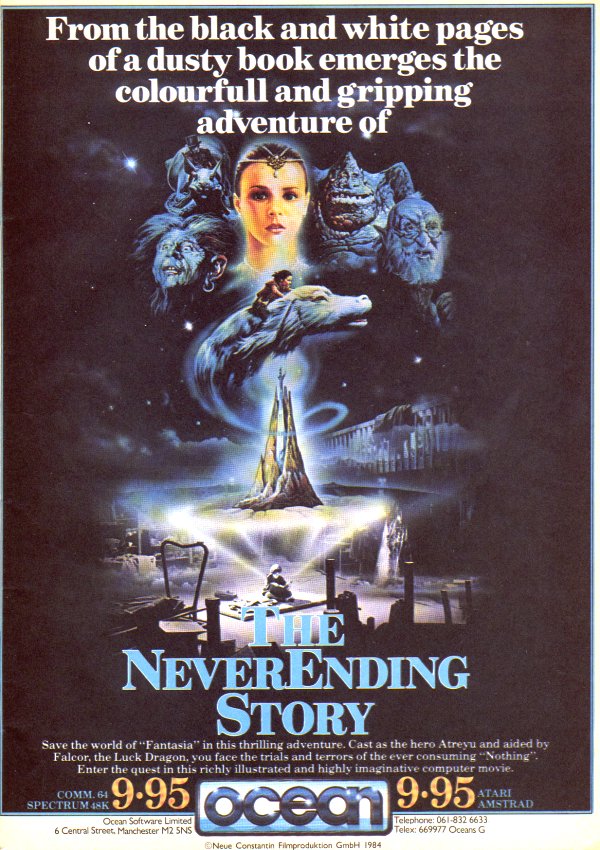
Full-page ad12
- Computer Gamer #11Feb 1986 · p.40
- Your Computer #2Feb 1986 · p.7
- Your Sinclair #1Jan 1986 · p.26
- C&VG (Computer & Video Games) #51Jan 1986 · p.94
- Your Computer #12Dec 1985 · p.85
- Sinclair User #45Dec 1985 · p.131
- Computer Gamer #9Dec 1985 · p.25
- Crash #22Nov 1985 · p.129
- C&VG (Computer & Video Games) #49Nov 1985 · p.84
- Your Computer #10Oct 1985 · p.9
- Sinclair User #43Oct 1985 · p.132
- Popular Computing Weekly #39Sep 1985 · p.40
News/Note4
- C&VG (Computer & Video Games) #55May 1986 · p.70
- Sinclair User #43Oct 1985 · p.127
- Home Computing Weekly #130Sep 1985 · p.11
- Home Computing Weekly #127Aug 1985 · p.7
Solution3
- ZX MagazínJan 2002 · p.12
- BiT #16Jan 1993 · p.12
- MicroHobby #188May 1989 · p.56
Letters1
- C&VG (Computer & Video Games) #56Jun 1986 · p.86
Feature1
- Crash #27Apr 1986 · p.34
Review1
- MicroHobby #58Dec 1985 · p.15
Preview1
- Crash #23Dec 1985 · p.16
CompoResult1
- Computer Gamer #5Aug 1985 · p.47
CompoEntry1
- Computer Gamer #2May 1985 · p.16
Licensed from
- The Neverending StoryMovieWarner Brothers Inc
Related
- Compilations
- Stars on the 128K
- Ports
- (Amstrad CPC), (Atari 8-bit), The Neverending Story (Commodore 64)
- Tags
- AY Sound
- Elsewhere
- Speccy Screenshot MapsCASACentre for Computing HistoryCentre for Computing HistoryMobyGamesRZX ArchiveThe TipshopUVLSpectrum Computing RZX - YouTubeModern ZX-Retro GamingRZX Archive - YouTube
- Same entry at
- Spectrum ComputingZXInfo
Reviews from people here
Sign in to write about this, or make an account. It takes a minute and lets you correct the catalogue too.
Everything ZXDB can hold about this is here.
Sign in to correct or add to this.
Hold the rights to this and want it taken down?