
Just Imagine
Strategy Game: Management · ZX-Spectrum 48K · 1 players · English
Central Solutions · 1986 · Pound sterling 3.99
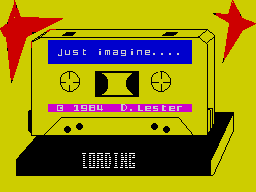
.png)
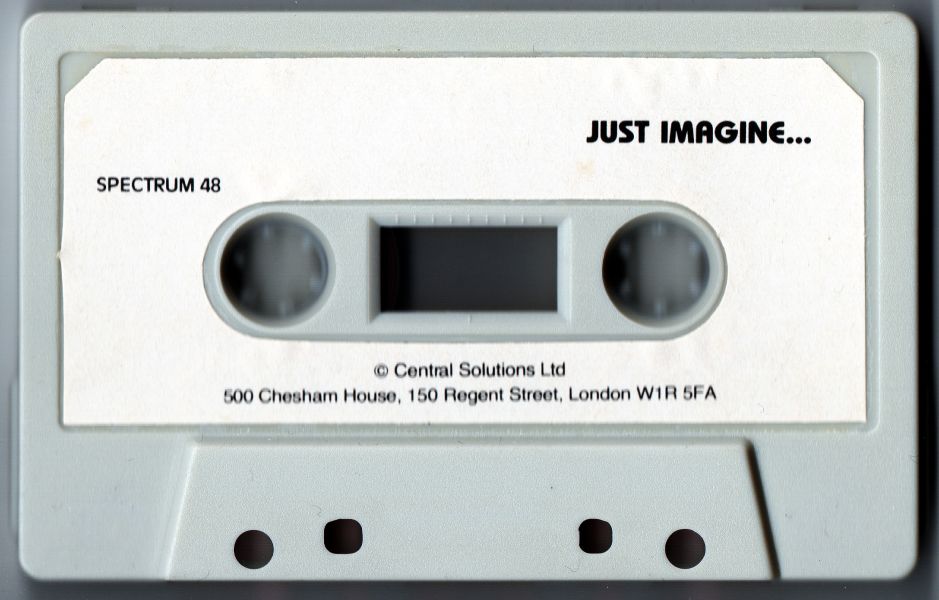
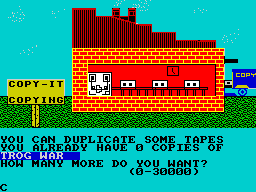
Discussion
Nobody has started a thread about this yet.
Remarks
SPOT: plus unspecified arcade game
Publication
Originally R&R Software Ltd was going to publish this game, but it closed doors in 1985 and this game only got released much later by Central Solutions.
Releases
- 1986Central SolutionsPound sterling 3.99
- 1988Pirate Software Ltd
Play
- JustImagine.tzx.zipTape image English26 KB
- JustImagine.tap.zipTape image English19 KB
- JustImagine(PirateSoftwareLtd).tzx.zipTape image English18 KB
- JustImagine(PirateSoftwareLtd).tap.zipTape image English18 KB
Documents
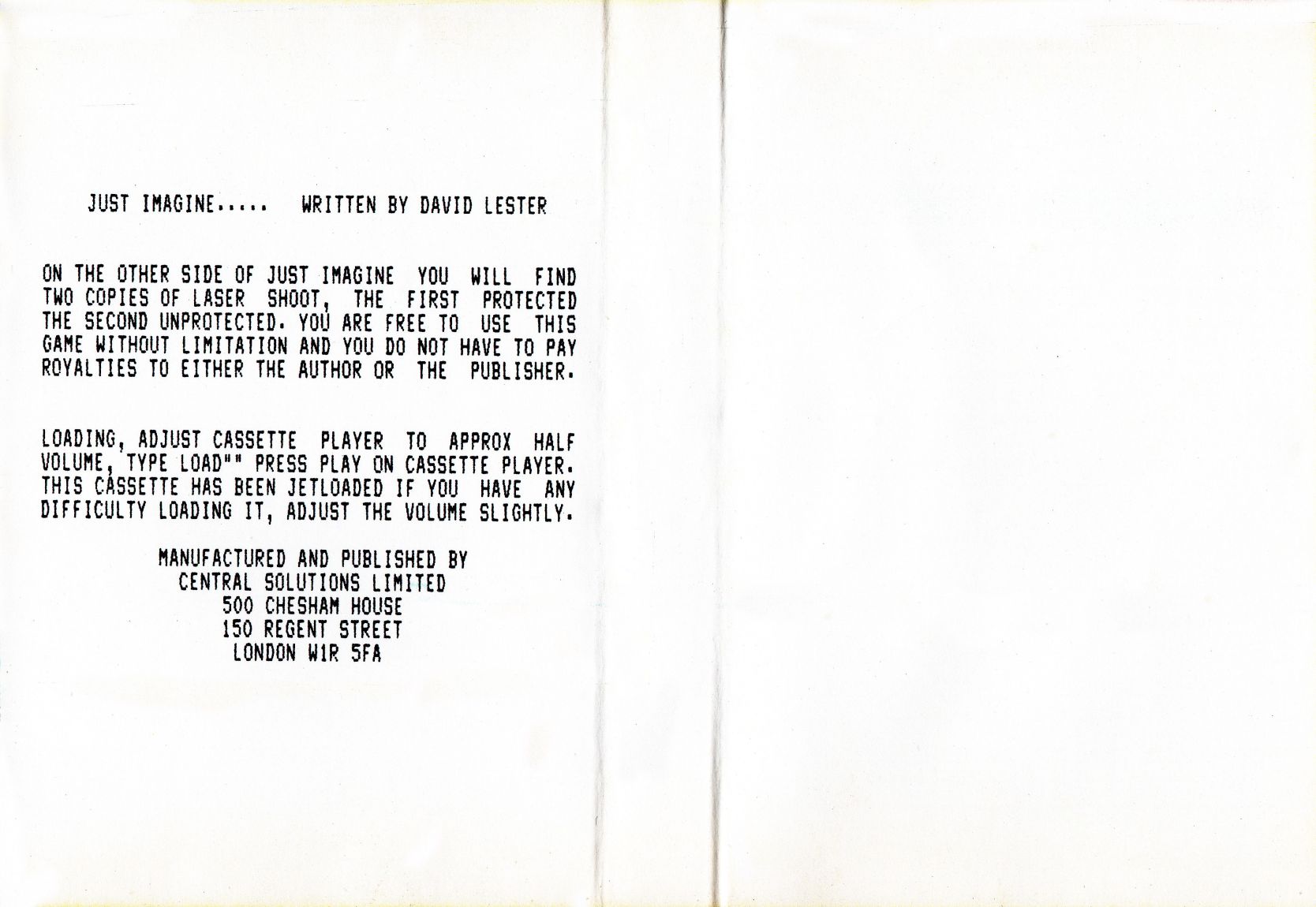
- JustImagine(EN).txtInstructions English1 KB
Files and rights
No permission is on record either way. Screens and pictures are copied here on a take-down basis: if you hold the rights and want something removed, say so and it goes.
Credits
- David Lestercredited
Sign in to credit somebody, or say what these people did.
Scores
In the magazines
- Your Sinclair #31986 · Overall4/10
- Crash #251986 · Overall59%
Elsewhere on the web
- WorldOfSpectrum 14 votes7.07
In the magazines 8
Your Sinclair #3Mar 1986 · p.172/108/105/105/104/104/10
Graphics 2/10
Playability 8/10
Value For Money 5/10
Addictiveness 5/10
Overall 4/10
Steve Malone 4/10
Central Solutions £3.99 Reviewer: Steve Malone A strategy game based on the software industry can only mean one thing - someone in the biz has succumbed to the overwhelming desire to stare lovingly at his own navel? The concept of the game is very similar to Software Star, written by Kevin Whatsisname of Football Manager fame, that came out about a year ago. You have to hype your product like mad, for as little as possible, to shift those unites. Trouble is, this game lacks the polish of Software Star, and could've done with some roadtesting and tightening up before release. That might have removed some of the irritating number of keypresses required and some of the more obvious decisions you're asked to make. What's more, the program has the cheek to suggest that software reviewers can be bribed! (Incidentally lads, my cheque never arrived this month).
Crash #25Feb 1986 · p.10956%54%45%N/A58%58%59%59%
Presentation 56%
Rules 54%
Playability 45%
Graphics N/A
Authenticity 58%
Value For Money 58%
Overall 59%
Sean Masterson 59%
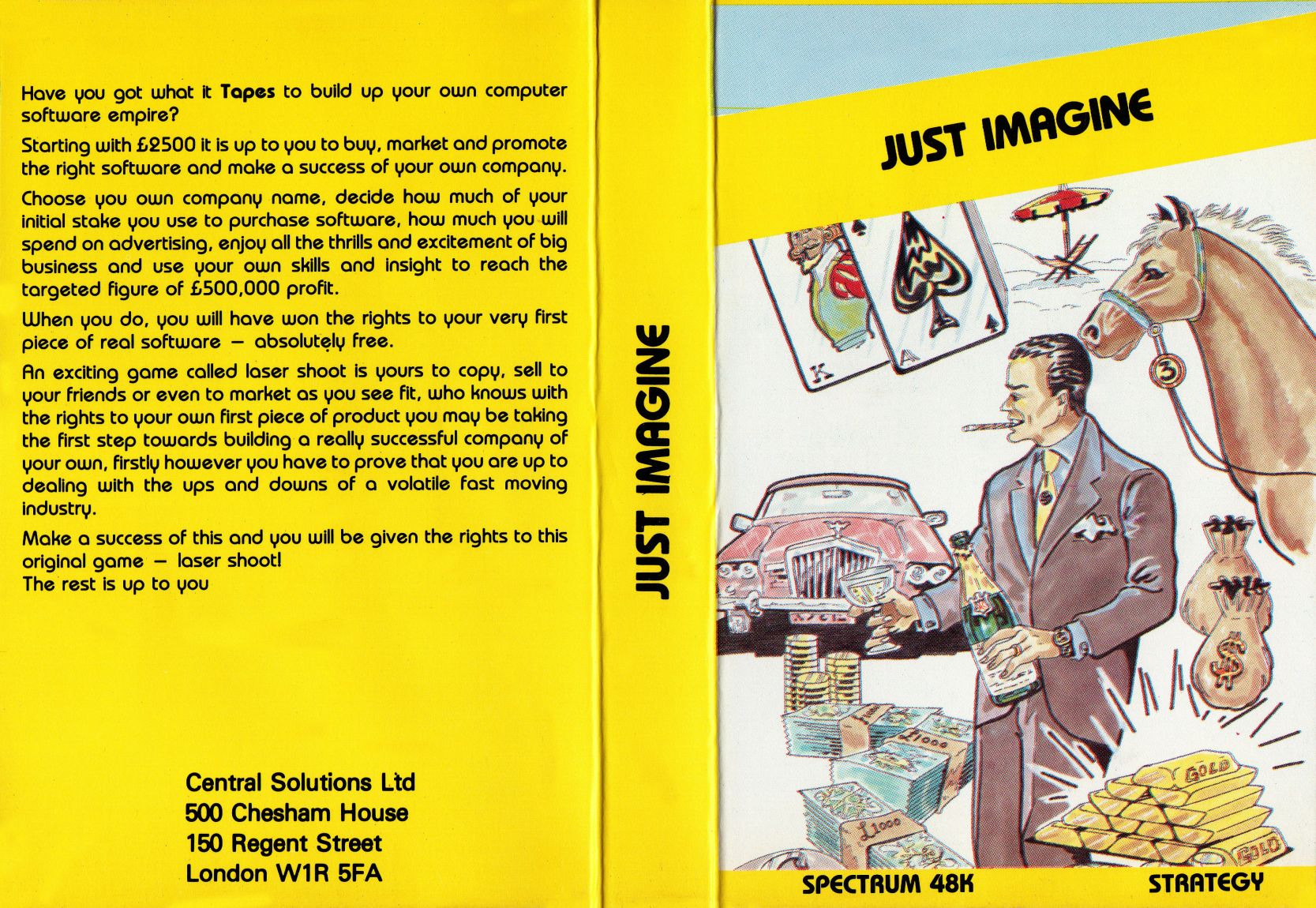
FRONTLINE WAVE UPON WAVE OF DEMENTED AVENGERS It seems my review of Lothlorien's Waterloo (Crash 23) has stirred up a little controversy - well, criticism at least. Some interesting points were raised in the Frontline postbag, I was pulled up for my use of the term 'indirect fire' - in the plaintiff's words, 'flak' was deserved for that, My mind was obviously in a different universe. I never meant to suggest Napoleon had radar assisted firepower, Sorry. The defence rests, humbly. A keelhauling by post then followed for my suggestion that the game was historically accurate, despite Napoleon's forces being given an extra corps. In the review, I took pains to point out that the rest of the game was historically accurate and the results were realistic, Somehow, I felt my accuser hadn't played the game - if that's the case, he's missing out. Another correspondent had a go at my rating for authenticity, raising historical point after historical point - many of which were more explicit versions of the criticisms made in the review itself. Lothlorien had some of the wrong commanders with the wrong units, as the author of this letter informed me. This is true, but not ultimately important. Sorry, but having a blunder like radar assisted weaponry would be! Names do not affect realistic combat, nor order sequence, completion, or any of the other factors the game possesses. In conclusion: Waterloo and Austerlitz should both have been given the Crash Smash label. Why this logo wasn't applied is beyond me, except that there's a rumour that Layout are spending a year dead on Mars for tax reasons... At least they can relax this month. Why? Read on! JUST IMAGINE Producer: Central Solutions Retail Price: £3.99 Just Imagine... a game by David Lester, a man familiar to computer strategists, although he is normally associated with reviewing games rather than supplying material for review. His game, Just Imagine is slightly reminiscent of Software Star in that you have to run a software company successfully until £500,000 pure profit has been made. Procedures are handled very differently to those in Software Star however. Initially your company has £2,500 in the bank. Games have to be bought rather than developed. Each month a selection of three software titles is presented along with percentage probabilities for success. Each program belongs to one of five categories: Strategy; Simulation; Arcade; Adventure and Utility. After selecting one of the programs available, an offer has to be made on the royalty payment for the author. Don't be mean if your offer is too derisory, the author will take his game elsewhere and you incur £750 in costs. Once a game has been obtained, a retail price needs to be selected. There is an upper limit of £15.00 on the price, so this reflects the current market fairly well. Packaging has to be bought and this is available in varying qualities. An option to buy the services of a cover artist is also presented. Then advertising (in terms of pages bought) is handled and number of copies to be made that month needs to be determined. At this point, various random elements enter the game. These are presented as news items in a magazine. At one point, I was told that burglars had wrecked some company equipment and stolen copies of the game but they thought they were so bad that they returned them! Sometimes however, good news is the order of the day and this can influence the next stage of the game. You are given a choice of marketing managers. One of them is expensive but efficient, offering all kinds of promotions for the product from TV interviews to buying a celebrity's name to support the game. The other choice is a little cheaper, but the kind of services he offers are more suspect to say the least. Anything goes, from bribing reviewers to sabotaging other companies' efforts. In fact his chart is used to show the position of the game later in month. Get involved with this guy though, and the chances are he will be caught and your company reputation takes a dent as a result. The last choice is simply to avoid a marketing man altogether, but this means any chances of extra publicity for that month will be missed. Eventually, the number of copies sold during the month becomes known and the top five games are displayed with your game and its position shown below (assuming it failed to make the top five). After that, revenue is determined alongside costs incurred for the month. It's only at this point that the difficulties of this game really become apparent. The bankers are evidently unwilling to supply much credit (even though this is a necessity for most companies) and debt at this stage generally results in the end of the game. There is the chance to sell off any games you have to other companies to cut your losses but this measure rarely works. This approach makes the game very difficult. With little chance of survival for more than a month without an immediate success in the charts, a good feature would have been the chance to restart from scratch at any point. Instead it's necessary to play right through to the end of a month before getting the proverbial boot. Another problem of the game is its speed. Little tunes are often played before different section of the game commence. These are usually quite pleasant but become irritating nonetheless because of the wait involved while they play. Another wait is necessary while the charts for the month are being sorted out. A message does appear asking you to be patient, but the whole process could and should have been implemented faster. The game has its plus points as well. When certain decisions are made, the computer sends a little message to comment on them. Sometimes it agrees with your pricing policy and at other times, it comes up with comments like, 'Oh dear. I don't think that's quite the right price for this but let's see.' At the end of the day however, I was disappointed. Initially I was impressed. There seemed to be more attention to rather simplistic and inaccurate Software Star but the game has problems all of its own. Speed (or lack of it), inflexibility in play and an unfortunately abrupt end make this a frustrating game. There's a sense of humour pervading the game which does a good job at making some cynical digs at the worst side of the software industry, but none of its excitement come through either. I'm afraid that this game is unsatisfying to play despite some of its more interesting features. As an added incentive, the inlay states that if you achieve a pure profit in excess of £500,000 on the game, you will receive 'rights' to a game called Laser Shoot. It seems you will receive a copy of the game to do with as you wish…
Just Imagine carries this game and has 8 references of its own.
Advert2
- Popular Computing Weekly #36Sep 1986 · p.23
- Popular Computing Weekly #34Aug 1986 · p.12
Feature1
- Crash #54Jul 1988 · p.61
Tips1
- Crash #40May 1987 · p.102
Letters1
- Crash #27Apr 1986 · p.85
News/Note1
- Crash #10Nov 1984 · p.135
Contains
Related
- Compilations
- Just Imagine, Take Five
- Elsewhere
- UVL
- Same entry at
- Spectrum ComputingZXInfo
Reviews from people here
Sign in to write about this, or make an account. It takes a minute and lets you correct the catalogue too.
No tag recorded.
Sign in to correct or add to this.
Hold the rights to this and want it taken down?